
How a Simple Oversight Ruined a NASA Mission to Mars (And Cost Over $100 Million)
A minor oversight, such as using the wrong units, ended the Mars Climate Orbiter mission and cost over $100 million. Learn how NASA lost its spacecraft on Mars due to an error no one saw coming.
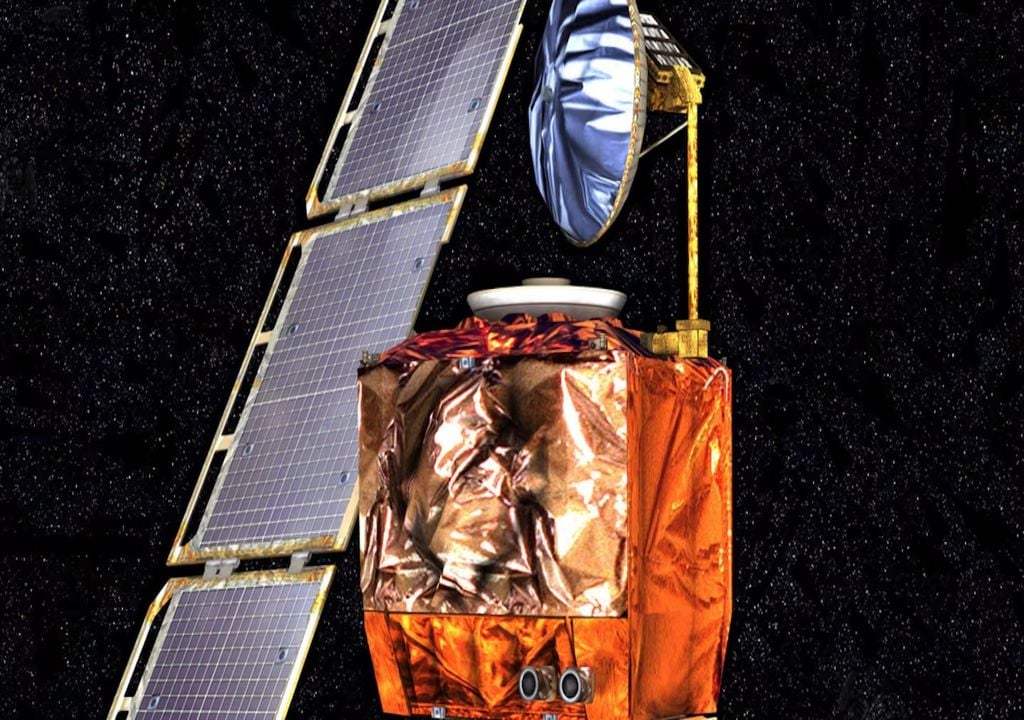
There are many NASA missions we have followed for decades, and almost without realizing it, we tend to assume they all succeed. Rockets that launch, probes that land, robots that send back images from millions of miles away.
However, even in the most sophisticated environment on the planet, an apparently insignificant error can derail everything. And that is exactly what happened in one of the most promising Mars missions of the late 20th century.
An Ambitious Journey to the Red Planet
It was 1999 when NASA launched the Mars Climate Orbiter, a probe designed to study Mars’ atmosphere, its climate, and the distribution of water vapor.
The spacecraft, built by aerospace company Lockheed Martin, was part of the “Faster, Better, Cheaper” program—a NASA philosophy aimed at reducing costs and accelerating timelines without sacrificing scientific results.
With a budget of around $125 million (plus another $80 million for launch and operations), the mission represented a strategic investment in Mars exploration.
NASA and Lockheed Martin, a Failed Collaboration
As with most space missions, NASA was not working alone. Lockheed Martin was responsible for the design and development of much of the spacecraft’s navigation system, while NASA’s Jet Propulsion Laboratory (JPL) handled mission control once it was in space.
The Mars Climate Orbiter was designed to study Martian weather and serve as a communications relay for future missions.
Jeremy Keeshin (@jkeesh) April 16, 2025
As it approached Mars, NASA watched in horror as the spacecraft disappeared.
The investigation revealed a shockingly simple mistake: pic.twitter.com/cX5BXCk0Ww
For nearly ten months, everything seemed to go according to plan. The Mars Climate Orbiter traveled more than 670 million kilometers without any apparent incidents. But the problem was not in the engines or the solar panels. It was something far more mundane: units of measurement.
A Silent Calculation Error That Took Months to Develop
The failure stemmed from a basic lack of coordination. Lockheed Martin used imperial units (pound-force seconds) to calculate the impulses of the spacecraft’s small thrusters. The JPL team, meanwhile, assumed those data were expressed in metric units (newton-seconds), the standard used by NASA.
The difference may seem minor on paper, but in space it is deadly. As a result, the probe adjusted its trajectory using incorrect data for months. The problem was that no one detected the discrepancy in time.
An Orbital Insertion That Ended in Disaster
September 23, 1999 marked the critical moment with orbital insertion around Mars. The Mars Climate Orbiter was supposed to settle at about 140 kilometers above the planet’s surface. However, due to the accumulated error, it descended to roughly 57 kilometers—far too close.
El protagonista es el Mars Climate Orbiter, una misión destinada a estudiar el clima de Marte. Todo iba perfecto hasta que llegó el momento de entrar en la órbita del planeta rojo. pic.twitter.com/KxOiBaw6HE
— Alberto Iglesias Fraga (@aiglesiasfraga) November 12, 2024
At that altitude, friction with the Martian atmosphere proved fatal. Engineers lost contact with the spacecraft and it was never heard from again. It likely disintegrated or was flung into deep space.
A Blow to NASA That Changed the Way It Worked Forever
The financial loss exceeded $100 million, but the impact went far beyond that. The twin mission, Mars Polar Lander, failed just a few months later, prompting a complete review of NASA’s Mars program.
The post-mission report was damning: communication failures, lack of cross-checks, and excessive confidence that “everything was fine”. Since then, NASA has strengthened its protocols, standardized processes, and turned this mistake into a mandatory case study for aerospace engineers around the world.