
How does planetary defense against asteroid risk work? Is Earth in danger?
In recent weeks, numerous fireballs or meteors have streaked across our skies, so it is natural to wonder if these phenomena really pose a danger to our planet and if there are programs to protect it.
It's not uncommon to hear about meteors passing very close to our planet, like the asteroid that came within just 24,710 km of Earth less than a month ago. On that occasion, the asteroid's closest approach to Earth was less than the distance at which geostationary satellites orbit, and we'll tell you all the details in a dedicated article.
But what would happen if an asteroid were to collide with our planet? Are we in danger of ending up like the dinosaurs?
What are the possible consequences?
An astronomical impact with a large asteroid, comet, or meteor can also have catastrophic consequences, which is why major space agencies have developed planetary defense programs. These programs are dedicated to constantly observing space and monitoring celestial bodies that are potentially hazardous to our planet.
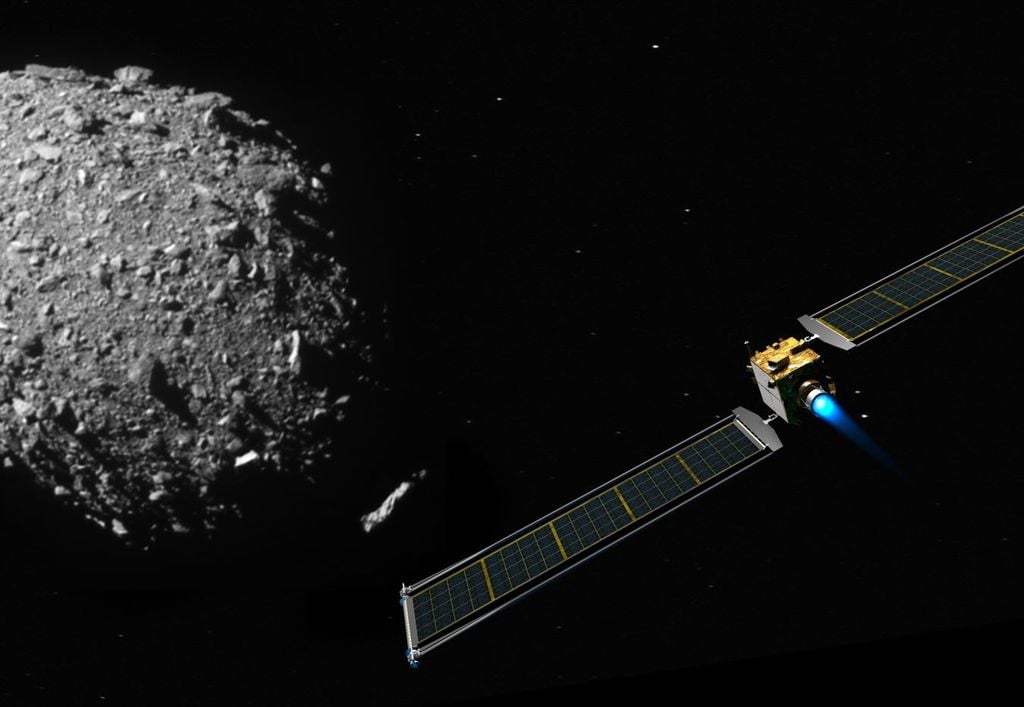
For now, the United States Space Agency (NASA) has gone a step further, crashing a spacecraft into an asteroid to deflect its trajectory. The DART (Double Asteroid Redirection Test) mission was a resounding success, and it will surely be followed by other missions with even more futuristic objectives.
Liftoff for the #HeraMission is only the start: a two-year cruise to the Didymos binary asteroid system will include a sequence of deep-space manoeuvres, with a flyby of Mars to put the @ESA_Hera spacecraft on course for its rendezvous with Didymos. pic.twitter.com/sX2QYV96iS
European Space Agency (@esa) April 25, 2024
However, the ESA , the European Space Agency, has also structured a planetary defense program and will soon begin the HERA mission. The probe is scheduled to launch in October 2024, in a few months, and its target is again the binary asteroid Didymos, the same as the DART mission, but this time no impact is expected.
In fact, the ESA probe will head towards the binary system to analyze it with the scientific instrumentation provided.
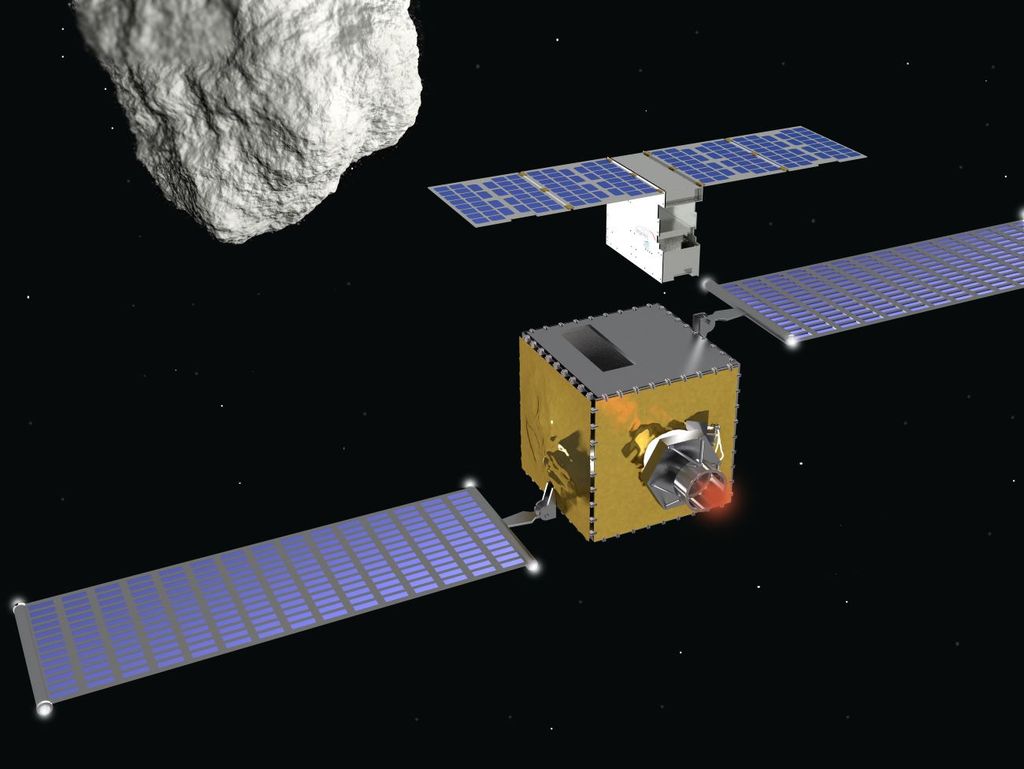
Originally, the two missions, DART and HERA, were conceived as a single joint mission by both space agencies, NASA and ESA, but due to a lack of funding, they were divided and scheduled in different periods.
The HERA mission probe will take approximately two years to reach Didymos and will therefore arrive in its vicinity in 2026. Studying this asteroid will not only help verify the actual effectiveness of the DART probe's impact on November 24, 2021 , but will also provide important information about this type of celestial body.
Are there any dangerous celestial bodies on the way?
It will be crucial for our future to know if this type of mission is capable of protecting our planet from possible impacts, even in the case of decidedly more massive and, therefore, potentially dangerous bodies.
However, at the moment no object appears to be on the horizon that could pose a risk to our planet , although not too distant events have shown how even relatively small meteorites can cause damage and injury.
The last astronomical impact of this type occurred on February 15, 2013, when a meteoroid about 15 meters in diameter exploded over the city of Chelyabinsk, south of the Urals, in Russia.
The Chelyabinsk meteor struck Earth without warning 10 years ago today.
— ᑕOՏᗰIᑕ ᗰᗴՏՏᗴᑎᘜᗴᖇ 𝕃𝕦𝕚𝕤 𝔸𝕝𝕗𝕣𝕖𝕕𝕠 (@LuisADomDaly) February 20, 2023
We couldn't see it coming, because it came from the direction of the Sun.
1️
It was the largest asteroid to strike Earth in over a century.
Just after sunrise on a sunny winter's day, a 20m and 13,000ton... pic.twitter.com/hMIwJyNxLX
The impact of the celestial body with our atmosphere caused a shock wave that broke the glass of numerous windows , injuring hundreds of people.
In short, even without any fragment reaching the surface of our planet, these events are potentially dangerous for us, so we continue to look for useful remedies to avoid or at least control astronomical impacts.