
The Pink Moon of April 2026 Is Approaching: Why It Has Been Determining the Date of Holy Week for 1,700 Years
The next full moon, in April, will determine the date of Easter. This has been the case for nearly two thousand years, since the First Council of Nicaea decided how to establish the date of this religious holiday.
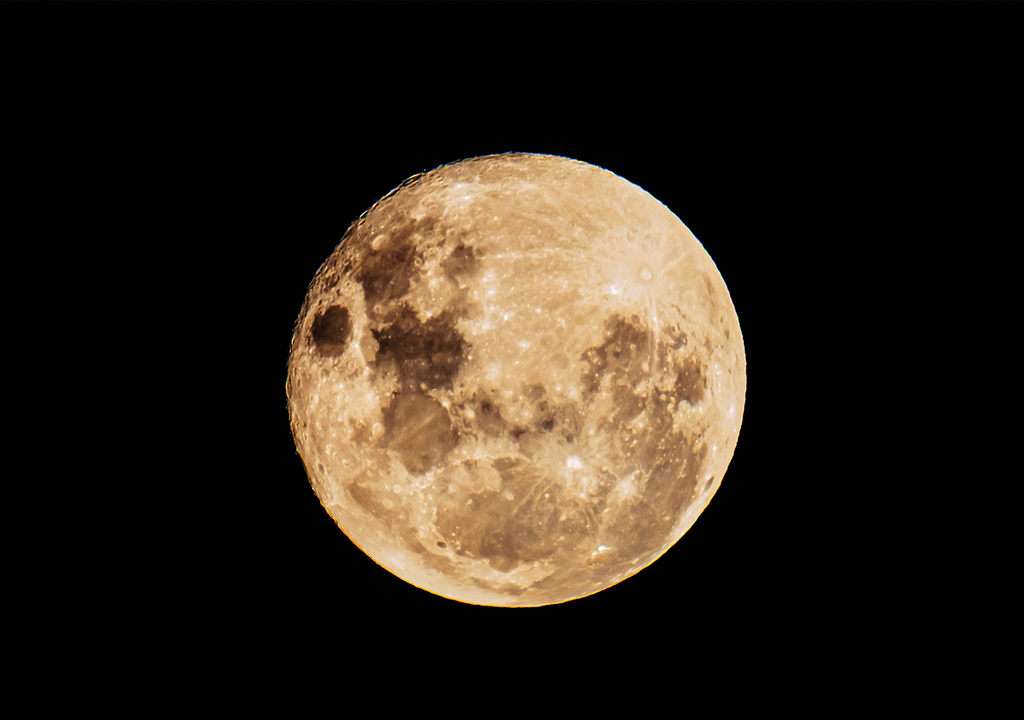
The fourth full moon of 2026 is approaching, in April, bringing with it a fascinating feature that links it directly to the celebration of Christian Easter. But there is more: this full moon also bears an ancient and evocative name passed down by Native Americans.
The April “Pink Moon”: Why Is It Called That?
April’s full moon is traditionally known as the “Pink Moon.” The reason has nothing to do with its actual color: the moon, of course, does not turn pink. The name comes from Native American traditions, which associated this full moon with the blooming of a spring wildflower with a distinctive pink blossom. In short, it was a sign of nature awakening after winter.
After the last full moon of 2026—the third of the year, which took place on March 3—the lunar cycle resumed with the new moon (March 19) and the gradual waxing of the crescent moon during the following nights, which we are witnessing these days. The full moon, the fourth of 2026, will take place on April 2. Below is the full calendar of the month’s lunar phases.
- Full moon (Pink Moon): April 2 (it will reach peak illumination on Wednesday, April 1, at around 8:11 p.m. Central Mexico time)
- Last quarter: April 10.
- New moon: April 17.
- First quarter: April 24.
The full moon will reach its maximum brightness on April 2, offering, as usual, a spectacular show.
The 13 Moons of 2026 pic.twitter.com/7qTmqrYi7C
— MOON LOVER (@M1ONLOVER) February 1, 2026
As always, to the naked eye the satellite will appear almost fully illuminated even on the nights immediately before and after the exact full moon.
Why Has April’s Full Moon Been Associated With Easter for Nearly Two Thousand Years?
The connection between the full moon and Holy Week is not a coincidence: it dates back to a decision made 1,700 years ago. At the Council of Nicaea, in the year 325 AD, the Church Fathers established that Easter would be celebrated annually on the first Sunday following the first full moon after March 21.
This date was agreed upon as the reference for the spring equinox (although astronomically the equinox can fall on March 19 or 20, the Church traditionally fixed March 21 as the reference date).
In 2026, the first full moon after March 21 falls on April 2, which is Thursday. Therefore, the first Sunday after that date is April 5, 2026: that will be Easter Sunday. Easter Monday will be April 6, 2026.
The Date of Holy Week in the Coming Years, Through 2030
Using the same calculation method, it is possible to determine the date of Easter for the coming years. Here is a look through 2030.
| Year | Equinox (According to the Church) | First Full Moon Afterward | Easter Sunday |
|---|---|---|---|
| 2026 | March 21 | April 2 | April 5 |
| 2027 | March 21 | April 22 | March 28 |
| 2028 | March 21 | April 9 | April 16 |
| 2029 | March 21 | March 30 | April 1 |
| 2030 | March 21 | April 18 | April 21 |
As you can see, the date of Easter varies considerably: in 2027 it will fall early, on March 28, while in 2030 it will fall particularly late, on April 21.
A “Movable” Feast, but With Precise Limits
Easter is one of the few holidays in the Western calendar whose date varies, meaning it does not have a fixed date. However, this flexibility is not unlimited. Since the lunar phases repeat, on average, every 29 days, Easter Sunday can never fall before March 22 or after April 25.
Within those limits, the full moon at the right moment decides each year when the celebration will take place.
The Calendar Reform That Prevented Easter From Being Celebrated in Summer
The history of the connection between the full moon and Easter would not be complete without mentioning one of the most important reforms in history: the Gregorian calendar reform, introduced by Pope Gregory XIII in 1582.
At that time, the Julian calendar, introduced by Julius Caesar and probably developed by the Egyptian astronomer Sosigenes of Alexandria, was still in use. This calendar had one flaw: it added about 11 minutes to the real solar year every year. Over the centuries, this small error accumulated until it created a shift of as much as ten days compared with actual celestial movements.
La Semana Santa no tiene fecha fija porque sigue una regla antiquísima: se celebra después de la primera luna llena posterior al equinoccio de primavera.
— Inaki Alzugaray ; ) (@inakialzugaray) March 26, 2026
Por eso a veces cae en marzo y otras en abril. No es casualidad: es astronomía, tradición e historia al mismo tiempo. ️ pic.twitter.com/IUoHQbD9I4
In practice, this meant that the date of March 21—used as the reference for calculating Easter—no longer matched the astronomical equinox, which was occurring ten days earlier. As a result, Easter was gradually drifting toward the warmer months. Had nothing been done, in a few centuries this fundamental Christian holiday would have been celebrated in the middle of summer, in contradiction with the Bible.
To fix this, Pope Gregory XIII abruptly removed ten days from the month of October in 1582, realigning the civil calendar with astronomical movements. Thus the Gregorian calendar was born, which is still used in much of the world today. This still has consequences for the celebration of Easter: Orthodox Easter, which still relies on the Julian calendar, is celebrated on a different date precisely because of this change.