
Why are some stars always visible in the sky? Earth's rotation could be the answer
The night sky changes throughout the year due to the seasons, with stars appearing and disappearing.
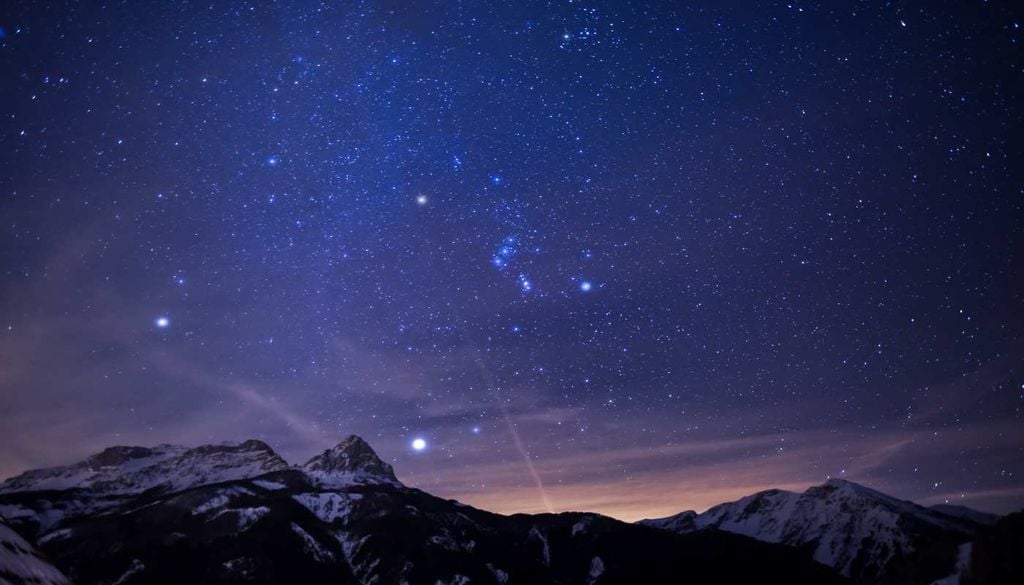
When we observe the night sky throughout the year, we notice that some constellations seem to fade away, while others always remain in the same place. In fact, this phenomenon is not random; it is the result of the way Earth moves through space and the position of the stars in relation to our planet.
Earth is in constant motion: it rotates on its own axis daily and orbits the Sun throughout the year. These two combined movements make the night sky appear to change gradually.
Sidereal Time
If we look toward the east at the same time on two consecutive nights, we will see that the stars appear to be in exactly the same spot. But they are not; this movement becomes noticeable if we continue observing at the same time for a week or more.
Earth rotates on its axis, which extends from the South Pole, passes through the center of the planet and reaches the North Pole once each day. Astronomers measure the day in two different ways: they measure the 24-hour solar day based on the position of the Sun, from noon to noon.
And they measure the sidereal day in relation to distant stars, which remain fixed in the sky. A sidereal day lasts 23 hours and 56 minutes.
Seasonal Stars: Why Do They Disappear?
Constellations such as Orion are classic examples of “seasonal” stars. During winter, they are easily visible in the early evening; however, in summer, they seem to fade away.
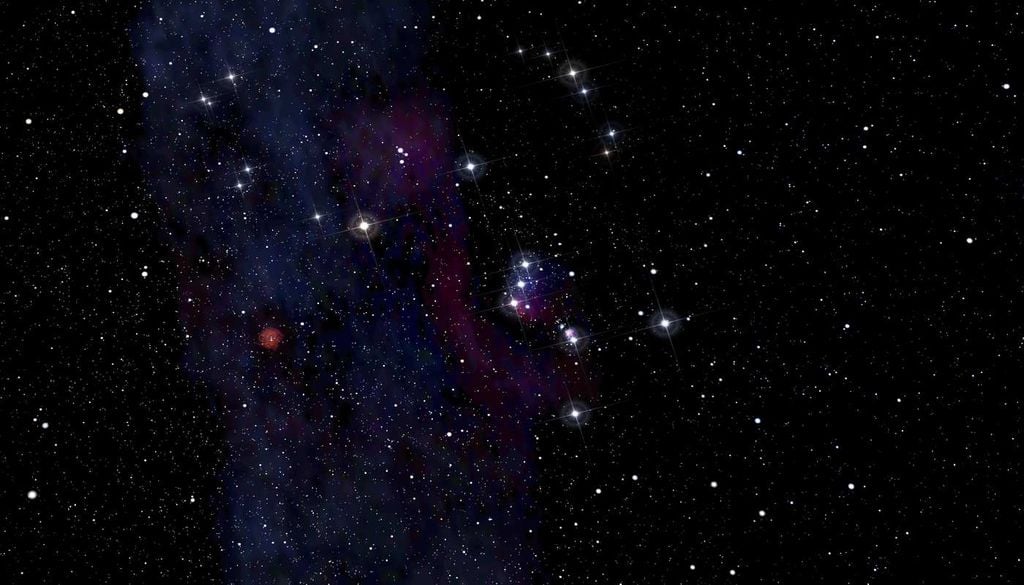
This happens because, as Earth orbits the Sun, the side of the planet facing space at night points toward different regions of the universe. Therefore, throughout the year, we observe different parts of the sky.
For example, when a constellation is in the same direction as the Sun, it becomes invisible at night, since it would only be visible during the day, when the Sun’s glare prevents it from being observed. On the other hand, there are stars that never disappear from the night sky. These are known as circumpolar stars.
They are located near the celestial poles: imaginary points in the sky aligned with Earth’s axis of rotation. In the Northern Hemisphere, many of these stars appear to rotate around the North Star (Polaris), without ever dropping below the horizon.
Due to Earth’s rotation, these stars trace circles in the sky; however, they remain visible throughout the night and throughout the year. The closer the observer is to one of Earth’s poles, the greater the number of circumpolar stars they can observe.
The Importance of the Observer’s Location
The visibility of stars also depends on where we are on Earth. At the equator, practically all stars rise and set; none are circumpolar. In mid-latitudes (such as northern Mexico), some stars are circumpolar, while others are seasonal.
At the poles, half the sky is always visible, while the other half never appears. Consequently, a constellation that is permanently visible in one hemisphere may not be visible at all in the other.
Long-Term Changes
In addition to daily and annual movements, there is a slower phenomenon known as precession. This involves a wobble of Earth’s axis, similar to the wobbling motion of a spinning top.
This process unfolds over thousands of years and gradually changes the position of the celestial poles. As a result, the star we currently know as the North Star will no longer play that role in the future.