
World's most powerful telescope reveals new 'dancing' feature in the Sun
'Dancing' magnetic waves revealed for the first time by the world's most powerful telescope show what astronomers suspected in the Sun but could never find.
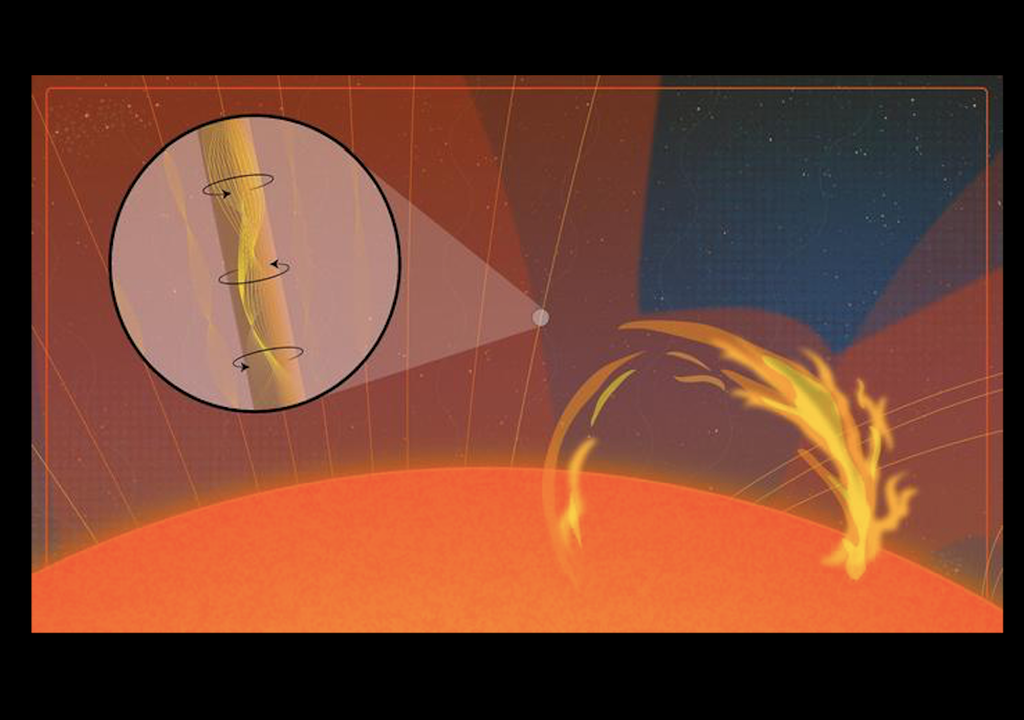
The first ever direct evidence of small-scale torsional Alfvén waves in the Sun's corona have been uncovered. These are magnetic waves that scientists have been looking for since the 40s, a bit like 'dancing' they appear to twist in motion.
The new discovery heralds a breakthrough in solar physics as it gives the first direct evidence in the Sun’s corona of elusive magnetic waves called Alfvén waves.
Published recently in Nature Astronomy, the international team’s discovery was made using observations from the world’s most powerful telescope.
The unprecedented observations were made by this telescope at the US National Science Foundation Daniel K. Inouye Solar Telescope in Hawaii.
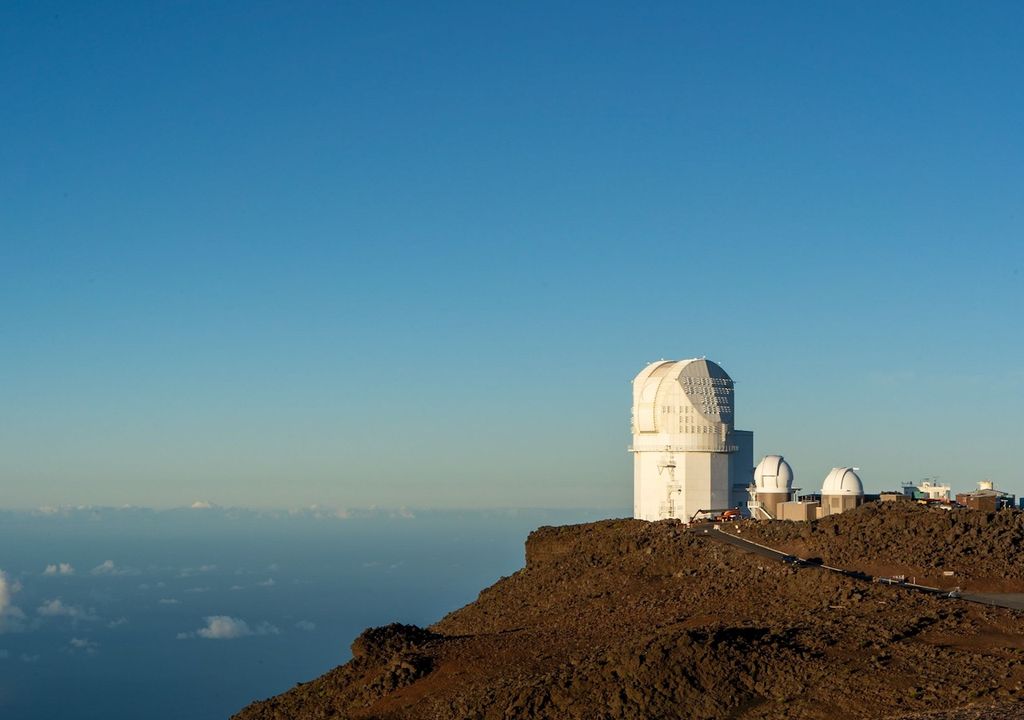
These findings could explain one of the greatest mysteries of the Sun - how its outer atmosphere the corona reaches temperatures that exceed millions of degrees with a surface only about 5,500°C.
What are Alfvén waves?
Alfvén waves are named after a Nobel Prize winner who predicted their existence in 1942. Interestingly, these magnetic disturbances can carry energy via plasma.
Though similar but larger patterns have been spotted in solar flares, this is the first time the small twisting type of these waves have been observed directly - though they are though to be present all the time while powering the Sun.
Northumbria University contributed to the discovery
Northumbria University helped develop the camera for the telescope’s Visible Broadband Imager as part of a UK consortium. Professor Richard Morton, a Professor within Northumbria University’s School of Engineering, Physics and Mathematics, led the research. He commented “This discovery ends a protracted search for these waves that has its origins in the 1940s. We've finally been able to directly observe these torsional motions twisting the magnetic field lines back and forth in the corona."
Professor Morton tried out a fresh, new analytical technique to analyse the wave motion in the available data from the telescope’s observations. He explained that the “movement of plasma in the sun's corona is dominated by swaying motions. These mask the torsional motions, so I had to develop a way of removing the swaying to find the twisting.”
Striking illuminations from Earth
The discovery illuminates new ways of understanding how the Sun works. The corona - the Sun’s outermost atmosphere during solar eclipses is heated beyond a million degrees Celsius. This is hot enough to accelerate plasma from the Sun like in solar winds that influence space weather and even satellite communications, GPS and power grids on Earth.
“This research provides essential validation for the range of theoretical models that describe how Alfvén wave turbulence powers the solar atmosphere,” added Professor Morton. “Having direct observations finally allows us to test these models against reality.”
This discovery sparks further discoveries that could illuminate more about how the Sun works and its influence over space weather and even communications on Earth.
Source of the news
Evidence for small-scale torsional Alfvén waves in the solar corona. Nature Astronomy. DOI: 10.1038/s41550-025-02690-9