
This is the world's strangest country that's slowly opening up to tourism
As intriguing as it is mysterious, Turkmenistan is one of the most closed-off countries in the world. Ruled with an iron fist, it maintains a particularly restrictive visa regime, in stark contrast to the other four Central Asian nations.
On social media, content creators who have managed to enter this former Soviet republic in Central Asia, rich in natural gas and largely covered by desert, describe Turkmenistan as the "strangest country in the world."
Turkmenistan is the most isolated of the five Central Asian nations that once formed part of the Soviet Union. As a result, tourists remain scarce, largely because obtaining a visa is far from easy. It is much easier to secure a simple five-day transit visa, the option chosen by most travelers moving between Iran and Uzbekistan who want to discover Turkmenistan's architectural treasures.
Ashgabat: the white city of spectacular monuments
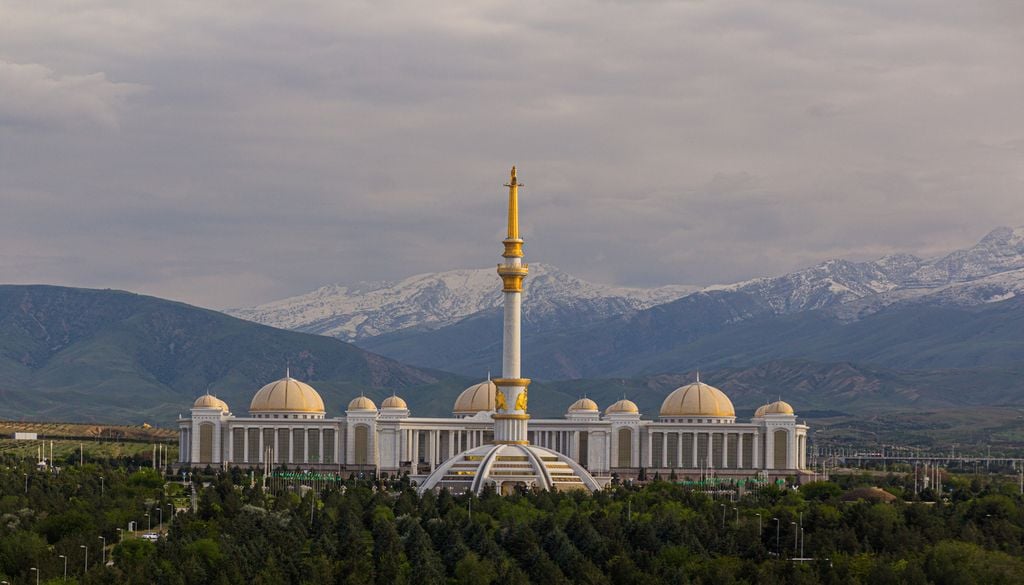
Amid the scorching heat of a desert that covers four-fifths of the country, most of the nation's life is centered in the capital, Ashgabat. The city stands out for its unique architectural landscape, shaped by its undisputed leader, Gurbanguly Berdimuhamedow, a man known for pursuing records, including the Guinness World Record for the city with the "highest density of white marble buildings."
Although Turkmenistan's capital has endured dark chapters throughout its history, that past paved the way for the creation of a remarkable architectural legacy in a country that remains far from the usual tourist routes. Ashgabat was devastated by a tragic earthquake in 1948 that claimed the lives of more than 100,000 residents.
The city built a memorial in their honor: the Earthquake Monument. The structure symbolizes a nation increasingly devoted to constructing monumental buildings. One of the city's most iconic landmarks is the Ertuğrul Gazi Mosque, located in the heart of the capital. Its striking architecture, framed by four minarets, recalls Istanbul's famous Blue Mosque.
A blazing crater and extraordinary archaeological sites
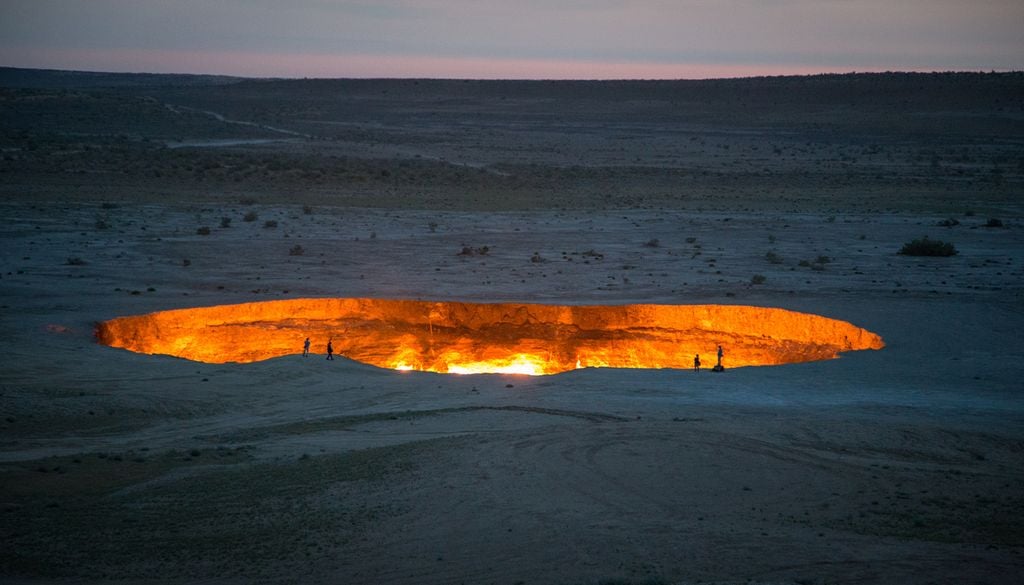
One of the country's top attractions is the "Door to Hell." Located about three hours from the capital in the Karakum Desert, this gas crater has been burning continuously for half a century following an industrial accident, drawing a growing number of visitors eager to witness one of Turkmenistan's most unusual sights.
This incredible, never-ending fire makes it the country's most mysterious destination, a place where flames can be seen burning more than 20 meters (65 feet) below the surface.
The ruins of Kunya-Urgench, Merv, and Nisa, all designated UNESCO World Heritage Sites, are unmatched for both their historical richness and vast scale. Merv was once a legendary city and a major hub along the Silk Road. Nisa served as the capital of an empire that ruled much of Central Asia, and its ruins bear witness to the significant economic and political influence once held by both the city and the empire.
A welcoming people with a nomadic heritage
Carpet Day, which features traditional weaving demonstrations and tastings of local products, is part of a trio of national symbols celebrated by the regime alongside Akhal-Teke horses and Alabay dogs. Turkmen carpets are renowned worldwide for their exceptional craftsmanship and handwoven tradition.
As for the horses, they belong to an ancient Central Asian riding breed known for its speed, endurance, and resilience. However, what truly makes the breed unique and internationally famous is its distinctive golden sheen.
Tourism is still in its infancy. Visitors face a strict screening process, fixed itineraries, tightly controlled arrivals, and limited air connections. Travel arrangements must be made through a licensed agency; everything requires prior approval and careful planning, explains Effie Frank, a guide with Saiga Tours.
Even so, local residents are always delighted to meet travelers interested in Turkmenistan, often inviting them into their homes to share a cup of tea or sample local cuisine. Descendants of nomadic traditions, their hospitality is even more remarkable because, living largely isolated from the rest of the world, they are eager to hear news from beyond their borders.
Reference
Le Figaro with AFP. (June 23, 2026). Archaeological sites, white marble, a burning crater... the "strangest country in the world" cautiously opens to tourism.