
Flowers in Farewell: The Symbolism of Floral Arrangements in Funerals and Cemeteries
Flowers at funerals and in cemeteries convey timeless messages of love, remembrance, and renewal beyond death. We explore this tradition that transcends cultures around the world.
Have you ever seen a wreath of red roses at a funeral and felt that the gesture spoke more than a thousand words? As in the film The Godfather, where flowers signal respect and eternal loyalty, these botanical arrangements have accompanied funerary rites since ancient times. In Greek mythology, Persephone returns from the underworld with spring flowers, symbolizing the cycle of life and death.
This silent language is not mere decoration: plants in cemeteries evoke deep emotions, connecting grief with hope. From Victorian graves to Asian offerings, flowers transcend cultures, reminding us that nature comforts the human soul in times of mourning.
The Floral Language in Funerals and Cemeteries
Wreaths and floral arrangements act as a “secret code” of emotions, similar to an emoji in a message, but with historical roots. In the Victorian era, for example, the book The Language of Flowers assigned meanings: red roses for passionate love, lilies for purity and resurrection.
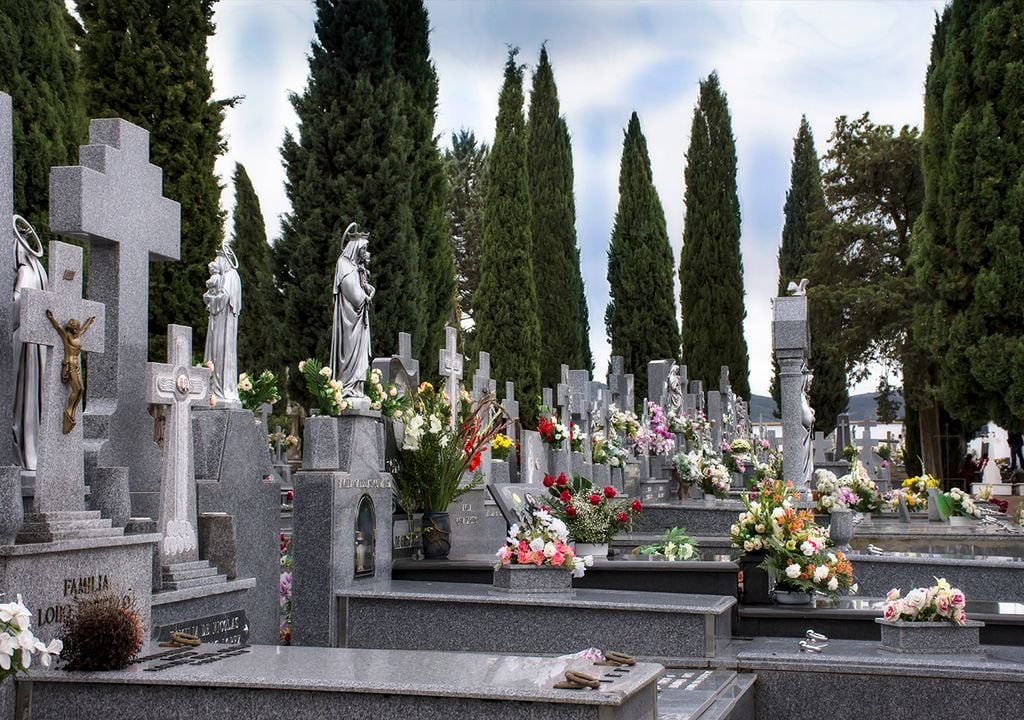
In cemeteries, trees such as cypress symbolize immortality due to their longevity, planted to “watch over” the graves. Arrangements with chrysanthemums evoke mourning in the West, but in Japan they honor ancestors with joy. This funerary botany not only beautifies spaces but preserves memories, like photos in a living album.
Color Symbolism in Farewell
Black reigns in the West as a symbol of absence and solemnity, absorbing light like the void left by a loved one. In Victorian England, widows wore “bombazine,” a type of dense fabric—generally black—made of silk and worsted, commonly used as a mourning “uniform” for years.
White, by contrast, evokes purity and resurrection in Christian traditions, such as lilies on children’s coffins, symbolizing untouched innocence. Purple blends red (life) and blue (sadness), signifying eternal royalty or dignity, common in wreaths for leaders. Red, paradoxically, appears in roses to represent immortal love rather than passion, reminding us that the bond persists beyond the grave.
In Asia, white predominates: in China and Japan, white garments are worn for mourning, while chrysanthemums symbolize purity and a peaceful transition to the afterlife—the opposite of Western black.
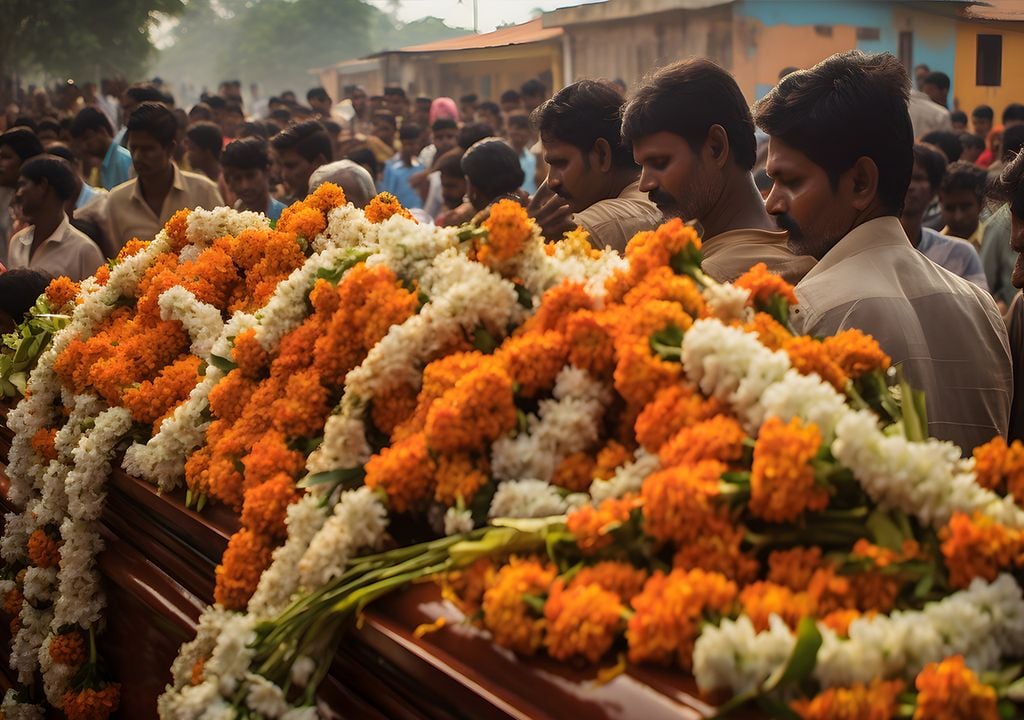
Yellow, a taboo color in Mexico for its association with death, shines in India with marigolds that guide souls during the Day of the Dead, signaling joy rather than sorrow. In Africa, vibrant red is used in Ghana to celebrate a life well lived, with colorful coffins. Islamic green represents paradise, appearing in turbans or flowers placed on graves.
These nuances show that mourning is not monochromatic; it is a cultural spectrum, revealing how we collectively process loss, like a global emotional thermometer.
Multicultural Roots: Beyond the West
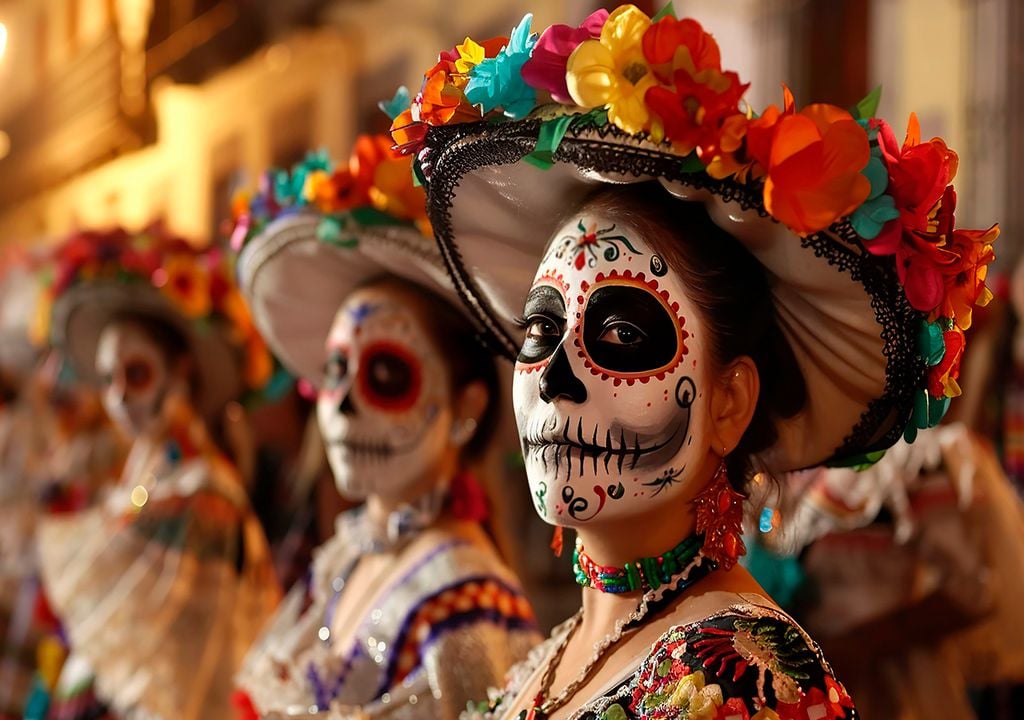
Although we often associate wreaths with European Christian traditions, floral symbolism is universal. In Mexico, during the Day of the Dead, orange marigolds guide souls with their scent, like beacons in the night. In China, weeping willows express sorrow through their drooping form, integrated into ancestral gardens.
In sub-Saharan Africa, palms are used for spiritual protection, and in India, floating lotuses signify purity in Hindu rites. These practices show that flowers transcend borders, adapting to local beliefs like a cultural chameleon.
In Greek mythology, Cyparissus wept so much over the death of his deer that the gods transformed him into a tree, so that his pain would be eternal and upright.
— Los Árboles Mágicos (by Oscar Gaitan) (@arboles_magicos) October 17, 2025
Since then, cypresses point to the sky: they are vegetal prayers.
But there is also science in their elegance.
Their crown pic.twitter.com/nHDnFBhnHD
Both floral symbolism in cemeteries and the colors of mourning highlight our human need for comfort in the face of loss, uniting generations. In a digital world, will we lose these tactile traditions? Will we forget these ancestral codes?
Their relevance lies in fostering empathy and sustainability by planting life over death. Ultimately, these choices invite us to honor the deceased with simple gestures, reminding us that the fleeting beauty of a flower and its color capture the eternal essence of remembrance.