
Climate Change Favors the Tiger Mosquito: Chikungunya Risk is Spreading as far as Central Europe
The Asian tiger mosquito is spreading across Europe – and with it, the Chikungunya virus. Central Europe is therefore becoming a potential transmission area for a disease that has until now been mainly confined to tropical and subtropical regions.
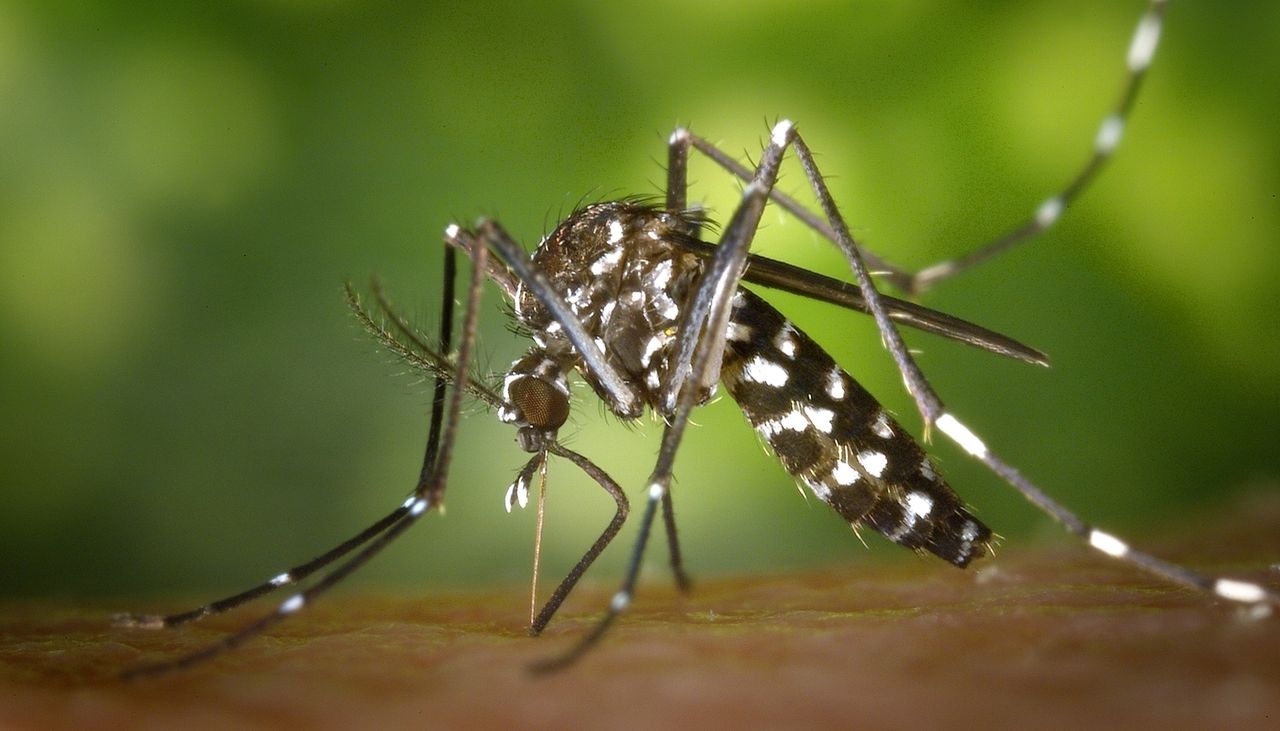
It is mosquito season once again. And warnings are already being issued about the dangerous tiger mosquito, which can transmit dengue fever and other tropical diseases – including the Chikungunya virus, which could become firmly established in Central Europe over the coming decades. This is the conclusion of a new study.
At the centre of the study is the Asian tiger mosquito (Aedes albopictus), whose range has been expanding for years. The species benefits both from rising temperatures and the increasing global movement of people and goods. It is now regularly detected across Europe, including in Germany.
Tiger mosquito is a key vector
Using climate models and distribution data for the main disease vectors, researchers examined how the virus could develop up to the year 2100. They found that the mosquito species Aedes aegypti and Aedes albopictus play a decisive role in determining where the virus occurs.
"In our study, the Asian tiger mosquito played a particularly important role and accounted for more than 70 per cent of the projected spread of the virus," said co-author Yang Wu from the Customs Technology Centre in Guangzhou. Together, the two mosquito species explain around 84 per cent of the global Chikungunya risk.
The resilience of the tiger mosquito significantly increases its ability to spread. Its eggs can survive temperatures as low as minus 10 degrees Celsius. This makes the species far better adapted to temperate climates than many other tropical mosquitoes.
Risk shifting northwards
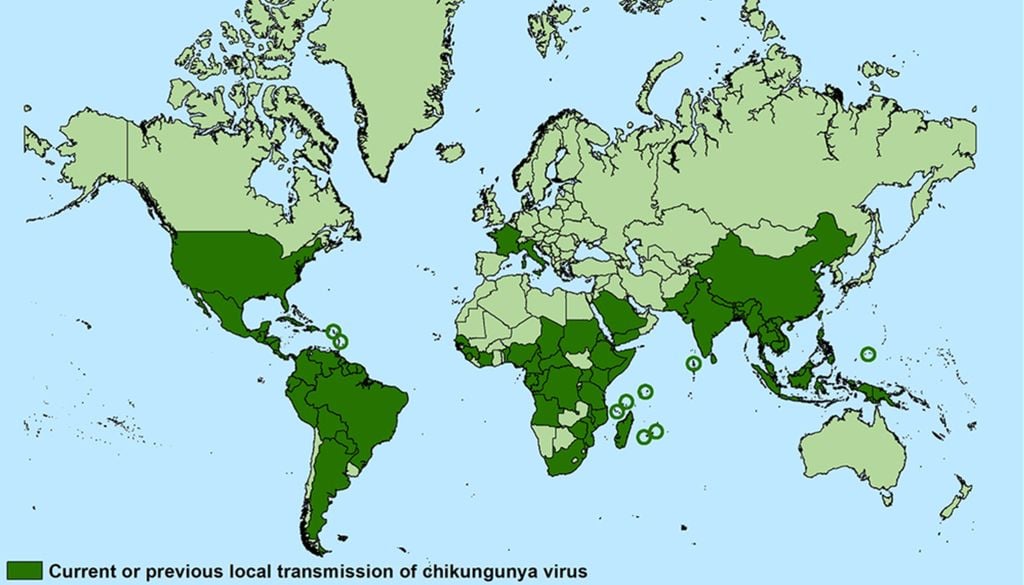
At present, 139 countries and regions are considered risk areas for the Chikungunya virus. This corresponds to more than 21 per cent of the world's land area.
"However, our climate models show that the virus will continue spreading northwards into temperate regions, particularly north-eastern North America, Central Europe and East Asia," said lead researcher Ye Xu from Zhejiang Chinese Medical University.
Scientists expect transmission risks to increase in parts of Central Europe as early as 2040. In the following decades, additional regions could become affected, including higher-altitude areas. Alongside Germany, the researchers identify the United Kingdom and Ireland as potentially affected countries.
"The public does not need to panic, but healthcare systems should prepare at an early stage," Xu emphasised. He recommends consistent monitoring of Aedes mosquitoes, training healthcare professionals, and strengthening mosquito-control measures. Emergency plans for potential outbreaks should also be developed.
In recent years, significant outbreaks have already occurred in Italy, France and Spain. Last summer, infections were also recorded just a few kilometres from the German border. However, transmission by locally established mosquitoes within Germany has not yet been documented.
Reference of the news:
Zhang, Q., Zhang, L., Ma, Y., et al. (2026): Predicting the global risk of chikungunya virus under climate change using ensemble species distribution models. Frontiers in Cellular and Infection Microbiology.