
The heatwave that affected Europe last June caused thousands of deaths
June 2026 was the hottest June ever recorded in Western Europe and the second hottest globally, according to data released by the European Copernicus Observatory.

During June, the heatwave that affected much of Europe pushed temperatures to record June levels in several countries, with some locations recording the highest daily maximum temperatures ever observed in long historical records.
The episode occurred just a few weeks after another period of intense heat in May and was followed by a further spell of exceptionally high temperatures at the beginning of July.
Extreme heat kills
According to the World Health Organisation (WHO), heat stress is one of the leading causes of weather-related deaths and can worsen underlying health conditions, including cardiovascular disease, diabetes, mental health disorders and asthma. It can also increase the risk of accidents and the transmission of certain infectious diseases. Heatstroke is a medical emergency with a high mortality rate.
Across every region of the world, the number of people exposed to extreme heat is increasing exponentially as a result of climate change.
Europe has experienced significant heat-related mortality during previous summers, most notably in 2003 and, more recently, in 2022 and 2024.
The June 2026 heatwave, the most extreme heat event ever recorded in Europe, had severe impacts on public health, with deaths linked to the exceptionally high temperatures.
It will still take several months before the true toll of Europe's worst-ever heatwave is officially confirmed. However, researchers are already able to estimate the number of deaths based on mortality observed during previous periods of extreme heat across Europe.
Christopher Callahan, from Indiana University (Paul H. O'Neill School of Public and Environmental Affairs), wrote an article based on a study published by his research team last year, presenting an estimate of the number of deaths caused by the June 2026 heatwave in Europe.
To produce this estimate, the scientists compiled temperature and mortality data from across Europe and established a relationship between high temperatures and excess mortality rates. They then used this relationship to infer how a heatwave of this magnitude would affect mortality across a region such as Europe.
The highest estimated death toll occurred in France, with 5,210 deaths, followed by Germany (4,543), Spain (3,163) and Italy (2,709).
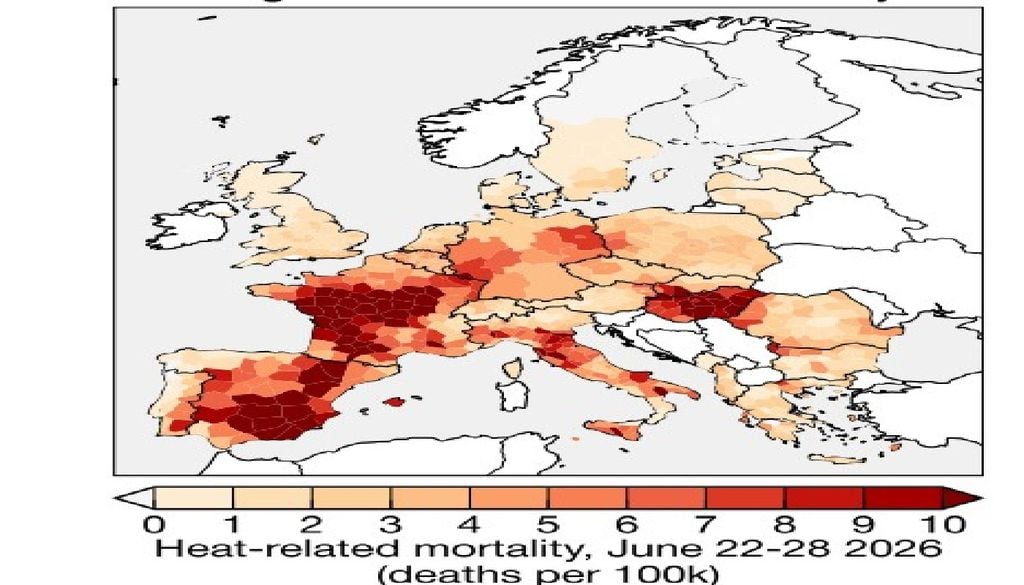
In Belgium, the heatwave, which lasted from 18 June to 1 July 2026, became the deadliest in the country's history, with average mortality increasing by 47.8%, resulting in an estimated 1,747 more deaths than would normally be expected at that time of year.
According to an emergency physician at a university hospital in Belgium, the situation during the peak weekend was so severe that excess mortality even exceeded that recorded during the worst weekend of the COVID-19 pandemic.
In Portugal, where the heatwave was felt most intensely at the beginning of July, the National Health Authority estimates that 125 deaths occurred as a result of the extreme heat.
Reducing the impact of heatwaves
Although these figures remain preliminary, Callahan warns of the urgent need for investment in adaptation measures to prevent similar impacts in the future.
The United Nations, through its various agencies, particularly the WHO, together with the health authorities of most countries, regularly publish self-protection and adaptation advice to help reduce the effects of heatwaves whenever meteorological services forecast periods of extreme temperatures.
Because the harmful health impacts of extreme heat are predictable and, to a large extent, preventable through targeted public health policies and cross-sector interventions, it is essential that advice on self-protection and adaptation measures is widely communicated to the public.
Several years ago, the WHO published guidance for public health institutions to help identify and manage the risks associated with extreme heat. Measures to tackle climate change, combined with comprehensive preparedness and effective risk management, can save lives both now and in the future, particularly when exposure factors linked to occupation and socioeconomic conditions are taken into account.
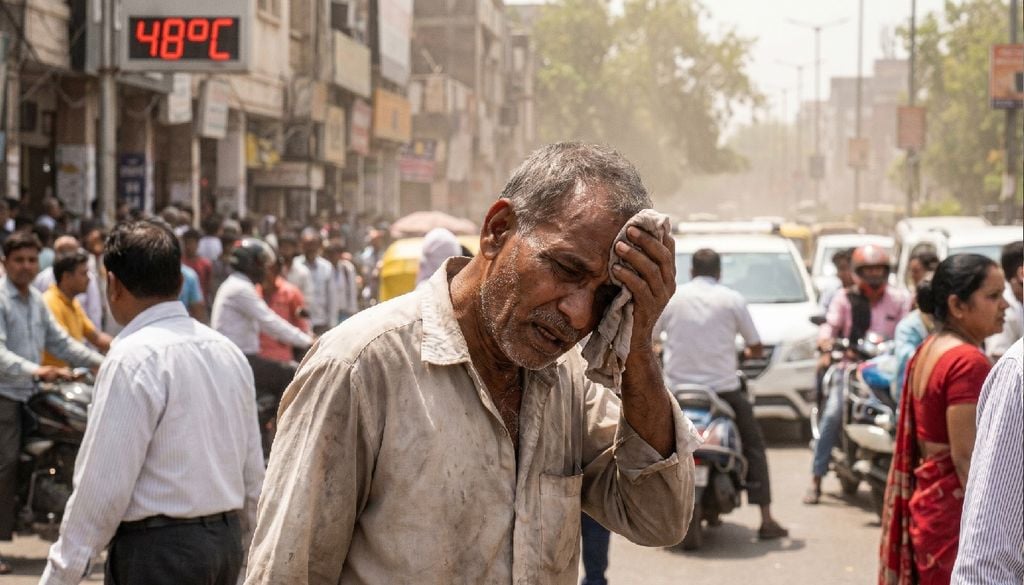
During periods of extreme heat, alongside other recommendations such as staying well hydrated, experts suggest making free drinking water compulsory at public events, ensuring access to cool or air-conditioned spaces within cities such as museums, strengthening protections for workers exposed to extreme heat by adjusting working hours where appropriate, and ensuring that local authorities or other relevant organisations make direct contact with vulnerable people.
Scientists warn that the message is clear: heat is now the deadliest weather-related hazard we face, and the majority of these deaths could be prevented because these events can now be forecast with considerable accuracy.
Although improvements have been made in public awareness, heat warnings and the installation of air conditioning systems, effective systems have still not been fully developed across healthcare, housing, social care and transport that can turn accurate forecasts into effective protection.
Governments, public authorities and society as a whole must always bear in mind that the priority is to prevent further loss of life as the planet continues to warm and extreme heat becomes increasingly severe.
News reference
Callahan, C.. (2026). Death toll exceeds 20,000 across Europe in June 2026 heat wave.