
The Mice Practice First Aid With Their Friends!
Mice are aware of pain and can even feel empathy. This allows them to provide first aid to their fellow mice in pain.
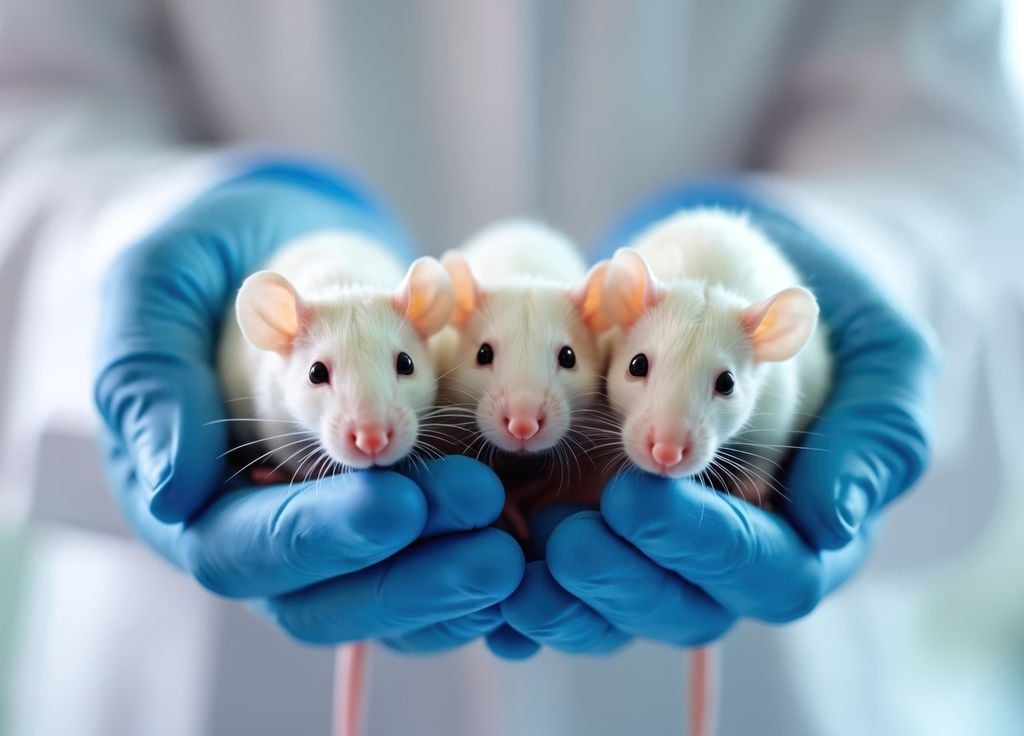
Mice demonstrate empathy and are even capable of helping their companions by providing care. This was shown by a team of researchers at the University of California, USA. According to their study, this behavior originates from neural signals.
As a last resort, healthy mice stick out their tongues at sick individuals in an attempt to save them.
Mice do not abandon weakened members of their nest. They will do everything possible to save their unconscious companions. To understand the origin of this phenomenon, American scientists carried out observations.
Grooming to Wake Mice
To understand this behavior, the researchers sedated some mice before returning them to the nest with healthy, conscious mice. The latter immediately went to check on their unconscious companions. They then began grooming the sleeping mice, focusing on the face and mouth.
The next time youre on 4Chan and you see another horrendous video of Chinese people callously leaving a child to die in the street, just remember that mice exhibit paramedic-like behaviours to their unresponsive friends to try and wake them up. pic.twitter.com/v9q4yuyfMY
— RAW EGG NATIONALIST (@Babygravy9) February 25, 2025
While the unconscious individual does not wake up, the mice (both males and females) groom them more intensely. However, they do not show this behavior with other healthy family members. Another surprising fact: even in darkness, healthy mice look for sedated individuals to give them attention. Therefore, this behavior is not related to the sense of sight.
In addition, perfectly healthy rodents, after grooming the sedated mouse, maintain more intense physical contact and even, as a last resort, stick out their tongues at the sick animal. In fact, this position, similar to the lateral recovery position (LRP) in humans, allows airway dilation and prevents suffocation during regurgitation.
Brain Analysis
To better understand this phenomenon, scientists analyzed the brains of the rodents—specifically the amygdala—using imaging techniques. This empathy in mice stems from several brain activations. Experts have discovered that amygdala neurons can differentiate between conscious and unconscious subjects.
MICE GIVE FIRST AID TO UNCONSCIOUS FRIEND
— Mario Nawfal (@MarioNawfal) February 26, 2025
Scientists observed mice responding to distress by staying close, mirroring social behaviors seen in higher mammals.
Researchers believe this could provide insights into the neurological basis of caregiving in mammals, including pic.twitter.com/hC2diBGICu
How does this discovery advance science? This study allows us to better understand the brain, and particularly the neural network of mice. This is especially important because these rodents are commonly used to study social behaviors that can be applied to humans.
This behavior is not exclusive to mice. Other animals can also show empathy and care for their peers in difficult situations. This is the case with certain large-brained mammals, such as dolphins and elephants.
News References
Lola Breton, Géo, (02/25/2025), Comme nous, les souris savent détecter leurs congénères inconscientes et s’en occuper
L'édition du soir, Ouest-France, (02/25/2025), “Altruistes”: these mice try to revive their unconscious companions and prove their empathy