
Cities and our surroundings influence our nervous system, mental health, and overall wellbeing
Architecture is not neutral. A city must not only look good and serve its function, but its design must align with human biology to become a healthy and sustainable environment over time.
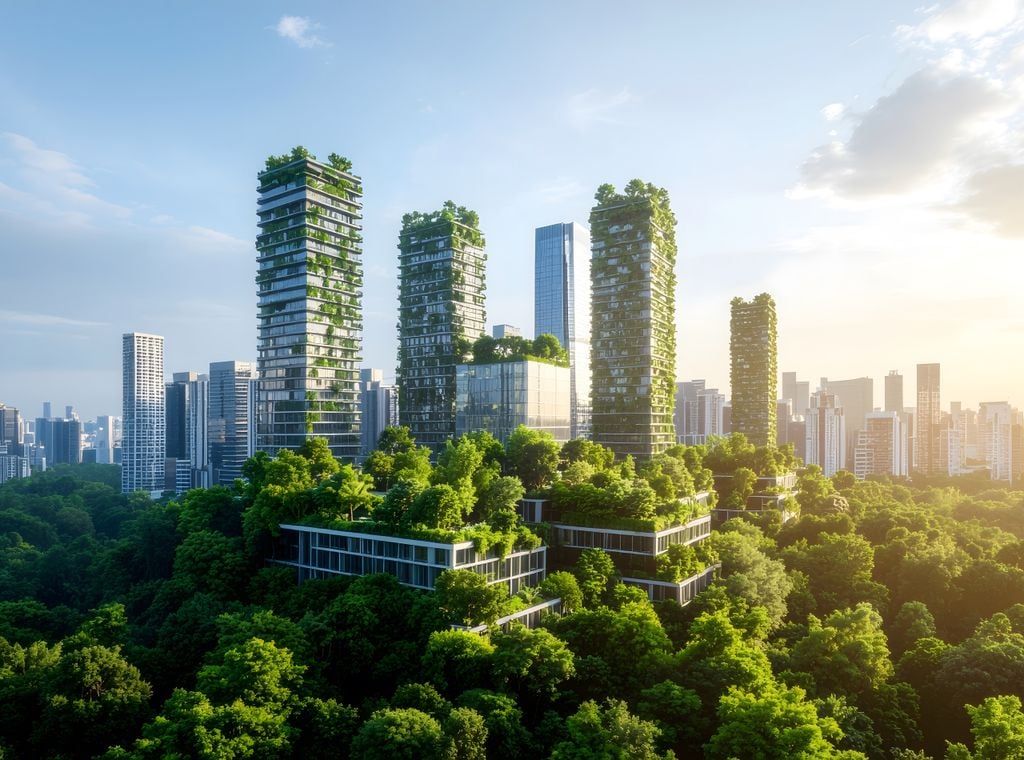
Above regulations, aesthetics, or profitability, architecture has a deeper responsibility: to safeguard human biology. This is the principle of neuroarchitecture, which highlights that for decades we have been designing buildings, spaces, and cities without considering the nervous system of the people inhabiting them.
What is neuroarchitecture?
Neuroarchitecture studies how the design of our surroundings impacts the brain, emotions, and human behaviour, using scientific evidence to improve wellbeing. It aims to create spaces that reduce stress, enhance creativity, and support health, optimising lighting, materials, and forms.
The field was initiated in the 1960s by biologist Jonas Salk and architect Louis Kahn, but it was formalised in 2003 with the creation of the Academy of Neuroscience for Architecture (ANFA).
Key elements include natural light, which regulates circadian rhythms, sleep, mood, and hormone balance; nature through biophilic design, which reduces stress and increases calm; as well as forms, heights, and colours, all of which affect mood.
It also employs tools such as virtual reality, heart-rate biofeedback, and machine learning to measure reactions in real time. Neuroarchitecture is not just about aesthetics; it is a data-driven methodology to humanise spaces.
What does neuroscience tell us?
Harvard University’s longest-running study on happiness shows that the biggest predictor of health and wellbeing is not money or professional success but the quality of our social relationships, because humans are fundamentally relational.
Neuroscience has shown that when an environment is perceived as threatening, the nervous system enters a state of alert, which suppresses the circuits for social bonding. This is a biological survival mechanism: without safety, there is no connection, and without connection, there is no wellbeing.
Although the systematic application of neuroarchitecture is still emerging, the scientific basis is solid. Since the 1980s, research has explored how light affects biological rhythms, spatial orientation, and environmental perception.
Many modern cities are seeking to renaturalise urban areas to combat pollution, improve climate resilience, and enhance citizen wellbeing. Designing spaces that regulate the nervous system can reduce healthcare costs, improve social cohesion, increase productivity, and boost collective wellbeing.
Green Cities versus Smart Cities
Green urbanism focuses on creating eco-friendly cities by reducing waste and emissions, promoting green spaces, using sustainable building materials, and supporting electric mobility.
By contrast, a smart city integrates digital technologies into its networks, services, and infrastructure to improve efficiency and livability for residents and businesses.
A common and critical factor in modern cities is sound. Chronic noise keeps the nervous system in a sustained state of alert. For this reason, the World Health Organization considers it one of the main environmental health risks in Europe, linked to stress, sleep disturbances, and cardiovascular diseases.
Among architectural elements with the greatest psychological impact are those that connect us to nature, especially natural sunlight, and lastly, air quality. According to the WHO, the “sick building syndrome” affects up to 30% of constructions, with poor indoor air quality impacting health.
Cities designed for living
By 2050, nearly 70% of the global population is expected to live in cities. If future cities do not integrate nature, active mobility, social spaces, and quiet refuges, they will foster social disconnection and chronic stress.
The cities of the future should not prioritise automation over human needs. They must respect human physiology and the environment, recognising that the body remains fundamentally biological and nature is the foundation for sustainability.
Design does more than build spaces; it shapes emotions. Neuroarchitecture is not a luxury or a trend. It is a biological and environmental necessity and a tool for social change. By designing in harmony with human biology and environmental principles, we improve not only buildings but our quality of life.