
Experts confirm it: “AI still struggles to predict the true intensity of hurricanes”
Artificial intelligence has revolutionized weather forecasting in just a few years, and AI-based global weather models can now produce forecasts that rival some of the world’s best physics-based prediction systems.
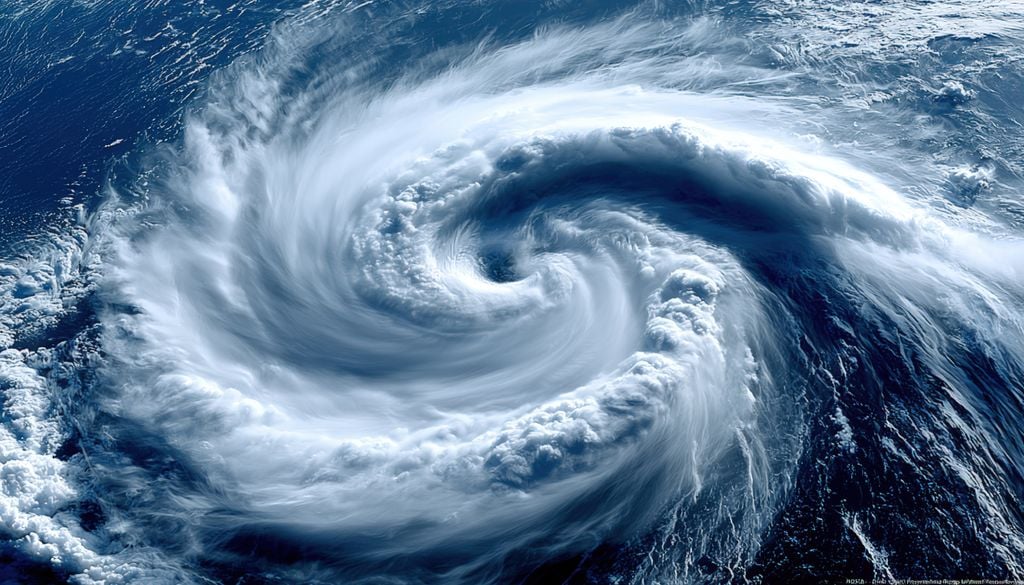
Progress in AI-based weather forecasting is driven by three factors: the availability of vast amounts of weather data, major advances in AI models, and unprecedented computing power. Much of the debate focuses on improving AI for weather forecasting through new models or hardware, but data are crucial for these models.
Artificial intelligence has benefited on a global scale from decades of weather records covering the entire planet. These datasets contain millions of examples of how conditions evolve over time and under different atmospheric situations, allowing AI models to learn patterns in a way that would have been impossible just a decade ago.
The regional scale of weather forecasting
The world has experienced the rapid intensification of a large number of hurricanes, which have gone from relatively weak storms to destructive hurricanes in a matter of hours. One example is Hurricane Polo, which rapidly intensified from a tropical storm to a Category 5 hurricane in 24 hours off Mexico's Pacific coast on September 21, with winds of 290 km/h.
Global weather forecasts are not uniform. However, hurricane intensity forecasting is generally considered a regional prediction problem, associated with extreme events such as torrential rainfall, severe thunderstorms, and squalls.
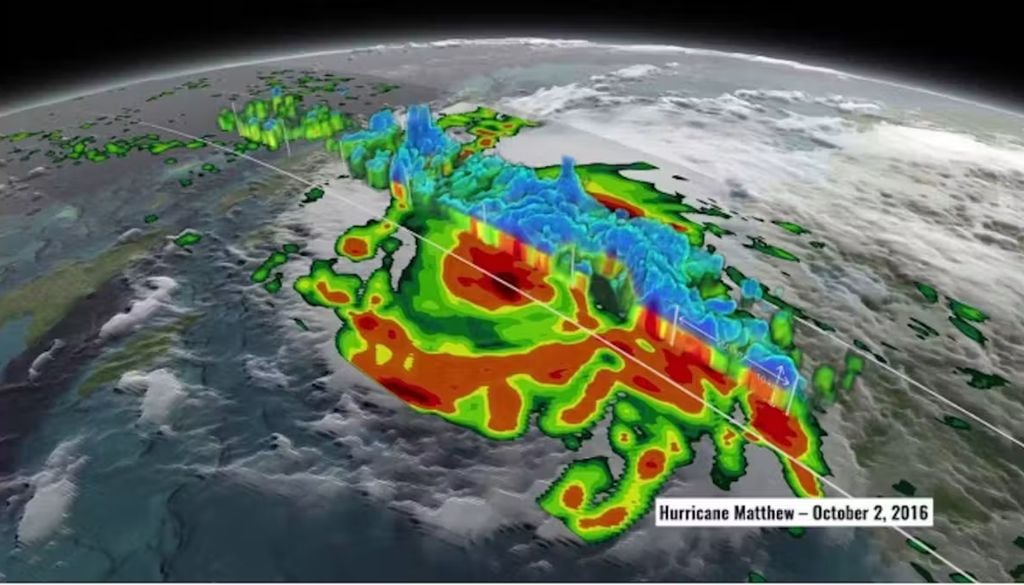
These extreme events often develop very quickly or move rapidly over short periods of time. The challenge is capturing this behavior with AI models because detecting these patterns requires data with far greater detail than current global datasets typically provide.
Two data sources
AI forecasts are primarily based on two sources of information:
- Observations: direct and detailed, but they are often limited to coastal regions and are unevenly distributed, while many of the most important stages of hurricane development occur over the open ocean, where observations are scarce. Modern satellites can help fill some of these observational gaps, but they cannot simultaneously scan the complete three-dimensional structure of every hurricane on the planet.
- Weather model simulations: they combine atmospheric conditions and knowledge of physics to provide the most complete high-resolution, three-dimensional picture of the atmosphere. These simulated data are not perfect either, because all computer models contain approximations and uncertainties stemming from our incomplete understanding of Earth's atmosphere, and there are small-scale processes that model simulations cannot capture.
As a result, there is currently no complete, high-quality three-dimensional dataset available to train an AI model to predict hurricane intensity.
An additional problem: chaos
Even if scientists could someday measure an entire storm every second across thousands of storms worldwide, AI might still be unable to predict hurricane intensity with complete accuracy. The reason is chaos, in which small differences in a hurricane's initial state can grow rapidly over time.
A hurricane can intensify over warm ocean water, while wind shear can slow its development. As ocean temperatures rise, a hurricane's potential intensity also increases, and any small disturbance can cause fluctuations in hurricane intensity. The warmer the ocean surface, the greater those fluctuations can become.
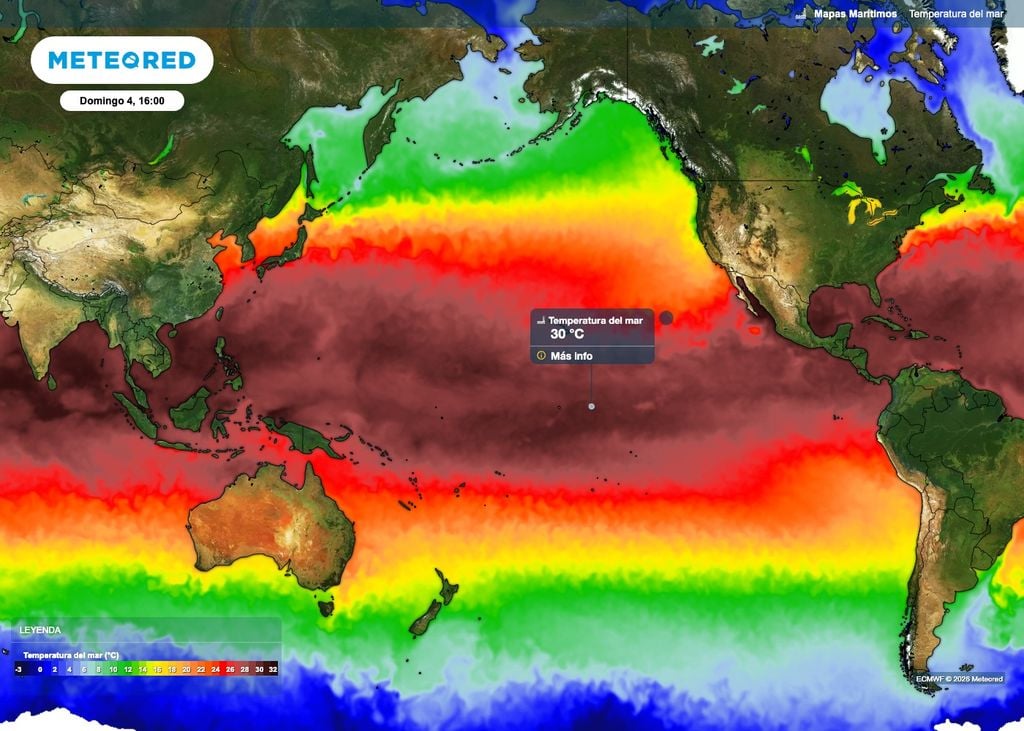
These fluctuations are not simply random. They occur within what is known as a chaotic attractor: a set of possible storm states within which a hurricane can evolve unpredictably, creating a fundamental dilemma for training AI models.
Goals of AI models
Scientists want AI models to produce forecasts that are as accurate as possible, so the goal during training is to minimize the difference between the forecast and what actually happens until the AI model achieves the lowest possible error.
Researchers also want AI models to capture the hurricane's intrinsic chaos. However, if an AI model can capture this chaos, its error cannot be reduced indefinitely.
Furthermore, because data always contain some degree of uncertainty, the rules an AI model learns are only approximate. As a result, the accuracy of hurricane intensity forecasts will deteriorate within just a few days.
How can hurricane forecasts be improved?
The challenge for AI models is not limited to obtaining more data, developing better neural networks, or implementing faster computers. It also involves understanding hurricane behavior and how variability in hurricane intensity arises.
Both factors determine whether AI models can learn what is predictable and what is unpredictable. This distinction is limiting the accuracy of current hurricane intensity forecasts and will shape the next generation of weather forecasting and evaluation systems, which should focus on a range of possible hurricane intensities and their probabilities of occurrence rather than a single numerical value.