
Human activity has caused the retreat of Antarctica's fastest-melting glacier
The first study to directly attribute the retreat of Antarctic glaciers to climate change shows that Pine Island Glacier has been pushed significantly further inland by human-induced global warming.
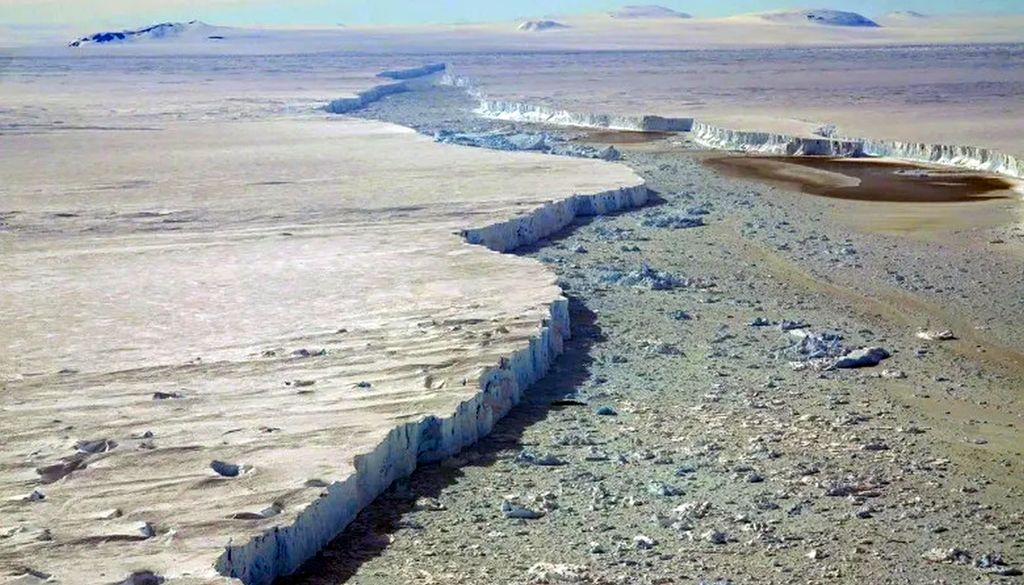
Human-caused climate change has significantly accelerated the retreat of one of Antarctica's most important glaciers during the 20th century.
Pine Island Glacier, which drains a large part of the West Antarctic Ice Sheet into the Amundsen Sea, is one of the biggest contributors to global sea level rise.
This pioneering study, led by scientists from King's College London and the British Antarctic Survey and published in The Cryosphere, is the first to directly attribute changes in a major Antarctic outlet glacier to human activity.
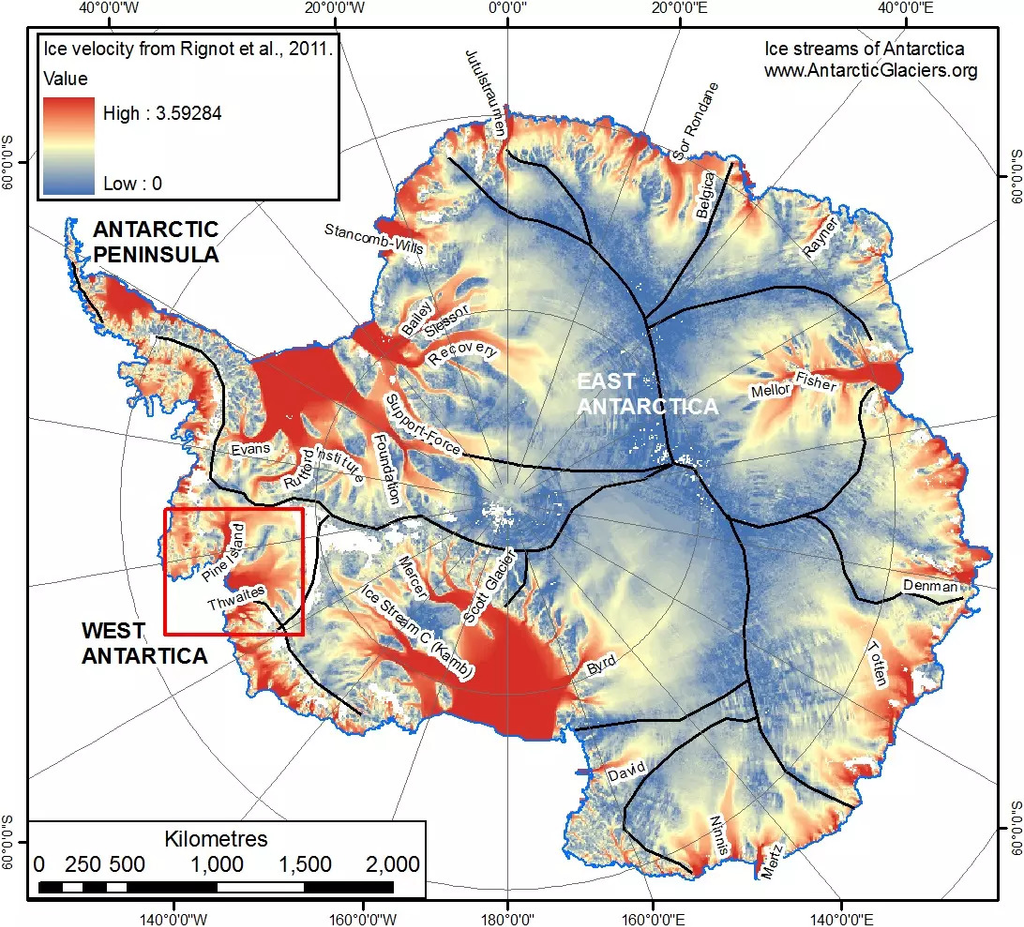
The authors of the study also warn that the impact of human activity will continue to shape Antarctic ice loss for centuries to come.
An unstoppable glacier retreat
The research reveals that greenhouse gas emissions have increased the retreat of Pine Island Glacier by between 18% and 20% since the 1940s. This has added several kilometres to its inland retreat.
Lead author Dr Alex Bradley, from the Department of Geography, says it is highly unlikely that the scale of retreat observed during the industrial era would have occurred without human influence.
"Our results show that climate change significantly worsened the retreat of Pine Island Glacier," said Dr Bradley, the study's lead author. "Without the sustained warming of the surrounding ocean since the mid-20th century, the glacier would not have retreated as far."
While attribution studies have previously linked the retreat of mountain glaciers to human-caused global warming, applying similar techniques to Antarctic glaciers has proved far more challenging.
"This type of work has become common for heatwaves and floods, and increasingly for mountain glaciers," said Dr Bradley. "What is new here is demonstrating, quantitatively, how human influence has altered the course of a major Antarctic glacier."
"Our findings add to the growing body of evidence that human-caused climate change is probably affecting even the most remote regions of the planet. Changes in Antarctica have global consequences, particularly for sea level rise, highlighting the far-reaching impacts of a warming world."
— Mira Adhikari, ice sheet modeller at the British Antarctic Survey.
Geological records indicate that Pine Island Glacier began retreating rapidly during the 1940s, probably due to stronger intrusions of warm ocean water beneath its floating ice shelf. This study shows that human-induced ocean warming, believed to have begun in the 1960s, accelerated that retreat even further.
Using a model that simulates glacier behaviour by matching observed changes in ice thickness and glacier retreat, the researchers compared scenarios with and without human-induced global warming.
By 2015, simulations excluding human influence showed that the glacier's grounding line had retreated around 4 km less. That difference represents just under one-fifth of the glacier's observed retreat.
Looking ahead, the models suggest that Pine Island Glacier could stabilise briefly towards the end of this century when it reaches a ridge in the underlying bedrock. However, this pause is likely to be temporary if global warming continues, with human influence once again becoming the dominant driver of retreat during the 22nd century.
"Ice sheets respond slowly," said Dr Bradley. "The impacts of today's emissions will continue to shape Antarctic ice loss for centuries."
Source: King´s College London
News reference
Alexander T. Bradley, et al. Detection and attribution of the role of anthropogenic climate change in industrial-era retreat of Pine Island Glacier. The Cryosphere.