
International study challenges whether global warming increases forests' ability to absorb CO₂
Global warming is lengthening the growing season of forests, a phenomenon that was thought to strengthen their role as carbon sinks, but a scientific study casts doubt on this and other assumptions.
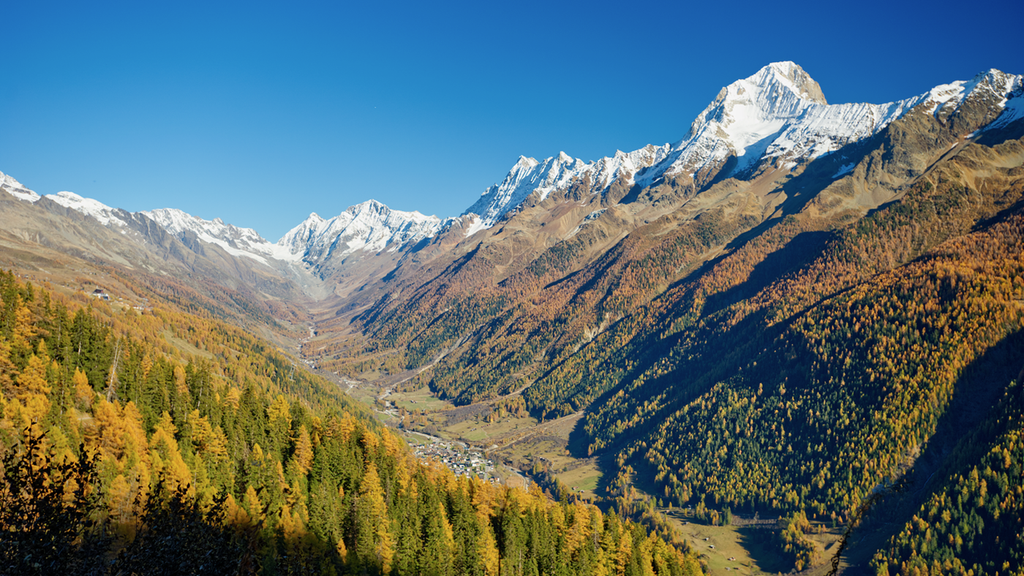
Global warming is lengthening the growing season of forests, a phenomenon that was thought to strengthen their role as carbon sinks. However, international research involving the Zaidín Experimental Station (EEZ-CSIC) and the Pyrenean Institute of Ecology (IPE-CSIC) concludes that the growth rate of conifers has a greater influence on wood production than the length of the growing season, and that drought associated with climate change can offset or even reverse this potential benefit for absorbing carbon dioxide (CO₂). Thus, the study, published in Science, challenges one of the most widespread assumptions about the role of forests as CO₂ sinks in a changing climate.
Forests play a key role in tackling climate change because trees capture carbon dioxide (CO₂) from the atmosphere and store it for years or even centuries in their wood. As temperatures rise, the growing season of trees becomes longer, allowing them to produce more wood, the main reservoir for the CO₂ they capture from the atmosphere. This has led to the belief that forests could absorb even more carbon in the future. However, the reality is more complex.
In fact, this study, which analysed how wood forms in conifers across more than one hundred forests, from boreal regions to semi-arid areas, reveals that it is not enough for trees to have more time to grow. What really determines how much they grow and how much carbon they store is the rate at which they produce new wood cells.
Contrary to what was previously thought, the results show that, although warming lengthens the growing season, this effect can be offset by increasingly dry conditions. They also found that wood production only increases with temperature up to a certain point. Beyond that point, a lack of water slows tree growth and reduces their ability to fix CO₂. Therefore, this study, led by Antoine Cabon of the Zaidín Experimental Station (EEZ-CSIC) and the Swiss Federal Research Institute for Forest, Snow and Landscape Research (WSL), suggests that the positive effects of a longer growing season could be offset, or even disappear, if rising temperatures are accompanied by increasing aridity.
A unique dataset
This conclusion stems from the analysis of more than 50,000 wood samples collected from conifer forests across four continents. Although warmer temperatures extend the period during which trees form wood cells, this does not always mean greater production throughout the year, as the findings of this study show.
“Compiling this unique dataset was a prolonged collaborative effort. Researchers from each participating institute regularly collected wood samples throughout several growing seasons. Back in the laboratory, each sample was processed, photographed under a microscope and analysed cell by cell,” says Antoine Cabon.
The researchers monitored the formation of new wood cells in the outermost growth rings of trees, a process known as xylogenesis. “By examining the samples under a microscope, we can see precisely when trees are actively forming wood, determine when this process begins and ends, and measure the rate at which they produce new wood cells,” Cabon explains.
Among the forests included in the study is the Lötschental valley in Switzerland, where wood samples have been collected weekly throughout the growing season for the past 20 years. “These frequent, long-term observations are extremely rare and valuable. By following the same trees over many years, we can reconstruct how wood formation responds to changing environmental conditions,” says Patrick Fonti, a dendrochronologist at the Swiss Federal Research Institute for Forest, Snow and Landscape Research, who coordinated the weekly monitoring.
The six-degree threshold
The researchers found that the rate at which trees produce new wood cells has a greater influence on annual growth than the length of the period during which these cells are formed. Temperature affected the two factors differently: although warmer conditions tended to lengthen the growing season, the rate of cell production did not continue increasing indefinitely. In fact, above an average annual temperature of around 6°C, the production of wood cells began to decline, probably because of reduced water availability. This shows that having more time to grow does not always translate into greater annual wood production when water is scarce.
This finding helps explain why lengthening the growing season does not have the same consequences in all forests. In forests where low temperatures limit growth, such as boreal forests, trees can grow for longer and at a faster rate as a result of global warming.
By contrast, in temperate and Mediterranean forests, rising temperatures and lower water availability reduce the potential benefit of a longer growing season, and the production of new wood cells slows down.
Forests in a warmer future
“If warming continues, even boreal forests could experience slower wood formation and lose the benefits of a longer growing season. Our results show the importance of considering not only the duration of wood formation, but also how quickly it occurs, when predicting how forests will respond to global warming,” predicts Cabon, who is currently carrying out his research at the Zaidín Experimental Station under a Ramón y Cajal programme contract.
In this way, the findings from this international study challenge the expectation that longer growing seasons will necessarily improve carbon storage in forests and, therefore, help mitigate climate change. “Although carbon storage depends on more than xylem cells, slower wood formation ultimately reduces the ability of forests to act as carbon sinks,” concludes Patrick Fonti.
Source: CSIC Andalucía
News reference
Cabon, A; Fonti, P, et al. Growth rate overrides the Benefit of extended growing season from boreal to semiarid conifers. Science.