
Okavango, the river that dies in the desert to give life to Africa
The Okavango River is a river that vanishes into the Kalahari Desert after an extraordinary journey through Angola, creating an inland delta that is crucial for biodiversity and one of the most extraordinary ecosystems in Africa.
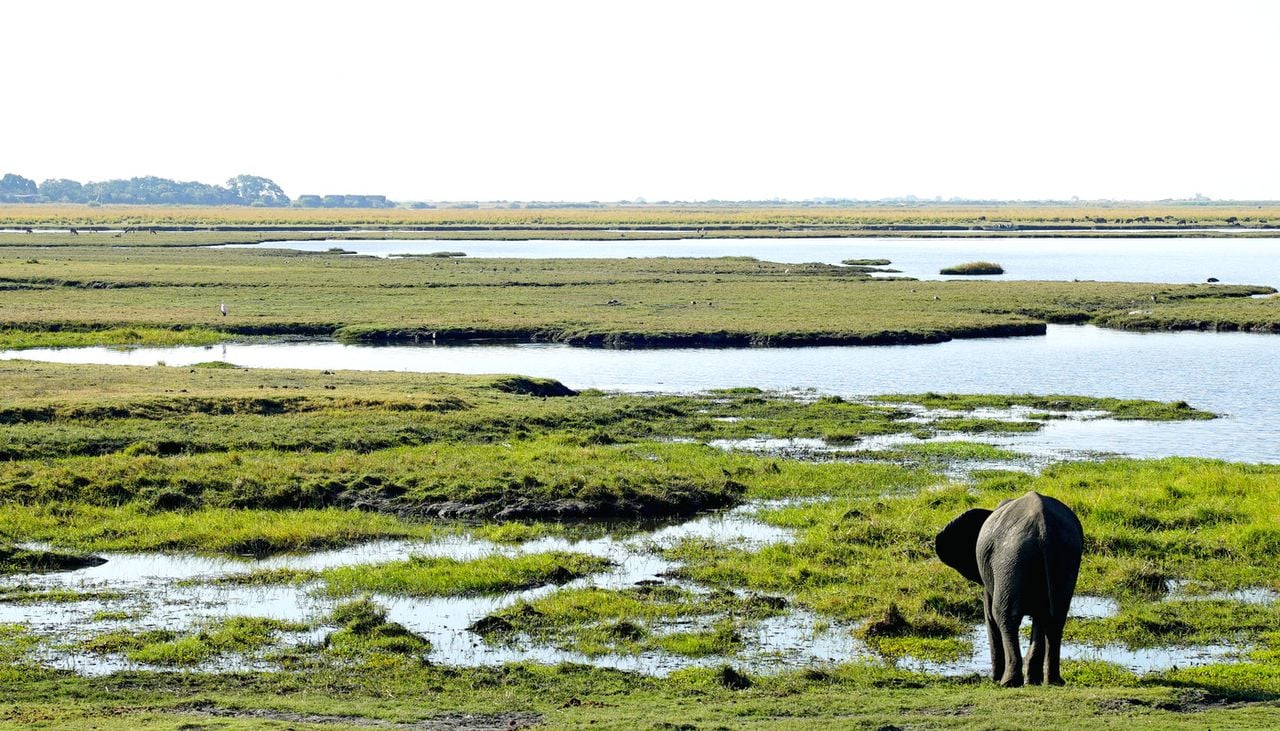
On most maps, rivers follow a clear logic: they have a source, grow as they flow, and eventually reach the sea. The Okavango River does not. This major river system in southern Africa fades away in the middle of the desert, never reaching the ocean.
What is remarkable is that in its "disappearance" it creates one of the richest and most complex ecosystems on the planet: an inland delta that sustains life in one of the driest regions in the world.
From an extremely wet environment to a desert landscape
The Okavango's journey begins in the wetlands of western Angola, where abundant rainfall feeds a network of rivers that slowly flow southwards.
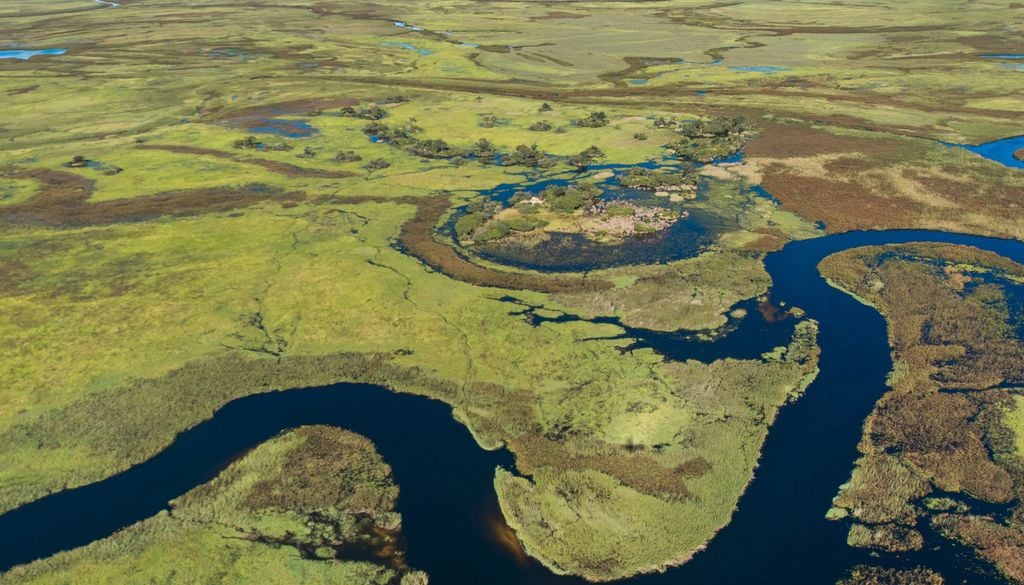
One of its main channels, the Okavango River, winds through the highlands before entering increasingly arid territory. It is a long, quiet and decisive journey, as it moves from a very wet environment into a desert landscape.
Extreme fieldwork: paddling to understand the river
For more than a decade, highly skilled teams have travelled through the Okavango system from within, using small traditional boats known as mekoro.
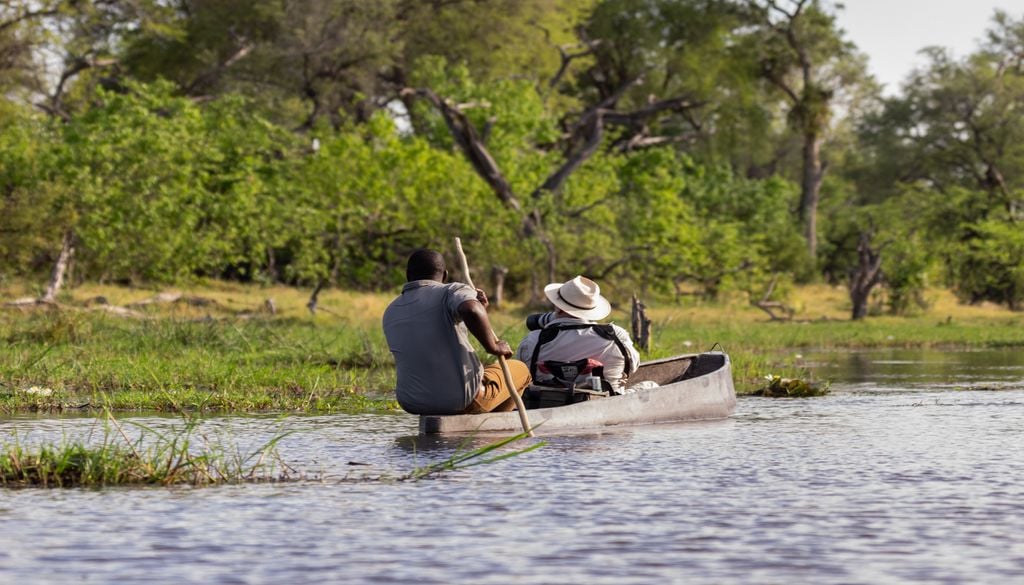
This type of exploration, driven by the Okavango Wilderness Project, has made it possible to document areas of the river that remained virtually unexplored until recently, where access was almost impossible.
During these expeditions, fieldwork has combined science, physical endurance and direct observation, revealing how small changes in the landscape can alter the entire river system downstream.
The miracle lies in the formation of an inland delta
As it continues its journey, the Okavango enters Botswana, and this is where something extraordinary happens: instead of continuing towards the sea, the water spreads out into a vast network of channels, lagoons and islands that form the famous Okavango inland delta.
This formation is not permanent, as it changes with the seasons, expanding during flood periods and shrinking during the dry season, with distinct periods of low flow.
An ecosystem that pulses with water
In essence, the delta functions almost entirely as a pulsating system. Every year, floods revitalise its surface and trigger a biological explosion, with plants, insects, fish and large mammals all depending directly on this hydrological rhythm and variability.
Elephants, hippos, buffaloes and predators such as lions and leopards use the delta as a feeding ground and refuge, while migratory birds make the most of one of the most important wetlands on the African continent.
Good morning! Web of water in the desert. The Okavango River (Rio Cubango in Angola) empties into the land's lowest point, but it's not the ocean like other rivers but Botswana's desert. A delta of water fans (seen here from space) creating a rich habitat for thousands of species pic.twitter.com/g8Oh7FhXXe
James Hall (@hallaboutafrica) March 9, 2022
Most remarkable of all is that this cycle does not depend solely on local rainfall, but on precipitation that fell months earlier in Angola, turning the system into a kind of "hydrological memory" of the landscape.