
Stellar collapse could be the secret to where many samples of gold, silver and heavy elements in the galaxy come from.

Stellar collapse could be the secret to where many samples of gold, silver and heavy elements in the galaxy come from.
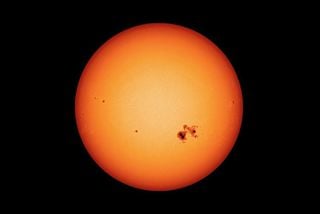
A giant sunspot has appeared on our star and is pointing toward Earth. Astronomers are constantly monitoring it because it could significantly disrupt our planet.
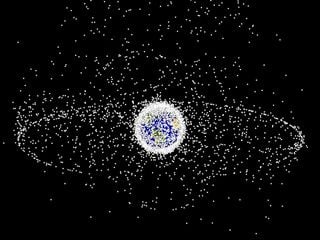
The entry angle of fireballs and space debris affects the accuracy of infrasound analysis. Understanding this geometry is vital to improving planetary defense and orbital management.

The observation of a high-speed gas cloud indicates the presence of a possible dark galaxy in the vicinity of the Milky Way.
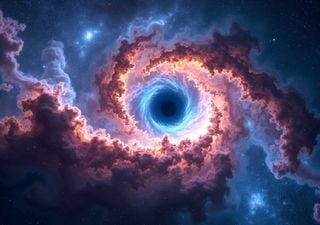
Massive stars, those weighing between 10 and 100 times the mass of our Sun, are the universe's heavyweights, playing pivotal roles in shaping galaxies and influencing cosmic evolution.
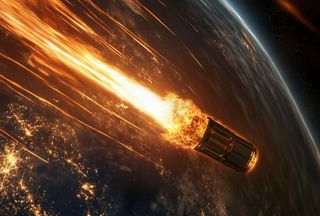
After more than 50 years, a Soviet satellite is about to re-enter Earth's atmosphere. The impact is expected in the coming days, between this Friday and Sunday, at a still unknown point on our planet.
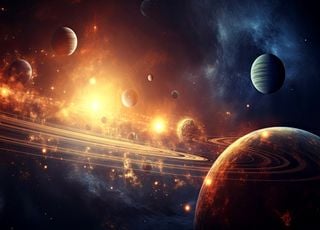
Regardless of their size, composition, or position in the Universe, all planets adopt a spherical shape, a phenomenon that can be explained "simply" by physics.
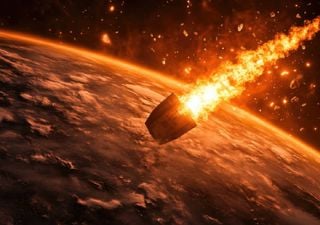
Soviet-era spacecraft Kosmos 482 is expected to make an uncontrolled reentry after 50 years in orbit, with its exact landing time and location still unknown.

In Hawaii, twice a year, the sun aligns perfectly with the vertical line. At that precise moment, objects cast no shadows.
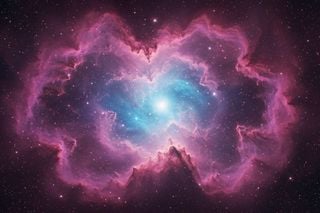
New observations from the James Webb Space Telescope have shed light on the darkness of the early Universe, showing how the first stars and galaxies emerged from the Dark Ages.
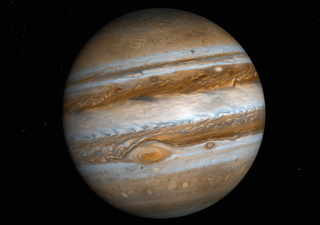
We discover the chaotic atmosphere of the gas giant Jupiter, the most extreme planet in our solar system with giant lightning strikes and balls of ice and ammonia called mushballs.
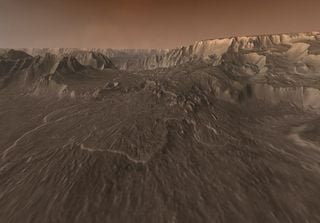
The Martian canyons and valleys, so similar to those on Earth, were formed by the erosion of rivers fed by rain and snow, rather than by the melting of the polar ice caps, a recent study reveals.