
Could giant magnets protect astronauts from solar storms?
A new study proposes using permanent magnets as a partial shield against space radiation. While they would not replace current technologies, they could become a key tool for protecting astronauts on future deep-space missions.
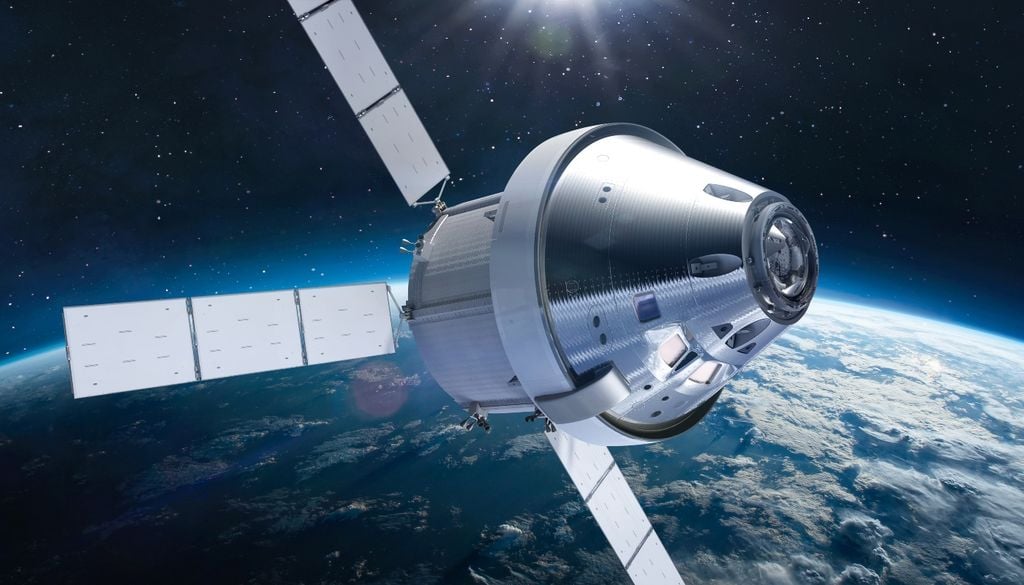
Sending astronauts to Mars or even more distant destinations means solving a challenge that is as complex as it is unavoidable: long-term exposure to space radiation. Beyond Earth, where the planet's magnetic field and atmosphere provide natural protection, humans are exposed to a hostile environment capable of damaging the nervous system, increasing cancer risk, and accelerating the deterioration of various body tissues.
For years, engineers have evaluated different strategies to reduce that risk. One of the most common approaches is surrounding the spacecraft with materials capable of absorbing part of the radiation, such as aluminum, polyethylene, or even water. However, this solution has one obvious drawback: the enormous additional weight that must be launched into space, significantly increasing the cost of any mission.
Another alternative that has attracted considerable interest is the use of superconducting magnets, capable of generating a powerful magnetic field around the spacecraft to deflect charged particles. However, these systems require a constant power supply and complex cryogenic cooling mechanisms. A failure in any of these components could leave the crew completely unprotected.
Betting on permanent magnets
To overcome these limitations, a group of researchers from Italy and Germany has proposed a middle-ground solution: using permanent magnets to generate a magnetic shield without consuming electricity.
The study, published as a preprint on arXiv, examines whether an array of neodymium-iron-boron (NdFeB) magnets, widely used for their strong magnetic properties, could deflect some of the charged particles released during a solar storm, one of the greatest hazards for crewed space missions.
To test the idea, the researchers developed a theoretical model consisting of an array of 1,482 cubic magnets, each measuring just 3 centimeters (1.2 inches) on each side. The entire assembly covered an area of about one square meter and weighed less than 300 kilograms (660 pounds), considerably lighter than an equivalent passive radiation shield.
Promising results, but with important limitations
The simulations showed that the system successfully deflected about 20% of solar particles with energies between 0.1 and 10 MeV. While this may seem like a modest percentage, it represents a significant reduction in lower-energy radiation—the type that permanent magnets were most effective at deflecting.
In practice, the shield acts like a filter. Lower-energy particles change direction as they pass through the magnetic field, while higher-energy protons pass through almost unaffected.
This behavior makes it clear that the technology is not a complete solution, but rather a potential complement within a broader radiation protection system.
Galactic cosmic radiation remains the biggest challenge
The main drawback is that this type of shield is virtually ineffective against galactic cosmic rays, one of the most dangerous components of the space environment.
The researchers also warn of another possible side effect. When high-energy protons strike the magnets directly, they may produce secondary radiation such as neutrons or gamma rays. Under certain conditions, this phenomenon could locally increase radiation exposure instead of reducing it.
There is also another concern: permanent magnets gradually lose part of their magnetization over time. This degradation would steadily reduce the system's protective capability during long-duration missions.
Another piece of the puzzle for protecting future astronauts
Despite these limitations, the authors believe the concept deserves further investigation. Rather than replacing existing technologies, permanent magnets could become part of a hybrid system that combines physical shielding, superconducting magnetic fields, and this new type of passive protection.
The next step will involve much more sophisticated Monte Carlo simulations to evaluate how the system would perform in a realistic space environment, where particles arrive from multiple directions and across a wide range of energies.
There is still a long way to go before a spacecraft bound for Mars carries a shield like this. Even so, any technology capable of reducing astronauts' radiation exposure—even partially—could prove critical in making future crewed missions into deep space a reality.
Reference
Parisi, V., et al. (2026). A First-Order Assessment of Permanent Magnet Deflection for Space Radiation Protection.