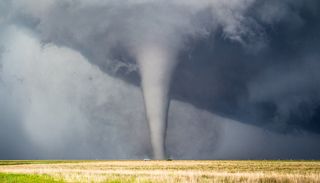
A team of scientists in the United States will study how turbulence in the lower layers of the atmosphere influences tornado formation. The aim is to identify which storms have the greatest potential to produce tornadoes and improve warnings.

With a degree in Atmospheric Sciences from the University of Buenos Aires, Christian Garavaglia knew how to turn his passion into his profession from the age of 12. He developed his career during these years in areas that were suitable for channelling his clear passion for weather forecasting, early warning and the dissemination of meteorological information to society.
He began this path as a student and was part of the Forecasting Group of the Department of Atmospheric and Ocean Sciences (UBA). Then, he joined the National Meteorological Service where he has been working as a forecaster since 2010.
In 2013, he began to complement his daily work as a meteorologist by bringing information to the public through various media. On TV he was a weather presenter for three years on the 360tv news and co-hosted a magazine on DirecTV Sports dedicated to the world of sport and snow. He also had several participations as guest meteorologist in news and magazines in the main TV channels (Canal 13, Telefe, Telenueve, C5N, Fox Sports, among others).
He was part of the multidisciplinary team Agrolink, dedicated to the information of the agricultural world, being a radio columnist in Radio10 and Radio Colonia, and currently does so on Rivadavia AM 630 on the Rivadavia Agro program. He also worked in news portals and radio stations in the province of Tucumán. He collaborated many times with the main written media and news portals in the country (Clarín and Infobae among others).
In his role as a private meteorological consultant, he provides ongoing advice to the electric energy company Edenor and has prepared meteorological reports on request for insurance companies and organizers of outdoor events.
Since 2018 he joined the Meteored team to develop and carry out the project in Argentina as Chief Editor. Now, he coordinates a work team made up of 7 professionals who keep one of the most important weather portals in the country updated on a daily basis.
A team of scientists in the United States will study how turbulence in the lower layers of the atmosphere influences tornado formation. The aim is to identify which storms have the greatest potential to produce tornadoes and improve warnings.
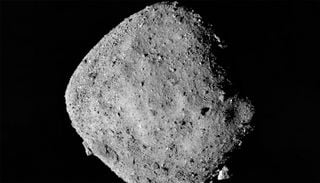
Samples from asteroid Bennu reveal that it formed in a transitional region of the early solar system, where materials from the inner and outer regions mixed.
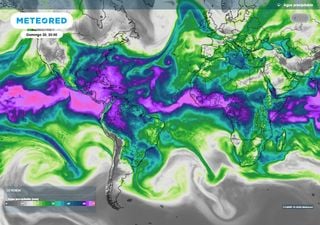
Earth’s atmosphere recorded the highest amount of water vapor on record in August. Global warming and El Niño appear to be key factors behind this new record.
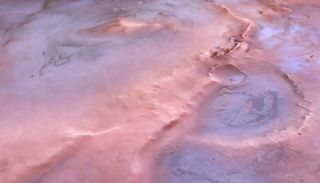
New images of Mars show a polar region where reddish tones mix with violet, pink and blue, revealing the diversity of materials and processes that shaped its surface.
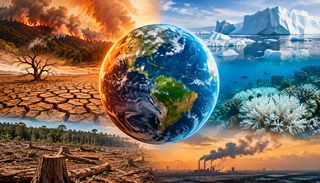
A new scientific report warns that seven of the nine boundaries that regulate the stability of the planet have already been exceeded and that all of them continue to move further away from the zone considered safe.
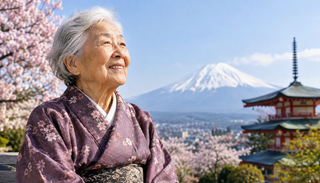
Japan has surpassed 100,000 centenarians for the first time. There are 107,677 people aged 100 and over, in a country where the population is ageing while fewer and fewer children are being born.
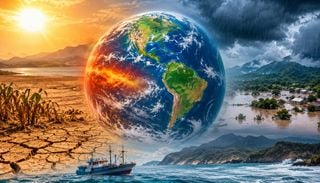
El Niño is gaining strength in the Pacific and beginning to affect different regions. Its exceptional intensity, combined with global warming, could alter familiar climate patterns.
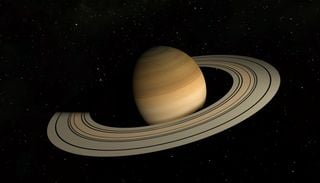
Nearly 5 billion kilometers from Earth, the icy object 450P/LONEOS began releasing gas and dust. Scientists believe it could be undergoing a key stage in its transformation into a comet.
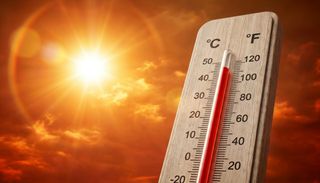
A new study reveals that extreme heat events are expanding their presence outside the traditional warm season, although the change is not happening in the same way in all regions of the planet.
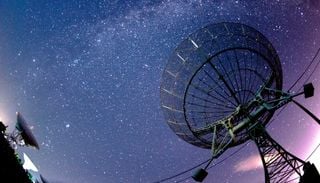
A NASA mission allowed for the first-ever observation of a sporadic E layer from several points at the same time and revealed a structure far more complex than previously thought.
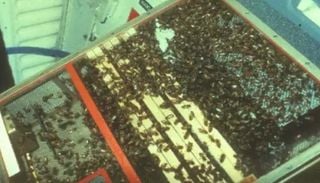
In 1984, a colony of bees traveled aboard the space shuttle Challenger to study how weightlessness affected their behavior and honeycomb construction.
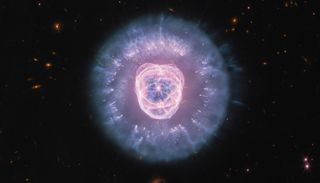
The James Webb Space Telescope observed the Lion Nebula again, revealing structures of dust and ionized gas that provide a better understanding of the final chapters in a star’s life.
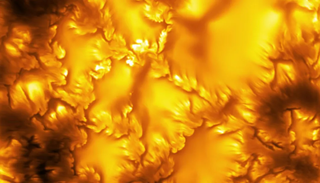
Unprecedented images captured by the world's most powerful solar telescope reveal magnetic vortices on the Sun's surface, helping scientists explain the origins of space weather and its effects on Earth.
A new study has revived a controversial hypothesis suggesting that Earth's greatest geological crises may follow a natural cycle that has repeated itself for hundreds of millions of years.
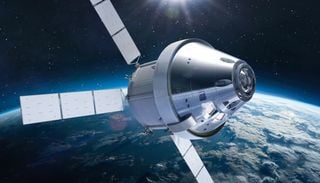
A new study proposes using permanent magnets as a partial shield against space radiation. While they would not replace current technologies, they could become a key tool for protecting astronauts on future deep-space missions.
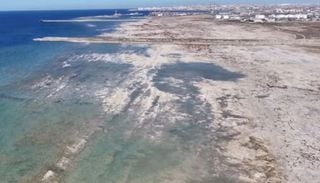
A new study reveals that the world's largest inland body of water has lost about 24,000 square kilometers since the 1990s. Human management of the rivers that feed it appears to be the main driver behind its retreat.
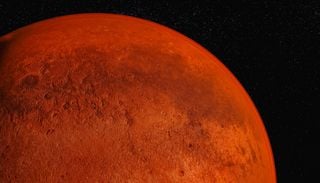
Scientists have found garnet in a Martian rock for the first time. The discovery provides new clues about the geological evolution of Mars and the processes that shaped its surface billions of years ago.
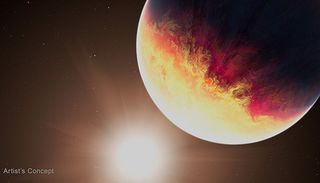
Observations from the James Webb Telescope show that HD 80606 b, a gas giant with an extreme orbit, undergoes surprising temperature spikes and chemical changes that may help us better understand other exoplanets.
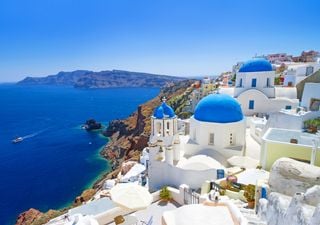
From wild paradises in Scotland to scenic train routes in Switzerland and tropical adventures in Ecuador, these five destinations offer authentic experiences, abundant nature and a fresh alternative to mass tourism during peak season.

A specialist from the University of Guadalajara argues that the growth of the 2026 World Cup could make it the tournament with the greatest environmental impact on record, despite FIFA's sustainability promises.