
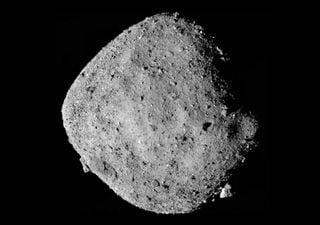
New analyses of samples returned by the OSIRIS-REx mission reveal that Bennu is a cluster of materials that formed in different corners of the cosmos, from the inner solar system to extinct stars.

New analyses of samples returned by the OSIRIS-REx mission reveal that Bennu is a cluster of materials that formed in different corners of the cosmos, from the inner solar system to extinct stars.
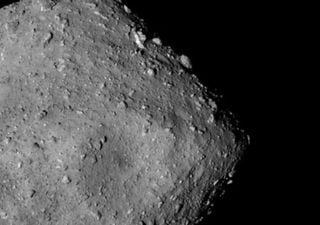
The study of fragments brought back by the Japanese Hayabusa2 mission allowed international scientists to precisely analyze the composition of the asteroid Ryugu. The findings provide clues about how water and organic molecules arrived on early Earth.
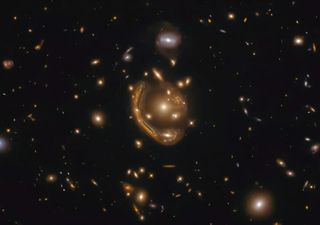
These formidable “cosmic magnifying glasses” created by gravity allow us to observe distant galaxies, study dark matter, and look back to the very first moments after the Big Bang. A new generation of telescopes promises to multiply these discoveries.
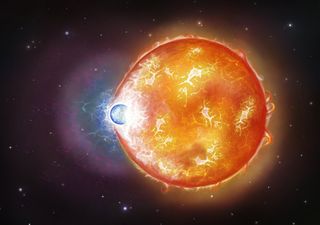
Thanks to ultraviolet light observations by the Hubble Space Telescope, astronomers have discovered that a massive white dwarf, located just 130 light-years away, is actually the remnant of a stellar collision.
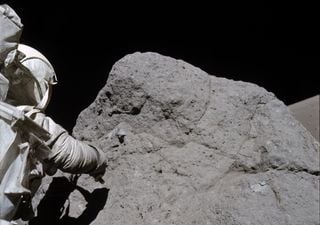
New research shows that ancient moonquakes, not meteorite impacts, were responsible for altering the landscape at the Apollo 17 landing site. The finding poses key risks for future human missions.
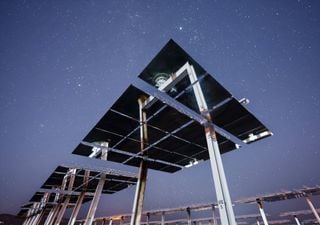
John Sandusky, a scientist at Sandia Space Telescope, proposes a bold idea: reusing heliostats at night to detect near-Earth asteroids. His proposal promises to be a low-cost alternative to conventional telescopes.
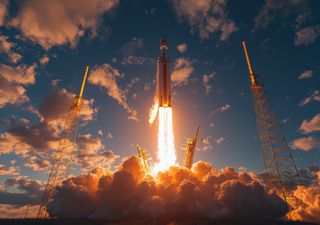
The accelerated growth of the space industry is worrying the scientific community because of its impact on the ozone layer, which is still recovering after decades of damage.

New research suggests the existence of mysterious celestial bodies propelled by dark matter at the center of the Milky Way. If confirmed, it could be a key clue to solving one of the deepest mysteries of modern cosmology.
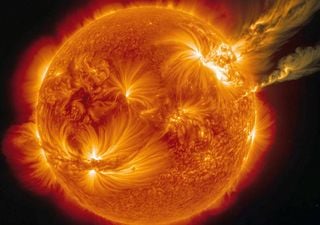
New research reveals that the orientation of solar ejection and solar wind conditions play a key role. Furthermore, advances in AI and space-based observations promise to improve warnings for future storms that threaten our technologies.
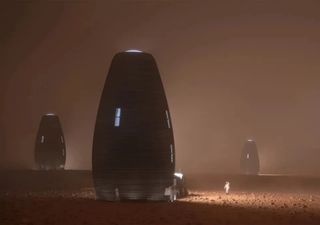
A team of scientists has developed an innovative system of synthetic lichens capable of generating building materials on Mars without human intervention. This technology, based on autonomous biofabrication, paves the way for self-sufficient colonization of the red planet.

They found unequivocal evidence of a gigantic plume of magma rising from the Earth's core beneath East Africa. This super-plume is reportedly driving a profound geological transformation that could culminate in the continent's breakup in the next few millions of years.

New research suggests that everything that exists could vanish much sooner than previously thought. Even the most enduring stars will evaporate, along with planets and human bodies, in a phenomenon previously thought to be exclusive to black holes.
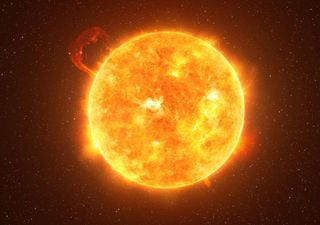
New observations allow us to visualize for the first time a phenomenon that may explain why the Sun's outer atmosphere is millions of degrees hotter than its surface.
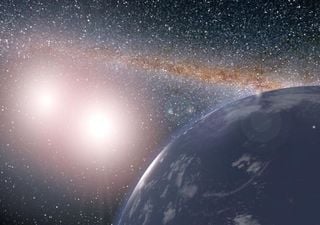
Using advanced statistical tools, researchers explore how even a "failure" in the search for life could offer key answers about our position in the cosmos.
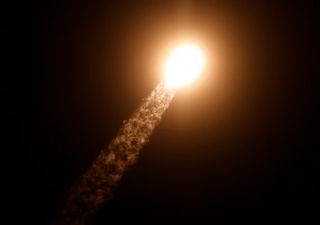
SpaceX's ambitious orbital flight, funded by entrepreneur Chun Wang, becomes the first private space mission to fly over both of Earth's geographic poles. Four non-professional crew members will conduct 22 scientific experiments that could revolutionize space exploration.
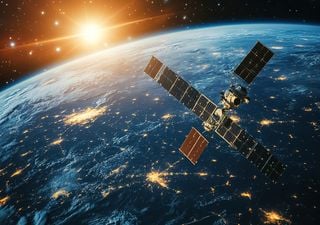
An MIT study reveals that greenhouse gas emissions are altering the upper atmosphere, reducing the capacity of low-Earth orbit and increasing the risk of space collisions.

NASA scientists have revealed that the Palos Verdes Peninsula in Southern California is moving towards the ocean at a frightening speed. Extreme rainfall in recent years is believed to have accelerated a process that has been underway for decades.

Three billion years ago, Earth's oceans were green due to their chemical composition. The Great Oxidation Event turned them blue, prompting the evolution of life. This discovery could help identify habitable worlds beyond our planet.
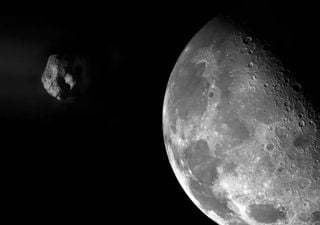
A 55-meter-wide asteroid, known as 2024 YR4, could hit Earth on December 22, 2032 with a low probability. Astronomers also warn of a small chance of a collision with the Moon.

Astronomers have detected 74 exocomet belts around nearby stars, revealing their role in planet formation. The discovery, made with ALMA and SMA, suggests that these bodies could influence the evolution of star systems, similar to the Kuiper Belt in our solar system.