Earth to Artemis: NASA Drops Thousands of High Resolution Images from Artemis II
The high resolution photos highlight an historic mission and bring the sights of human space travel to personal devices around the globe. Earthsets, a lunar eclipse, and the scarred lunar surface are among the deep image cache.
Orion’s high resolution cameras were bustling during NASA’s recent 10-day mission. NASA astronauts Reid Wiseman, Victor Glover, Christina Koch, and Canadian Space Agency’s Jeremy Hansen took the first journey back to the Moon since the 1970s during the historic Artemis II mission in April 2026.
Technology has advanced exponentially since the last mission of its kind, and NASA ensured the stunning sights of space travel could be captured for Earth-bound inhabitants to enjoy. NASA had released a few lower-resolution images as they were received by the crew, but data transfer limitations through the cosmos limited the flow of real-time images.
Now that the physical SD cards have returned home, NASA released thousands of stunning high resolution images captured by the four astronauts. The images number more than 12,000, all of which are free to view in varying resolutions at NASA’s Gateway to Astronaut Photography of Earth portal.
Lunar Views: Light and Dark
A close flyby of the moon gave astronauts the capability to capture lunar surface geological features in stunning detail. These images will be key to scout out ideal landing sites of future Artemis missions as well as a future lunar surface base.
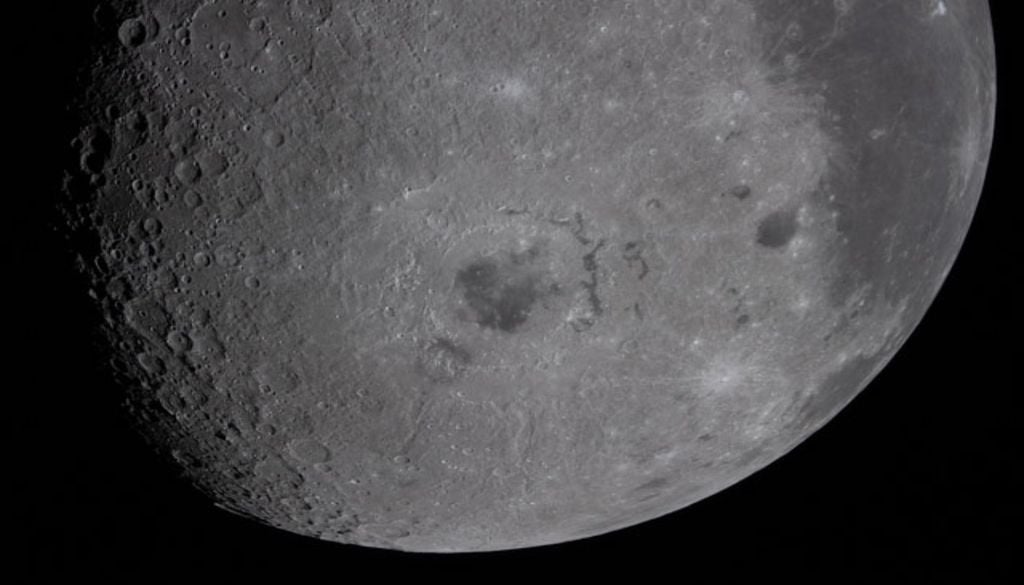
Key geologic features stand out on the scarred surface, including the prominent Orientale basin. The impact crater is 600-miles wide and falls along a transition area between the light and dark sides of the moon (as seen from Earth). A more wide-angle view shows the scale of the crater against the lunar surface.
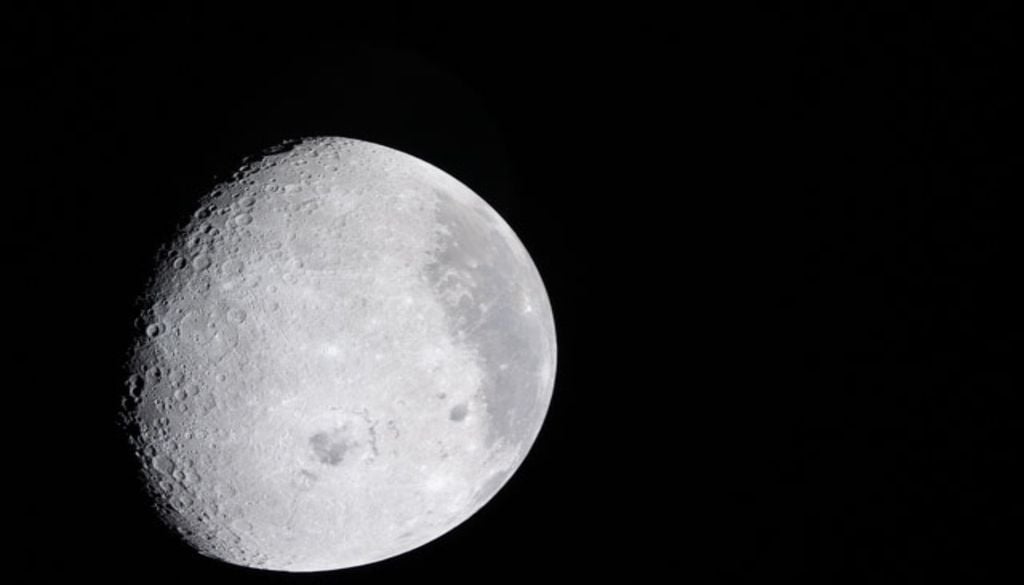
The jagged terrain of the Moon’s surface is evident in a notable image from the darkside, as the shimmering sun shines along the lunar terminator. Lunar mountain ranges and crater rims highlight the irregular lunar terrain.
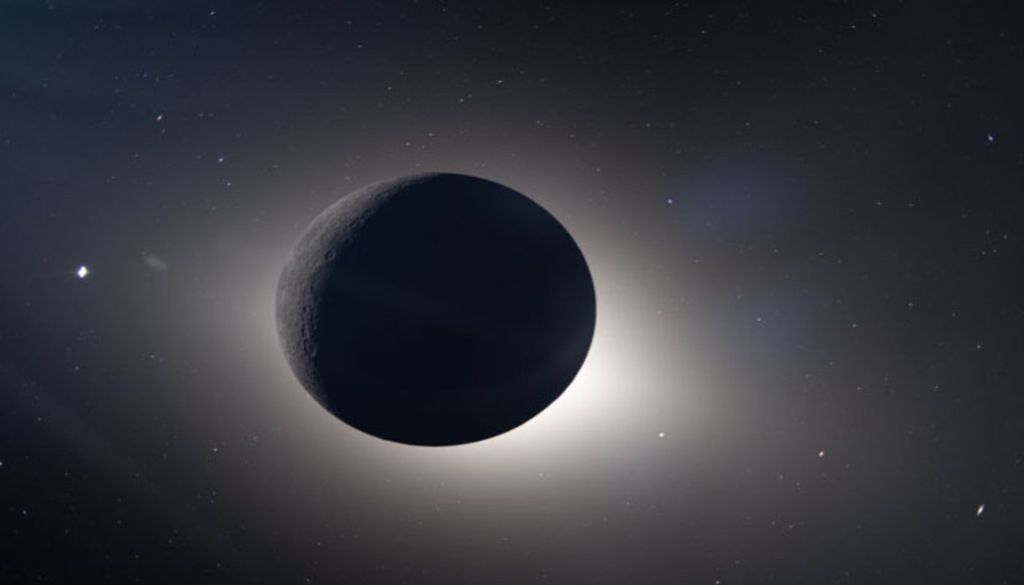
As the Orion capsule swung around to the far side, the crew was treated to a lunar-centric solar eclipse. With the sun darkened and backlit by the Moon, a few stars begin to peak out from the void.
Images of Home
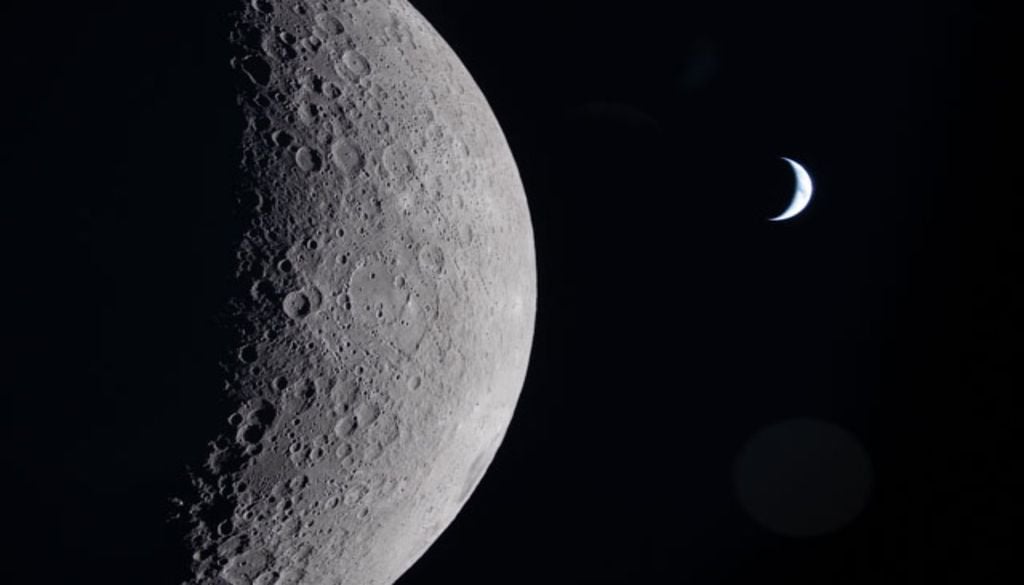
Before dipping below the lunar horizon, the crew witnessed the dramatic setting of their point of origin. Snapped nearly a quarter of a million miles from home, the crew witnesses the crescent Earth setting amid the lunar foreground.
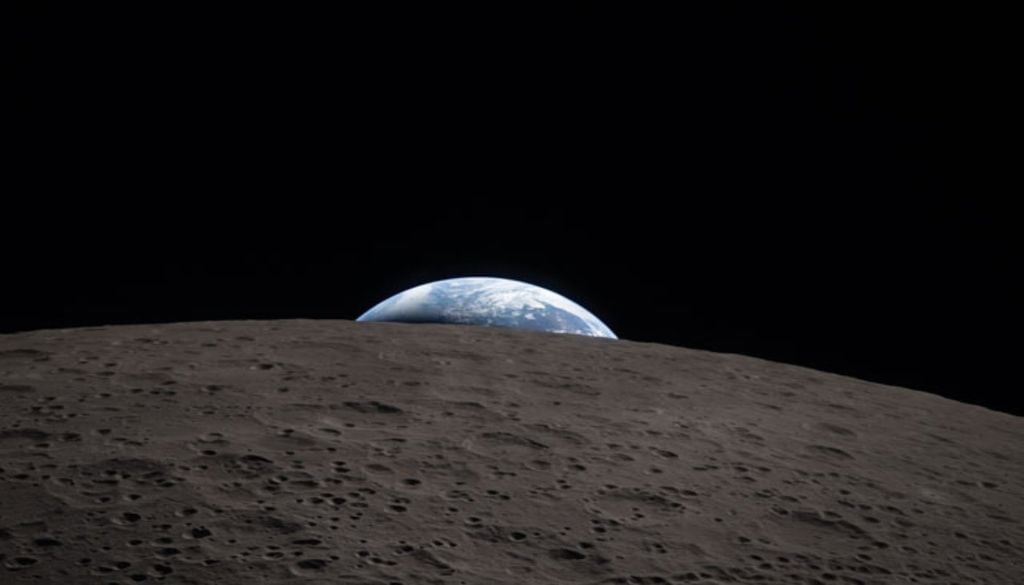
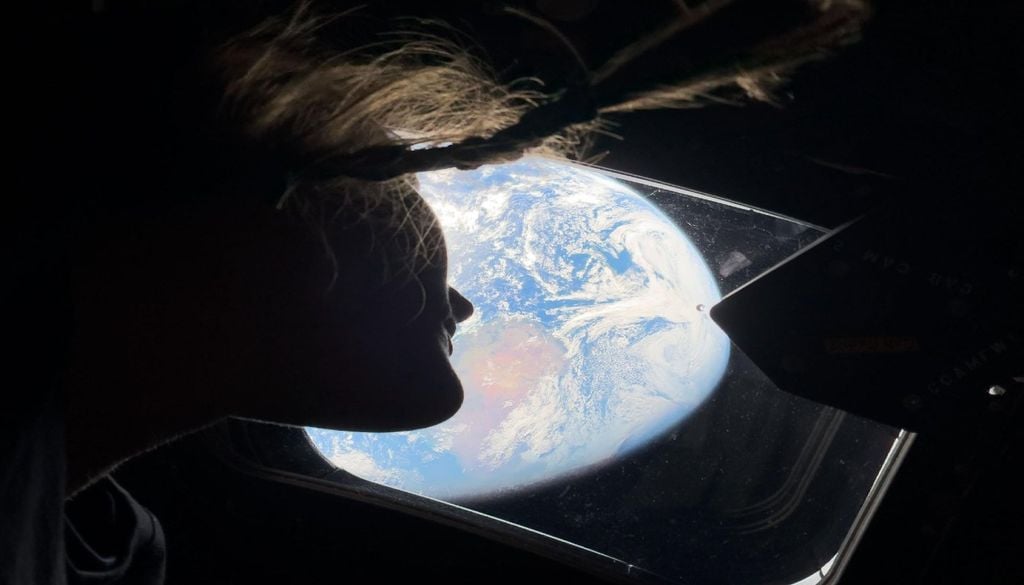
Hundreds of images of Earth are peppered throughout the image catalog. A unique capture includes the perspective of Mission Specialist Christina Koch as she gazes upon her home planet.
This moment, captured about halfway on their journey to the moon, puts Koch and the remaining crew further into space than any human since the Apollo missions.