
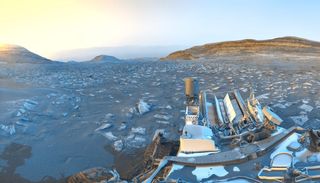
A sandy landscape, a blue sky, and shimmering golden light. It’s not a desert morning on Earth, but rather a photograph 14 Earth-years in the making from the Martian surface.

Mike grew up in central New Jersey, less than an hour outside of New York City. After graduating from Rutgers University with a B.S. in Meteorology, Mike’s passion for extreme weather brought him to the White Mountains of New Hampshire to work at the famed Mount Washington Observatory atop Mount Washington, NH. Mike spent 10 years on the summit crew.
Mike departed MWO in 2018 to explore science education with White Mountain Science. Mike spent six-and-a-half years driving the growth of WMSI to a thriving regional organization, which provides STEM education to rural New England students.
Mike is currently the Summit Weather Operations Manager for Mount Washington Observatory, helping oversee the year-round weather operations for the summit station.
When free time presents itself, you can find him hiking, traveling to the desert southwest or the Caribbean, or supporting the scientific skeptic community. Mike lives in northern NH with his wife and two pups.
A sandy landscape, a blue sky, and shimmering golden light. It’s not a desert morning on Earth, but rather a photograph 14 Earth-years in the making from the Martian surface.
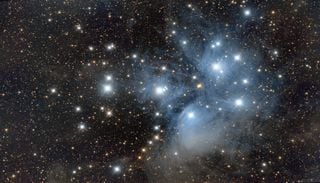
The Moon will completely obscure the planet Jupiter across most of North America this month, which won’t recur for almost a decade. A brilliant Saturn and two meteor showers round out the astronomical calendar.
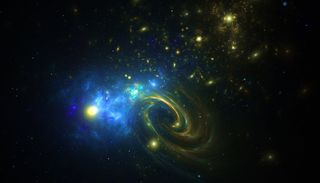
Three weeks following the launch of NASA’s latest space telescope, the L2-bound instrumentation package has been powered on, while its fuel efficiency points to a possible extended mission duration.
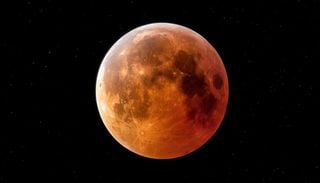
A near-total lunar eclipse will sweep over much of the world, including North America, later this week. The dramatic, colorful event requires minimal to no travel for most, and zero equipment to behold.

Reflect Orbital aims to capture sunlight on demand with satellite and ground-based technology. A new preprint study suggests the satellite-based mirrors could light up the night sky significantly more than intended.
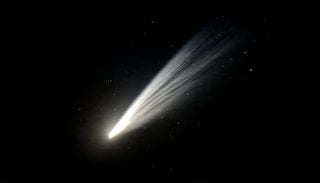
1998 SH2 had no telltale signs of a comet since its was first discovered nearly 30 years ago. New analyses combined with historic international observations tells a different story.
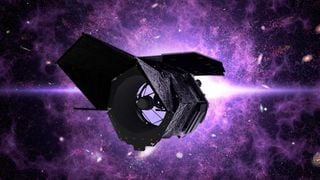
Neutron stars exist under some of the most extreme conditions in the universe. The instrumentation aboard the still-to-be-deployed Nancy Grace Roman Space Telescope paves the way for a key technique in neutron star detection.
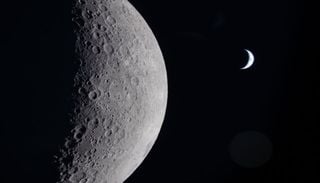
The high resolution photos highlight an historic mission and bring the sights of human space travel to personal devices around the globe. Earthsets, a lunar eclipse, and the scarred lunar surface are among the deep image cache.
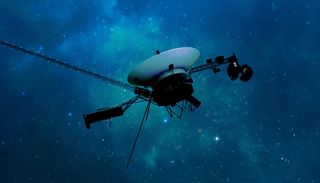
A sudden drop in power forced the shutdown of the low-energy charged particles experiment. This was part of a contingency crafted in advance by NASA engineers in the event of a sudden power drop.

NASA plans missions focused on launches of satellites designed to gather atmospheric and geologic data from above. The missions are an adjustment from the previously-planned Atmosphere Observing System initiative.
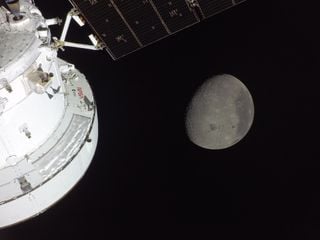
After days in deep space, the crew of NASA’s Orion spacecraft is preparing for the most intense phase of their journey yet, plunging back to Earth at nearly 25,000 miles per hour in a fiery reentry through the atmosphere on Friday.
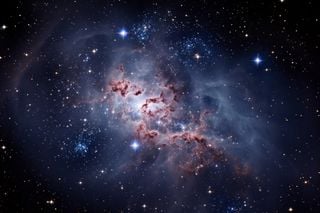
Motions of the stars and gases within the Small Magellanic Cloud have long been viewed as irregular when compared to other galaxies. A recent study points to the likelihood of a collision with its neighbor.
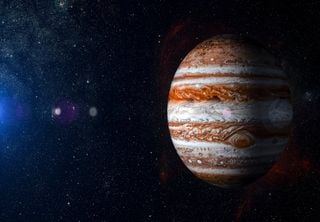
Through scans by the James Webb Space Telescope and its near-infrared spectrograph, a team of scientists collected data around Jupiter that yielded several surprising results, including several cold spots and regions of highly variable densities.

Included in the kit are historical artifacts from previous missions to space, mementos from partner space agencies, and even a swatch of cloth from the original Wright Brothers’ craft.
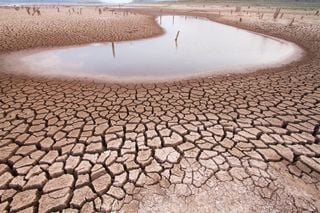
The global water cycle is delicately-balanced, and most locations rely on this balance for access to clean water. The WMO’s latest report highlights increasing imbalances and extremes globally and in parts of the U.S.
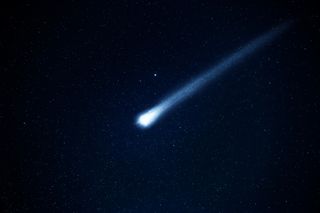
As the third-ever-confirmed interstellar object 3I/ATLAS races deeper into our solar system at high speeds, researchers using the James Webb Space Telescope have revealed surprising results regarding its composition.
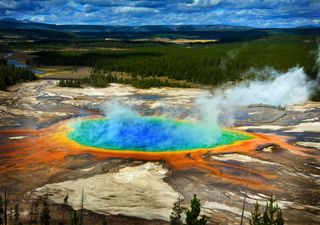
Geologists at Yellowstone National Park confirmed the discovery of a new hydrothermal feature amidst a geologically active area of the park. Its blueish color and its surroundings reveal the origins and composition.

The SeaCURE pilot project, funded by the UK government, seeks to gauge the feasibility of capturing carbon from the sea as a method of climate mitigation. While reducing further carbon dioxide emissions is the most critical step in stemming the tide of climate change, many climate scientists believe carbon capture can help.

A direct link between airborne aerosols spawned by wildfires and the formation of clouds over the Arctic has never been made. A new study published in Atmospheric Research has made one, which has illustrated the need for additional research in a changing climate.

Drones have been making headlines across the United States over the last few months. A recent study suggests they may prove to be a key tool in unlocking the next phase of accurate weather predictions across the planet, particularly in remote corners of the world.