
From Mines to Stargazing: A German Region Transforms to Host an Elite Astrophysics Center
Germany is transforming a former mining region into the future home of the Görlitz Center for Astrophysics. The new gravitational wave observatory marks a scientific milestone and is generating major excitement across the region.
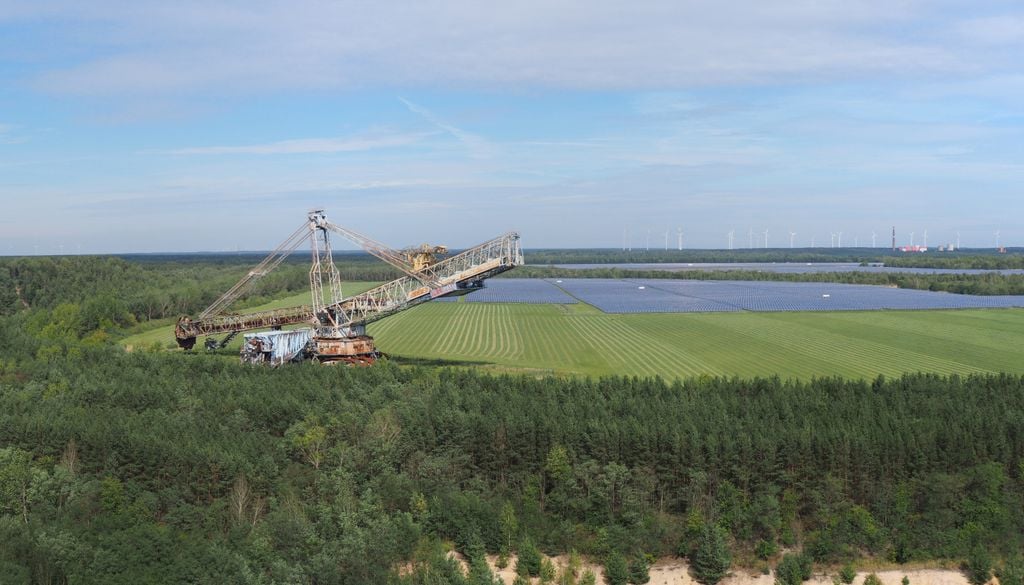
Promising feasibility studies are currently underway. The Lusatia region offers an ideal foundation for the construction of the so-called Einstein Telescope.
Lusatia Has Several Distinct Advantages
This type of telescope requires ample space, quiet surroundings, and above all, stable ground. Ideally, the telescope should be located between 200 and 300 meters underground. Only then will it be able to reliably detect gravitational waves.
In addition, Lusatia has a significant advantage: its bedrock is made of granodiorite, a geological formation that provides a level of structural stability found in very few other locations.
As a result, the telescope is not only highly sensitive to noise, but also extremely susceptible to other forms of ground movement and underground disturbances. Christian Stegmann is also optimistic about these new developments.
A Feasibility Study Offers Hope
Together with Andreas Rietbrock, he is leading the Einstein Telescope feasibility study. Christian Stegmann is a professor in the Department of Astroparticle Physics at the University of Potsdam.
It is worth noting that the feasibility study in this region is supported by a large amount of previously collected data. An incredible amount of knowledge is available, dating back to the era of the GDR. In total, around 34,000 boreholes were drilled during that period.
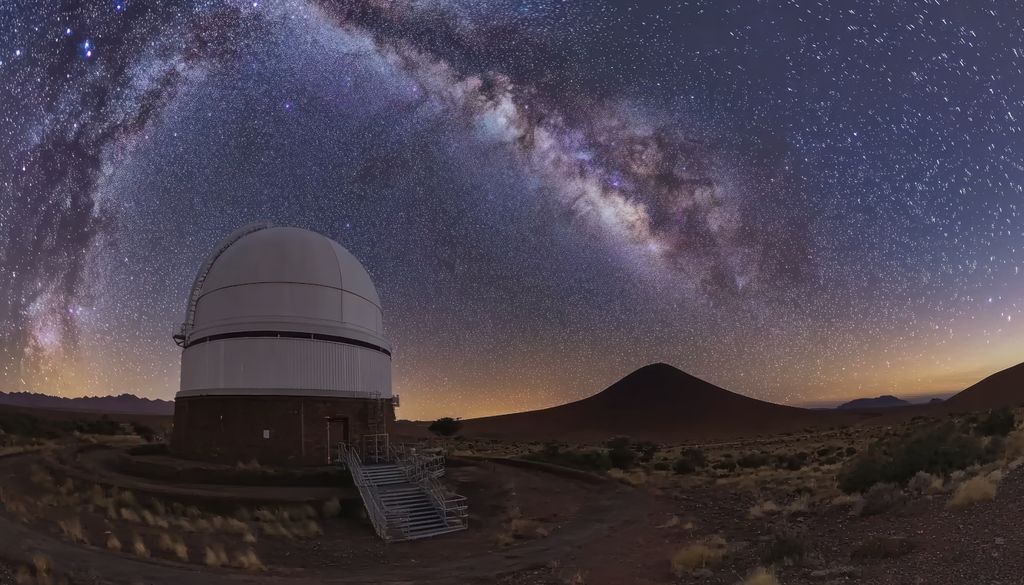
As a result, the team can draw on a true treasure trove of data collected by both miners and scientists. Approximately 2,000 of those 34,000 boreholes are directly helping the research team today. This has already allowed them to identify another important advantage over other possible locations.
The Rock Is Ideal
The rock known as granodiorite is not only stable and solid, but also exceptionally dry. As a result, researchers will likely need to install fewer pumps.
Otherwise, those pumps would interfere with the telescope’s sensitive sensors. Ultimately, the final decision on whether or not to proceed with the Einstein Telescope project is not expected until 2027 or 2028.
News Reference
MDR.de (2026). Einstein-Teleskop in der Lausitz: Das Flüstern des Urknalls hören. Grossprojekt der Forschung. Naturwissenschaft. Wissen.
TU Dresden. (2026). Das Einstein Telescope: Ein neues Fenster zum Universum. Einstein Telescope Lausitz.