
Humanity will have to wait until 2178 to see Pluto complete its first orbit around the Sun
Pluto takes 248 years to complete one orbit around the Sun, and in 2178 it will return to the point it occupied when it was discovered in 1930.
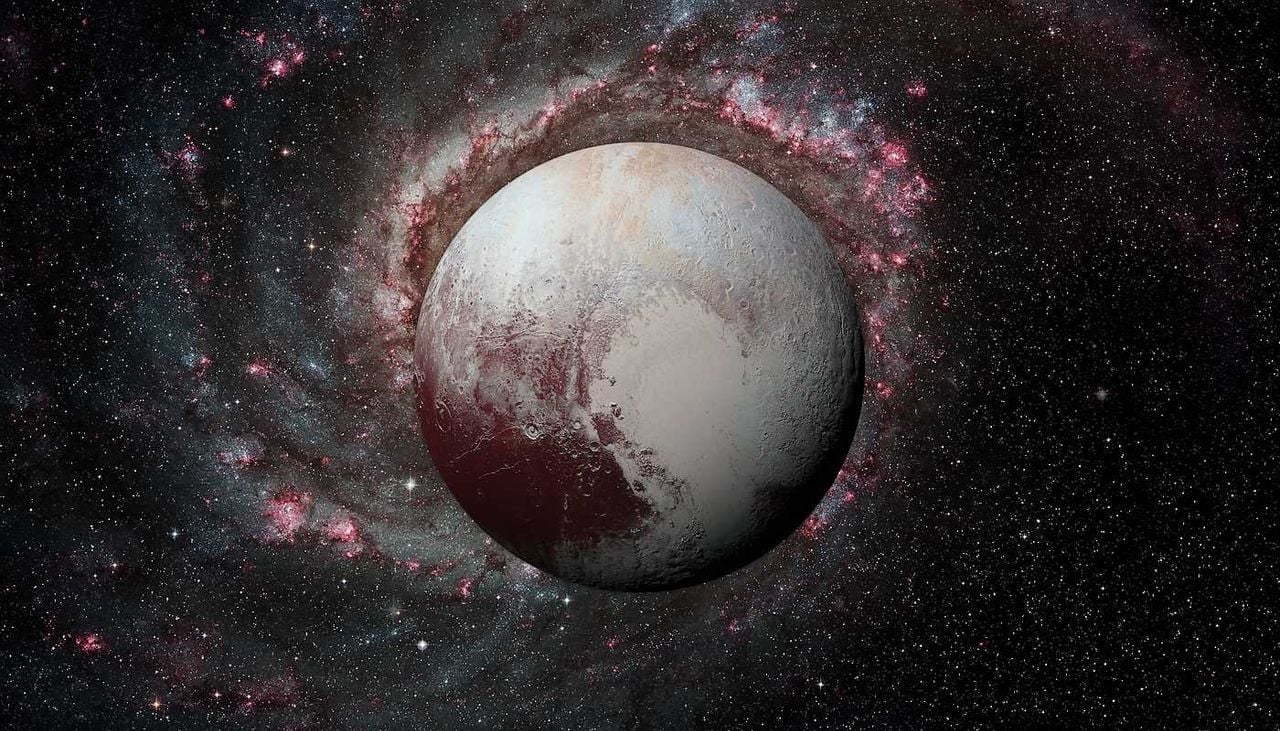
American astronomer Clyde Tombaugh discovered Pluto nearly a century ago, but that discovery did not mark the beginning of its orbit. The object had already been orbiting the Sun for billions of years when Tombaugh managed to identify it on photographic plates at Lowell Observatory in Arizona. Since then, humanity has tracked its journey for only a fraction of a Plutonian year.
The numbers put the extraordinary wait into perspective: about 248 years will pass between Pluto's discovery and its return to the same point in its orbit. During that time, Pluto will travel an enormous distance around the Sun as several human generations are born, live and pass away. The paradox is that we have already sent a spacecraft there and know its trajectory without ever witnessing one complete revolution.
Pluto takes 248 years to complete its orbit
The length of a year depends on which world we're talking about. Earth's roughly 365-day year is not a universal standard. Mercury takes about 88 Earth days to complete its orbit, while Neptune needs nearly 165 years. On Pluto, a year lasts about 248 Earth years.

The explanation lies in its enormous distance from the Sun. Pluto is, on average, about 5.834 billion kilometers from our star, or roughly 39 astronomical units. Its orbit is not circular either: its distance from the Sun varies from approximately 4.44 billion to 7.375 billion kilometers, equivalent to about 30 to 49.3 AU.
That orbit placed Pluto closer to the Sun than Neptune between 1979 and 1999. This does not result in a close encounter between the two bodies because their orbits are locked in a 3:2 resonance. For every two orbits Pluto completes around the Sun, Neptune completes three, keeping their relative positions from bringing them dangerously close together.
Pluto's discovery did not mark the beginning of its first orbit
In 1930, Tombaugh was searching from Lowell Observatory for a possible planet beyond Neptune. To find it, he photographed different areas of the sky and compared plates taken at different times. The stars remained virtually stationary, while an object belonging to the Solar System could change position.
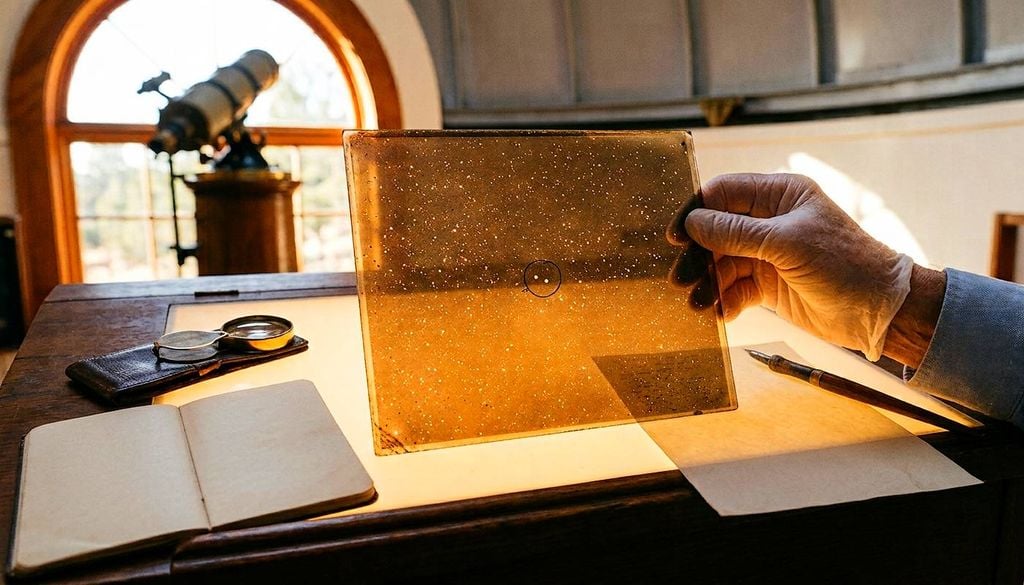
That is how Pluto was discovered. But two events that can easily be confused need to be separated: discovering an object is not the same as the beginning of its orbit. Pluto did not start orbiting the Sun in 1930. What began that year was humanity's record of its position and, with it, our ability to track its movement.
The situation is similar to photographing a runner who has already been circling a track for a long time. The picture marks the moment we started watching, not the moment the race began. In Pluto's case, that track stretches billions of kilometers, and completing one lap takes nearly two and a half centuries.
In 2178, Pluto will return to its 1930 position
Astronomers do not need to wait until 2178 to know how long Pluto's orbit takes. Observations allow scientists to determine its position, speed and motion. By applying the laws of gravity to those data, they can calculate its trajectory, determine where Pluto was before its discovery and predict where it will be in the future.
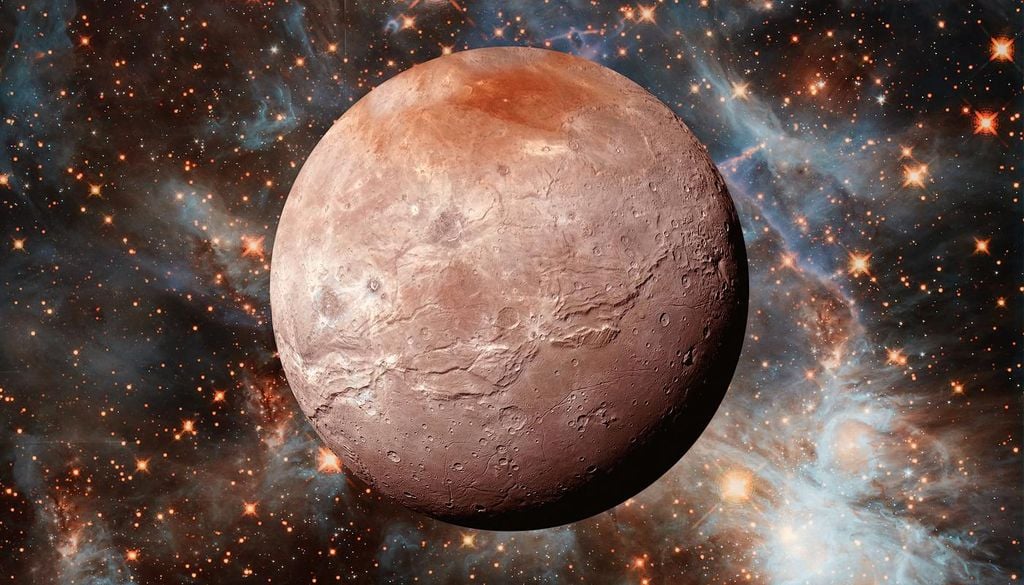
There are also photographs taken before 1930 in which Pluto was captured without anyone identifying it at the time. These pre-discovery images expand the available data and help scientists reconstruct its motion over a longer period.
NASA places Pluto's return to the orbital position it occupied when it was discovered in 2178. Some estimates point to approximately March 23, although the space agency does not specify an exact date. By then, nearly 248 years will have passed since Tombaugh's discovery.
New Horizons reached Pluto before it completed its year
Humanity did not have to wait for that return to get a close-up look at Pluto. NASA's New Horizons spacecraft, launched in 2006, reached Pluto and performed its historic flyby on July 14, 2015, after traveling billions of kilometers. The images revealed mountains of water ice, vast frozen plains and the famous bright, heart-shaped region. The tiny point Tombaugh had spotted among the stars became, 85 years later, a world we could see in remarkable detail.
NASAs New Horizons spacecraft traveled nearly 3 billion miles over nine years to capture this moment on Pluto
— Night Sky Now (@NightSkyNow) August 26, 2026
About 15 minutes after its historic flyby, New Horizons turned back toward Pluto and recorded a breathtaking near-sunset view. pic.twitter.com/fJyFXNZ8fI
All of this happened while Pluto was still far from completing the orbit that, from our perspective, we began tracking in 1930. By 2015, only 85 years had passed, still a relatively small fraction of its 248-year orbital period.
When 2178 arrives, Pluto will return to the same point in its orbit that it occupied when it was discovered. For Pluto, there will be no anniversary or meaningful change: it will simply continue along its path around the Sun. The date matters only to us because 1930 was when we began observing it.