

Albania, Germany, Vietnam, New Zealand and Uruguay combine good transportation, nature, beaches and plenty to explore independently and safely.

Belén Valdehita is a journalist from Madrid with more than 25 years of experience. She studied journalism at the Centro de Estudios Universitarios San Pablo CEU, and began her career collaborating with various print media, such as the magazines GEO, Tiempo, CNR, Car&Driver, Motor 16, Cambio 16... She also worked as a chief editor of the magazines Quad&Jet and Neumáticos y Mecánica Rápida and as a communication director of the ABA Press agency.
Her professional career later led to communication on the Internet, where se has collaborated providing content and as a community manager on blogs and websites such as Europeos Viajeros, Viajes Aristocráticos, FotoNostra, Astromía, Suite 101, "Viajes, Ocio y Placer" or Viajes para toda una vida.
She currently works as a freelance content editor for websites such as Lifetime Trips, Hoteles.net and Tiempo.com.
Albania, Germany, Vietnam, New Zealand and Uruguay combine good transportation, nature, beaches and plenty to explore independently and safely.
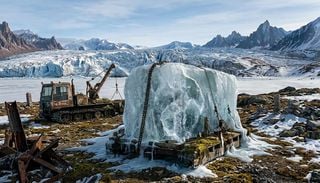
In 1977, Saudi Arabia brought an unusual idea to the United States: to investigate whether transporting icebergs from Alaska could deliver fresh water to arid regions.
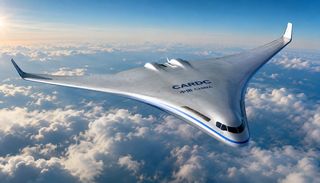
China is testing a high-capacity aircraft with more than 800 seats, an 85-metre wingspan and a cruising speed close to 1,000 km/h.
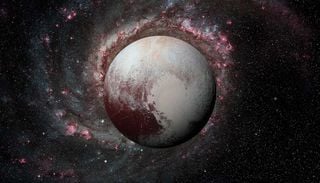
Pluto takes 248 years to complete one orbit around the Sun, and in 2178 it will return to the point it occupied when it was discovered in 1930.
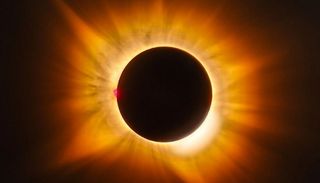
The August 12 solar eclipse produced an unusual sight: the corona took on a golden hue over Spain due to the Sun’s position and wildfire smoke.
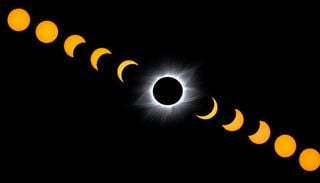
Eclipse prediction makes it possible to determine with great precision when the Sun, Moon, and Earth will align and which areas will be able to observe the phenomenon.
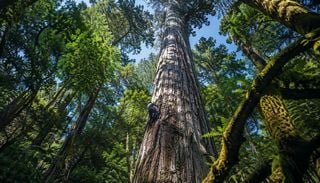
Un equipo de investigadores localizó en Taiwán el árbol más alto conocido de Asia Oriental tras una década de expediciones, mapas LiDAR y trabajo de cientos de voluntarios.
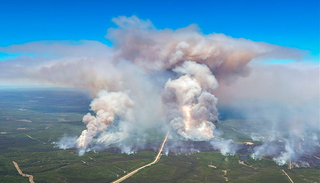
Large wildfires don't just spread rapidly. When they reach extreme intensity, they can alter the atmosphere itself, making firefighting efforts even more difficult—as has happened in Spain in recent days.
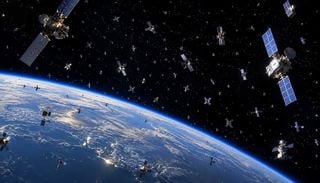
Nearly 16,000 satellites already orbit Earth, and that number could reach between 60,000 and 100,000 before the end of the decade. Keeping them operational will be the biggest challenge.
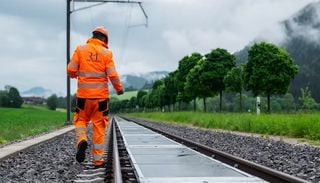
A European country is considering installing solar panels on a railway line following results from Switzerland, where a pilot project is already generating electricity directly from the rail infrastructure.
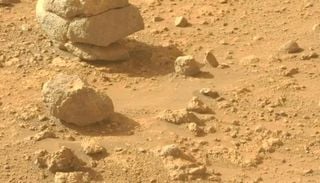
The latest images from Mars reveal unusual rock formations, dust devils, and new details of Jezero Crater, one of the most scientifically significant regions on the Red Planet.

Training during a heatwave requires changing your schedule, intensity and habits to reduce the risk of exhaustion and maintain physical activity without compromising your health.

High temperatures increase the risk of heat exhaustion and heat stroke. Recognizing the warning signs and acting quickly can help prevent serious complications during the warmest months of the year.
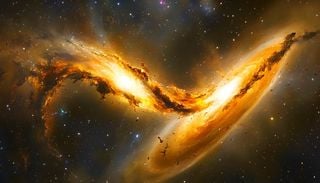
The Milky Way bears the scars of ancient collisions and is once again experiencing gravitational disturbances that point to a new encounter with another massive galaxy in its immediate neighborhood.

Octopuses have nine functional brains, three hearts and remarkable intelligence, challenging everything we know about animal evolution. They play, dream and solve problems, leading some scientists to consider them the closest thing to an alien mind.

Extreme heat in the Indian city of Banda during May, with temperatures reaching up to 48°C, has dramatically altered working hours, local businesses and access to water.
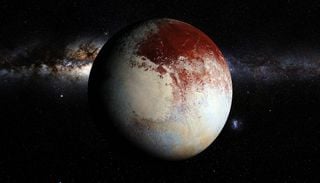
The U.S. space agency is reopening a historic debate about Pluto that could change what has been taught in schools in recent years about the solar system.
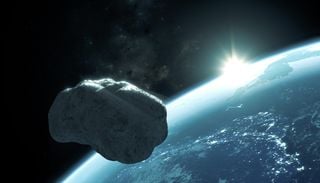
On April 13, 2029, a rocky visitor of colossal dimensions will cross the night sky, passing at a distance closer than that of our own artificial satellites.
A strong earthquake in northeastern Japan recently triggered tsunami warnings and raised concerns among travelers. Here’s what is known, which areas to watch, and how to respond.

A scientific study detects periodic emissions from the reactor of a submarine that sank in 1989, while the nuclear warheads appear to remain sealed on the seafloor.