
NASA warns about the danger satellites pose to astronomy!
NASA recently issued a warning about the risks posed by the surge in satellites orbiting the planet. These satellites are expected to greatly affect the images captured by certain telescopes in the future.
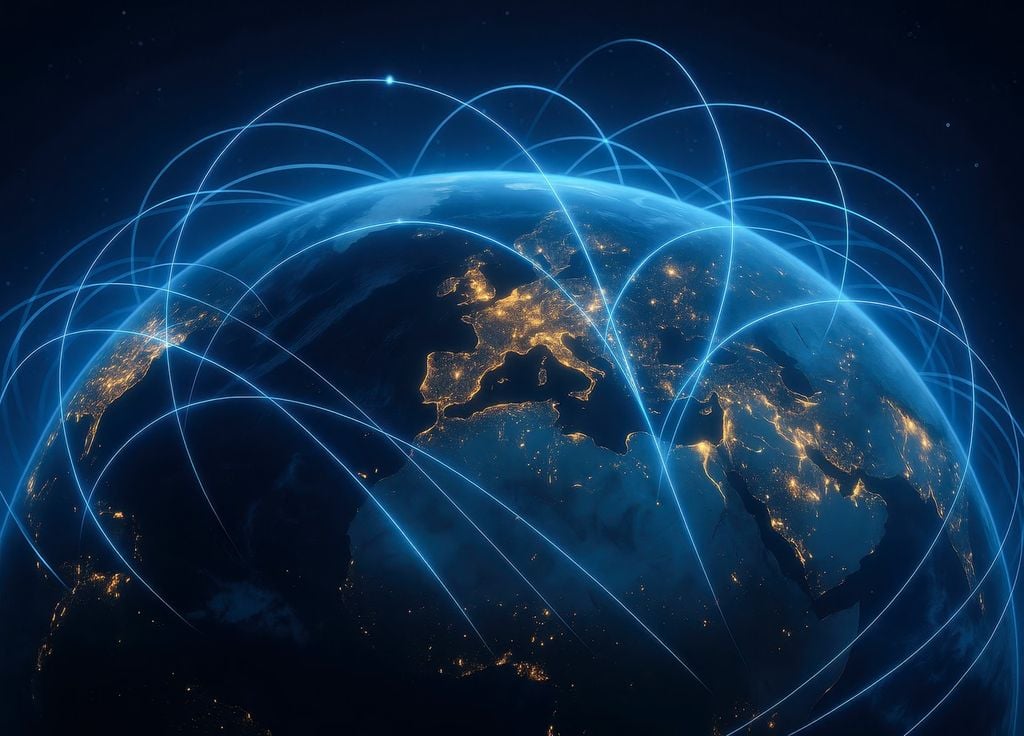
According to a study conducted by NASA and recently published in the journal Nature, the increasingly large satellite megaconstellations will have particularly harmful effects on future astronomical observations.
Satellites becoming far too numerous
More and more telecommunications satellites are present in orbit around our planet. While there were around 2,000 satellites in low Earth orbit in 2019, today that number has risen to more than 15,000, and this is only the beginning.
Beyond the increasingly concerning issue of space pollution and the growing number of incidents involving space debris re-entering Earth’s atmosphere, these thousands of satellites now pose a serious problem for astronomical observations carried out by different space telescopes.
According to a study led by researcher Alejandro Borlaff and his team at NASA’s Ames Research Center, if all planned satellite constellations become operational in the coming years, the vast majority of images captured by Hubble, Xuntian, SPHEREx and ARRAKIHS could be affected.
Telescopes soon to be unusable?
Amateur astrophotographers know well that artificial satellites are easily visible in long-exposure images of the night sky. By reflecting sunlight but also light from the Earth and Moon, they create bright streaks in images, streaks that are difficult to remove and can seriously degrade the quality of the image.
The NASA research team modelled eighteen months of observations for the telescopes with more than 560,000 satellites in orbit. According to the results, 96 percent of images taken by Xuntian, SPHEREx, and ARRAKIHS would contain at least one satellite trail. Only Hubble would fare slightly better, with just one third of its images affected, due to its narrower field of view.
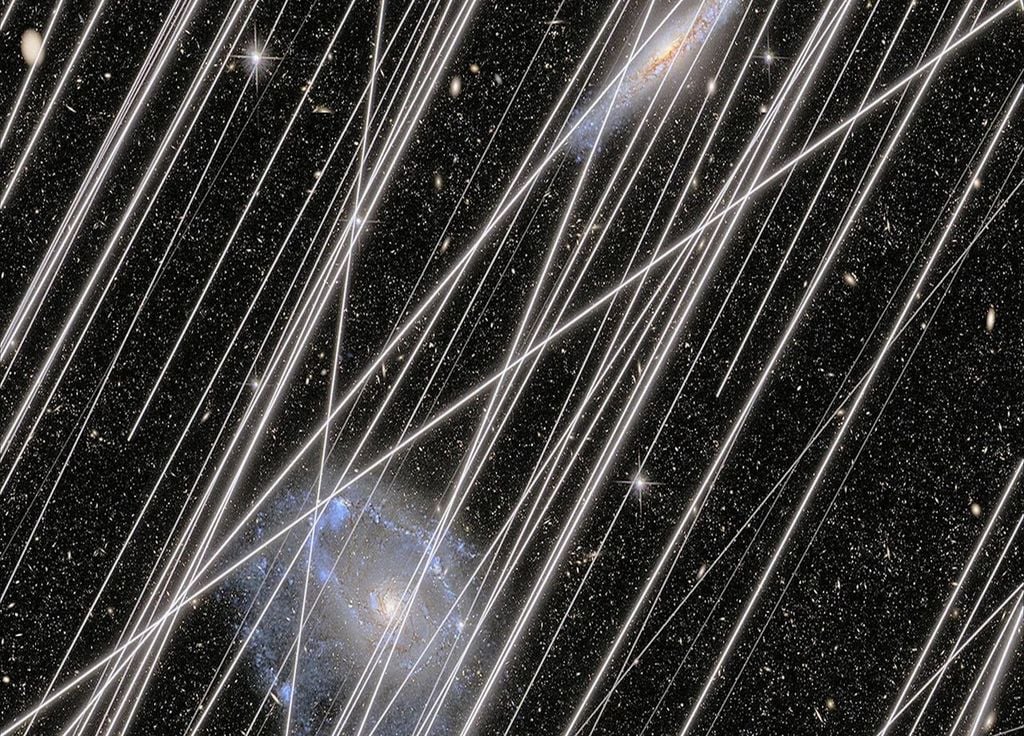
These streaks would have harmful consequences for scientific research. For example, they resemble the trails left by asteroids in deep-sky images, meaning it will become difficult to detect new potentially hazardous celestial objects in the future. This presents a significant risk for Earth.
The research team has proposed several approaches to limit damage. For example, it would be preferable to restrict satellite constellations to lower orbits than those of space telescopes, although ground-based observatories would still be impacted.
The most logical solution would be to launch fewer spacecraft, but current commercial competition makes this unlikely. To understand the scale of the issue, it is important to note that humanity is set to launch more satellites in the next ten years than in the first seventy years of the space age.
References of the news
"Une menace très sévère” : la NASA sonne l'alarme, les constellations de satellites détruisent l'astronomie spatiale, Les Numériques (05/12/205), Aymeric Geoffre-Rouland