
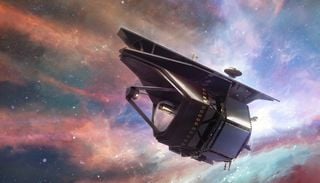
NASA is already preparing for the era after James Webb with PRIMA, a future space telescope dedicated to far infrared observations.

Tristan Bergen has been passionate about meteorology since a young age. With a degree in Earth and Environmental Sciences from the University of Nice/Sophia-Antipolis and a master's degree in Disaster and Natural Risk Management from the University of Montpellier III, he decided to devote himself fully to his passion at the end of his studies and to try his luck in the field that fascinates him.
After founding his company in 2018, he is now a professional forecaster, social media manager and web editor and meteorology is an integral part of his daily life.
NASA is already preparing for the era after James Webb with PRIMA, a future space telescope dedicated to far infrared observations.
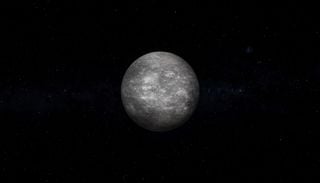
The smallest planet in the Solar System may have shrunk more than previously thought over the course of its history. Scientists now estimate that Mercury may have lost up to 23 kilometers in diameter since its formation.
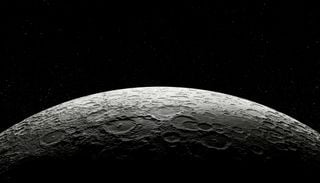
A new crater measuring 222 meters in diameter has just been discovered on the Moon’s surface. Formed by the impact of an asteroid or comet in 2024, it is the largest recent impact crater identified so far in the solar system.
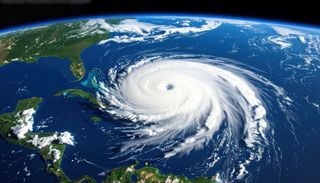
Although the climatological peak of hurricane season has already passed, the Atlantic remains exceptionally quiet: no hurricanes have formed in 2026, something not seen since satellite observations began.
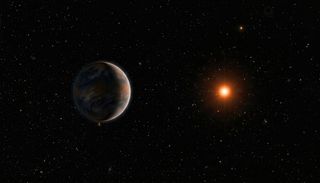
After conducting additional calculations and observations, scientists have determined that the planet GJ 3378 b could potentially be habitable, contrary to what was initially believed when it was discovered.
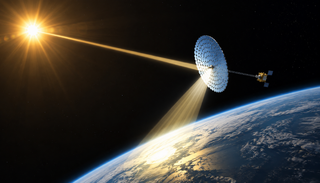
The future project by Reflect Orbital could pose a risk to our health, while also having potentially significant consequences for our night sky.

In response to the numerous satellite megaconstellation projects orbiting Earth, the European Southern Observatory has requested the establishment of a limit to preserve astronomical observations from the surface of our planet.

Our gardens suffer during prolonged periods of intense heat. However, a few simple measures can help limit the damage and losses.

Although its launch into space had previously been scheduled for next year, the Nancy Grace Roman Space Telescope could lift off as early as next September from Florida!

The exploration of oceans around the world carried out by the organization Ocean Census during 2025 led to the discovery of a large number of new species.
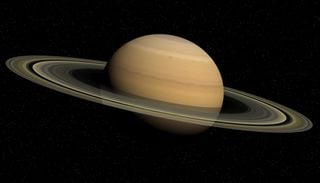
The origin of Saturn's rings remains a subject of controversy in the scientific community. However, some researchers have put forward a theory that seems to explain why and how they formed.
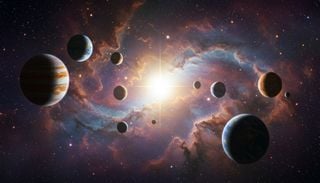
By reanalyzing data from the first year of operations of the TESS telescope, scientists have reportedly identified more than 1,000 new exoplanets, although some uncertainties about their exact nature still remain.
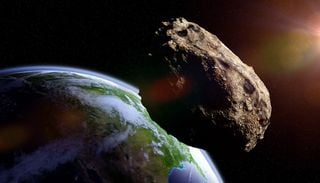
An asteroid will come very close to our planet in April 2029, giving the European Space Agency the opportunity to study it in detail thanks to the launch of a probe that will head toward it.

According to a recent study, the development of renewable energy, especially notable in recent years, would significantly limit the impacts of the current global energy crisis.

The annual minimum extent of Antarctic sea ice was reached in late February. This figure is higher than in previous years and even approaches the average.
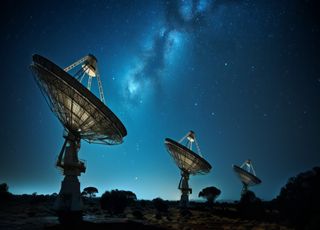
A recent study has highlighted the fact that we might not currently be able to detect radio signals emitted from the far reaches of the cosmos.
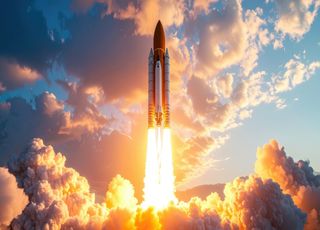
The launch of the Artemis II mission has been postponed again due to an interruption in the helium flow of the SLS rocket.You May Be Interested In | NASA's Artemis II Spacecraft Prepares to Carry Astronauts to the Moon
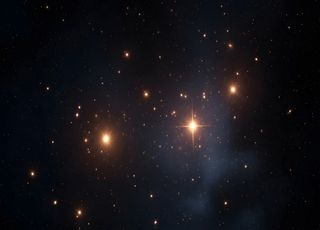
The star M31-2014-DS1 appears to have mysteriously disappeared without producing a supernova between 2014 and 2024, according to observations from the NEOWISE telescope, which would confirm a hypothesis proposed by astrophysicists.
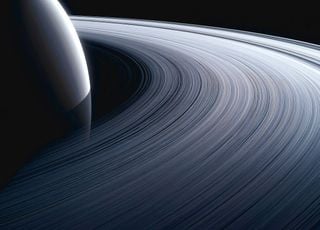
Saturn’s rings may be the result of a succession of collisions between the planet’s moons, at least according to a simulation conducted by researchers at the SETI Institute.
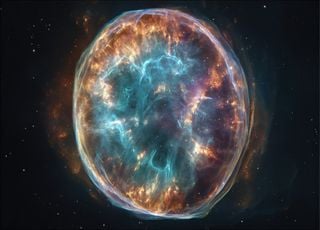
Astronomers have discovered a peculiar celestial object thousands of light-years from Earth, a spherical structure whose origin they have been unable to identify.