
Have you heard of this ‘dead city’? It’s in Portugal and can be visited for free
In the north of the country, there is an ancient settlement where you can still walk among walls, houses and streets with thousands of years of history. The best part? You don’t have to pay an entrance fee.
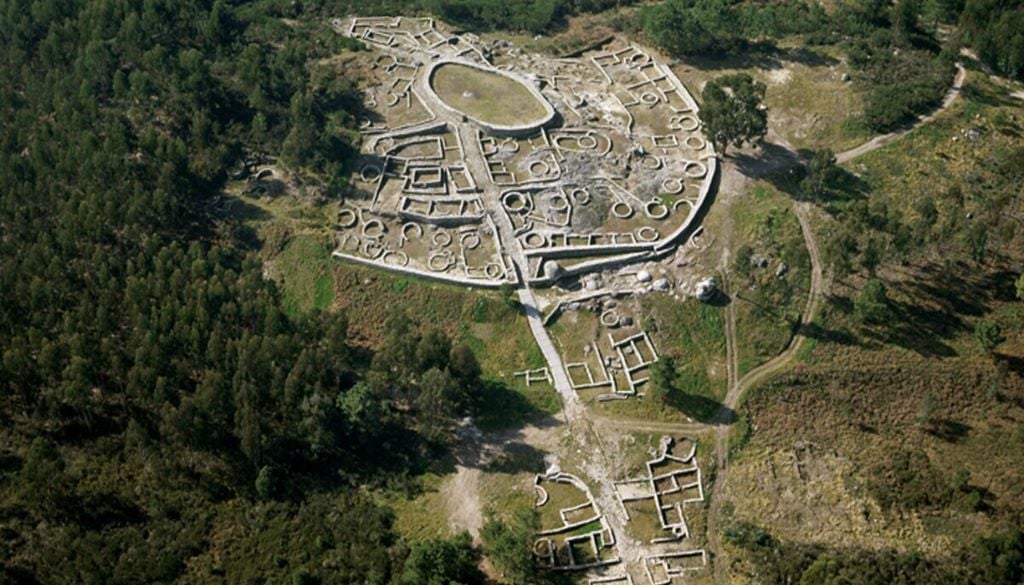
The name is dramatic, but the history is far more interesting. In Penafiel, the Castro de Monte Mozinho, also known as the Dead City, preserves the ruins of a settlement that began to be built more than two thousand years ago. And yes, it can still be visited today. Best of all, you can do so for free.
As for the name, the explanation is quite simple. The site was inhabited for several centuries, but was eventually abandoned. Now, instead of residents, there are the remains of houses, walls and other structures that help us understand what life was like on this hill around two thousand years ago.
“On a hill in the municipality of Penafiel, 408 metres above sea level, there is a hidden settlement with more than two thousand years of history,” writes ‘NiT’ magazine. “No one lives there anymore and what remains are stone walls and the remains of ancient dwellings that shaped the region.”
Covering approximately 22 hectares (equivalent to 30 football pitches), Castro de Monte Mozinho is spread across the parishes of Galegos, Oldrões and Valpedre. It is therefore one of the largest fortified settlements from the Roman period in northern Portugal.
A city with houses, walls and stone warriors
But the story of the settlement began much earlier. More precisely, between the end of the 1st century BC and the beginning of the 1st century AD, at a time when the Roman presence was beginning to transform the north-western Iberian Peninsula.
And don’t think Rome erased everything that already existed. On the contrary. The remains found at Monte Mozinho show a mixture of Castro traditions and new Roman influences.
Among the structures identified are circular houses, characteristic of an older tradition, as well as square or rectangular dwellings.
Over time, the settlement grew and acquired different areas, streets and defensive structures. In the upper part, for example, there was an acropolis, enclosed by a wall, which is thought to have been used for various community activities.
It is also in this higher part of the settlement that some of Monte Mozinho’s best-known remains were discovered. At the entrance to the wall, two statues of Gallaecian warriors, carved from granite, were found. Today, anyone wishing to see them will have to visit the Penafiel Municipal Museum, as the pieces are no longer located alongside the ruins.
What happened to the “Dead City”?
Despite the changes it underwent, the settlement remained occupied for several centuries. Archaeological remains point to an occupation that continued until at least the 5th century.
It was from this point onwards that the site began to lose importance and was gradually abandoned. No, this was not likely to have been a sudden event. Instead, it appears to have been a gradual process, with the population seeking out other places to live.
“Some inhabitants may have moved to lower, more open areas, while others may have left the region,” says the ‘Away’ website.
For many centuries, only the abandoned structures remained on top of the hill. It was only much later that the site once again attracted the interest of those wanting to understand what had happened there.
The first modern investigations date back to the beginning of the 20th century, but archaeological excavations officially began in 1943. Work resumed decades later and made it possible to identify houses, streets, walls and other remains, as well as objects such as coins and pieces of pottery.
It is thanks to these discoveries that it is now possible to reconstruct, at least in part, the history of the people who lived at Monte Mozinho.
A free visit in Penafiel
The best part is that you don’t need to book a guided tour or buy a ticket to explore the settlement. Access to the archaeological site is free and the visit can be made outdoors, following the information available at the site.
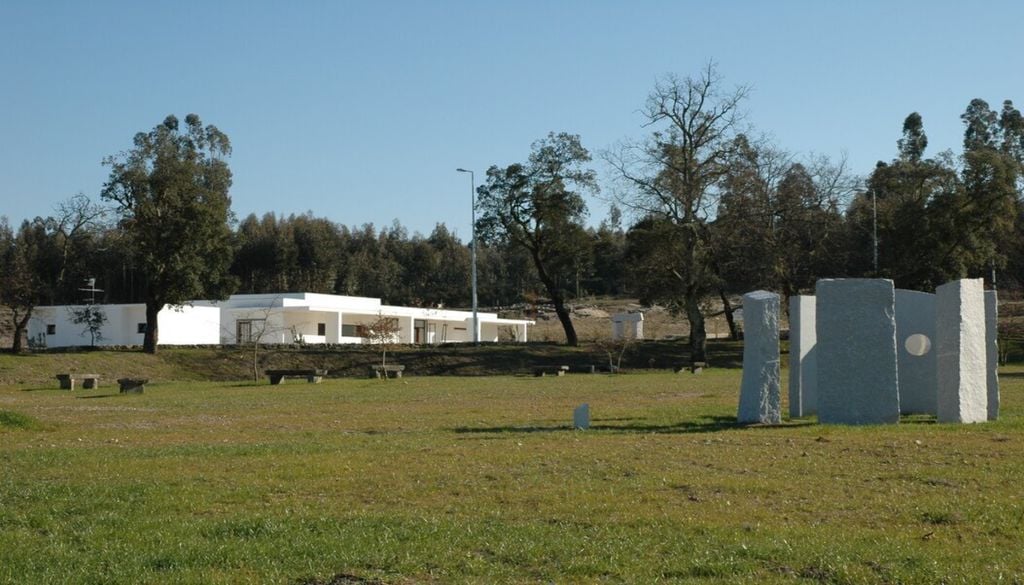
To complement the visit, there is also the Castro de Monte Mozinho Interpretation Centre, established in 2004 and linked to the Penafiel Municipal Museum. The centre was designed to provide context for the remains discovered during the excavations and help visitors understand the development of the settlement.
“Although you can visit the ruins in the open air, the museum is temporarily closed,” warns ‘NiT’.
There is also parking and a picnic area nearby, allowing you to extend your visit without much planning. Even so, there is one simple rule worth remembering: the ruins are archaeological heritage and should not be used as a path, bench or, even worse, as an improvised climbing wall.
“For those looking to discover Portuguese heritage away from the best-known tourist circuits, the ‘Dead City’ is therefore one of those places where history is no longer just in books, but is literally beneath our feet,” the ‘Away’ website states.
News references
Museu de Penafiel. (2026). O Castro de Monte Mozinho integra a Rede de Castros do Noroeste Peninsular.
NiT, Pincelli, I. (2026). A “cidade morta” com mais de dois mil anos em Portugal que pode visitar à borla.
Away. (2026). Esta “cidade morta” tem mais de 2 mil anos, fica em Portugal e é de entrada gratuita.