
Better than a lawn: low-maintenance alternatives for a sustainable garden
The evergreen, closely cut lawn remains the ultimate ideal for many garden owners. However, this classic English lawn is not actually very beneficial for nature.
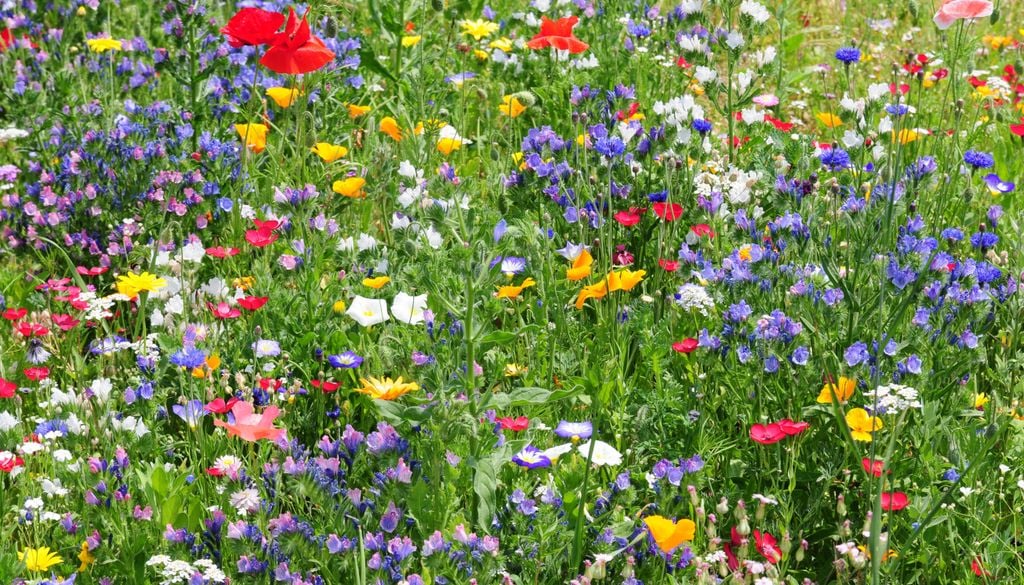
From an ecological perspective, such a short lawn is not really an advantage. Of course, it is still better than a concrete wasteland or paving stones in the front garden.
A lawn can be so much more
In times of heatwaves, even a short lawn can benefit from a few small changes. A long-term solution for a more robust lawn and increased habitat for insects and other plant species can be achieved quickly. There are many simple and effective alternatives.
The simplest alternative is to create a clover lawn. All that is needed are clover seeds and one or two loosened patches of lawn. The loosened soil allows the clover seeds to establish themselves easily.
Clover establishes quickly
The clover will begin growing within a few weeks and, alongside the traditional lawn, will form small patches that help retain moisture, attract insects and produce attractive blossoms in spring. Another option is the deliberate creation of a flower meadow.
A flower meadow can sometimes develop naturally and quite quickly simply by leaving the lawn to grow undisturbed for a period of time. It is also possible to purchase special seed mixes from garden centres.
Flower mixes help lawns through drought periods
A mixture of different grasses and herbs such as daisies, clover and self-heal gives the lawn something special.
A flowering lawn is particularly suitable for families with children or pets. Not least, a flowering lawn can still be cut back easily when needed.
The most beautiful form of transformation is therefore a wildflower meadow. It is not only especially attractive and impressive because of its many colours, but also provides a wonderful habitat for insects.
The most sustainable option: a wildflower mix
Wildflower mixes can be established particularly well around the edges of a garden and contribute to greater biodiversity. Where there is plenty of space, creating a large meadow does involve some initial work.
However, once established, a wildflower meadow is extremely low-maintenance. It generally requires no fertiliser and only needs to be mown once or twice a year.
Resource of the news:
Utopia.de (2026). Rasen abschaffen? Diese 6 umweltfreundlichen Alternativen sind sinnvoller und schöner als Gras. Ratgeber.