
Seven fast-growing shrubs, ideal for separating spaces and gaining privacy (even between balconies)
Alternatives that combine fast growth, easy maintenance, and ornamental value to transform awkward boundaries into private, natural spaces.
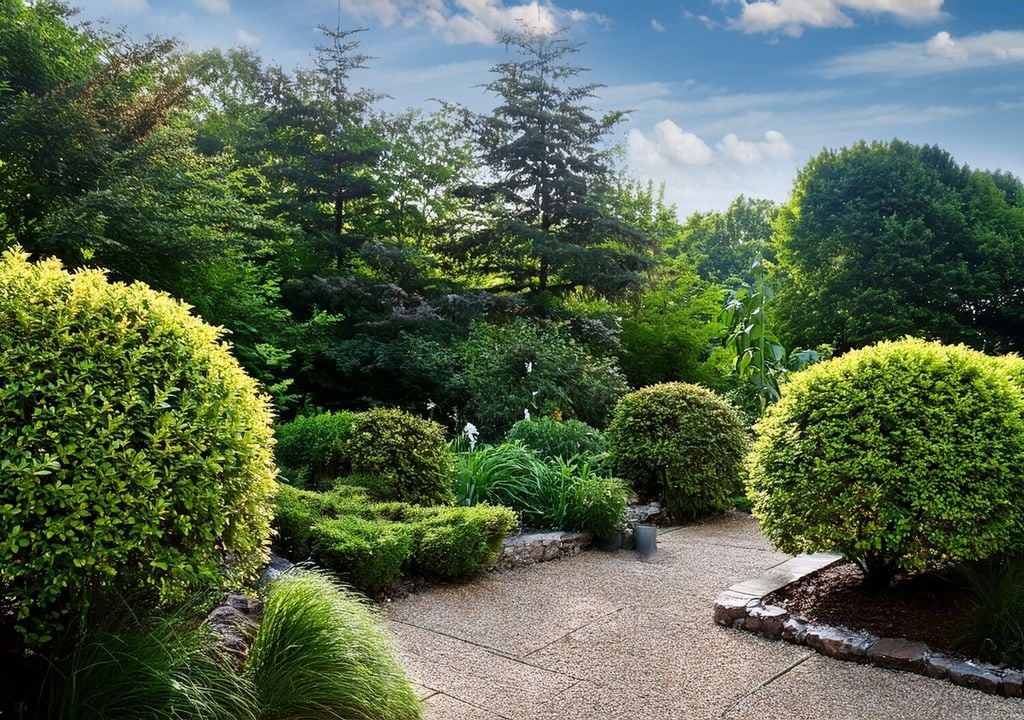
You do not need to build a wall or partition to create a private outdoor space at home. There are shrubs that, in just a few seasons, grow enough to form a dense, living green screen that provides privacy without structural changes or excessive expense.
The key is choosing well, according to the space available and the level of maintenance you are willing to give them. Many species grow quickly—between half a meter and more than one meter per year in good conditions—and form dense masses that work as a visual screen as well as a barrier against wind or noise.
The following options look beautiful in small patios or larger gardens. But they can also adapt to more limited spaces, such as terraces or balconies.
1. Japanese Pittosporum (Pittosporum tobira)
It is one of those shrubs that solves a lot without drawing too much attention. Until it blooms. Japanese pittosporum is evergreen, relatively fast-growing—around 30 to 60 cm per year—and forms dense masses that work very well as a green screen.
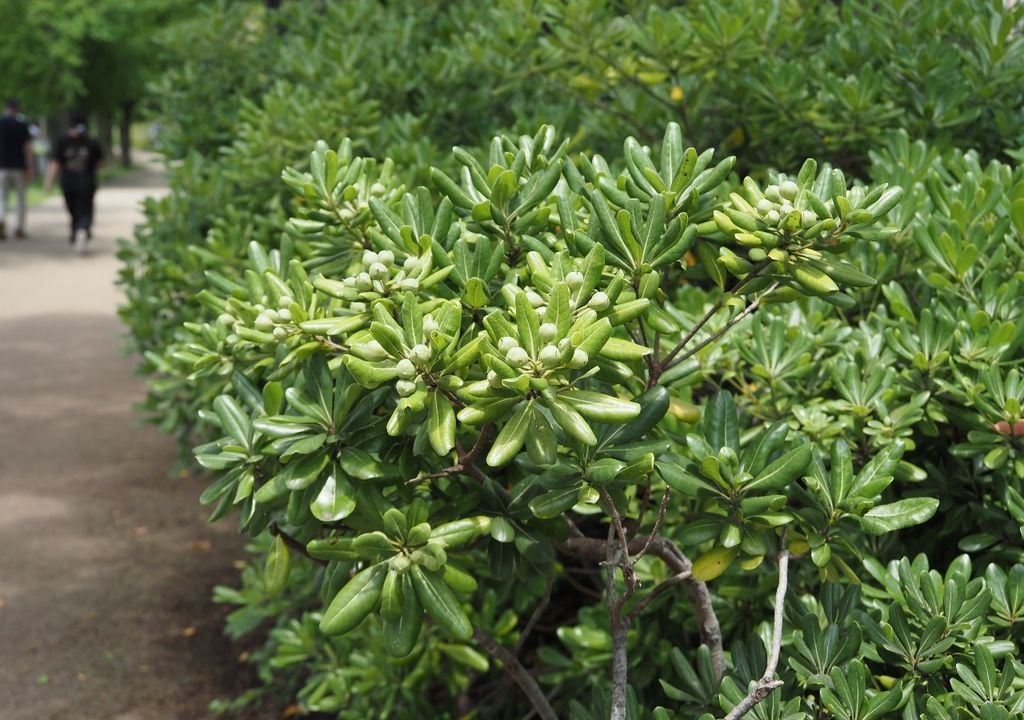
It adapts to full sun or partial shade and tolerates wind, salinity, and urban conditions without trouble.
In spring, it produces small, white, highly fragrant flowers. Once established, it is not demanding with watering and responds well to pruning, which makes it possible to keep it compact. It also works very well in pots: with a large container and periodic pruning, it can create green divisions on balconies.
2. Photinia (Photinia)
Hard not to notice: its red shoots contrast with the green and bring life to any boundary. It grows quickly—about 40 to 60 cm per year—and responds very well to pruning, which helps it become denser.
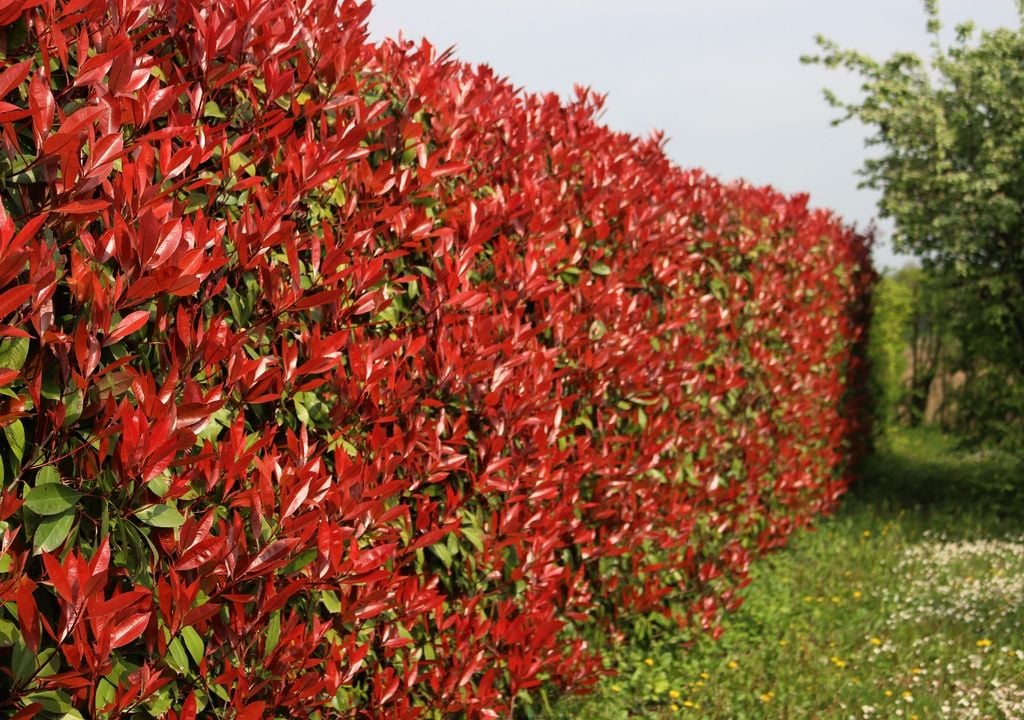
It needs sun to show its best color, along with moderate watering, without waterlogging. It forms attractive and fairly compact living hedges.
It also adapts to pots, although it grows more slowly there: it requires large containers, good light, and more frequent watering.
3. Oleaster (Elaeagnus ebbingei)
One of the most reliable options for closing off a space in a short time. It can grow between 50 and 80 cm per year and forms dense hedges, with dark green leaves and silvery highlights. It adapts to sun or partial shade. It tolerates strong winds, poor soils, and water scarcity once established.
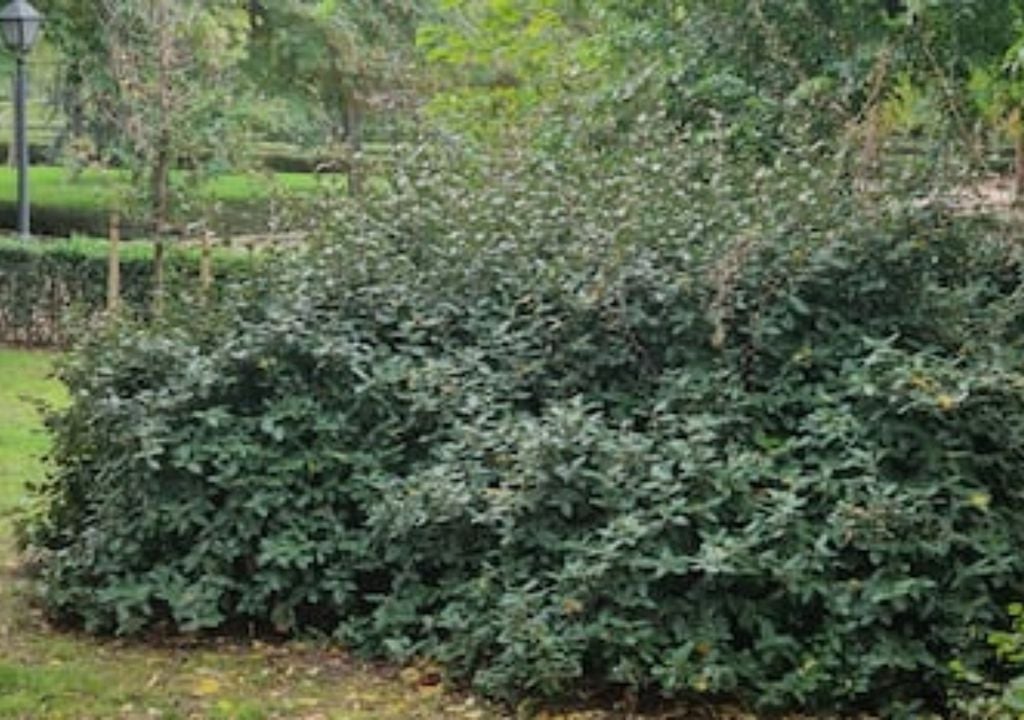
Pruning is not a problem: it tolerates it very well and makes it possible to create formal hedges or more relaxed ones. And it has an unexpected bonus. In autumn, it produces small, discreet flowers, almost hidden, but with an intense and sweet fragrance that can be noticed several meters away.
It is viable on balconies if the pot is large: it keeps its hardiness, although it needs more regular watering.
4. Forsythia (Forsythia spp.)
Before the leaves emerge, it becomes covered in yellow flowers. It grows quickly and reaches a good size in just a few years, although its structure is more open than that of other shrubs.
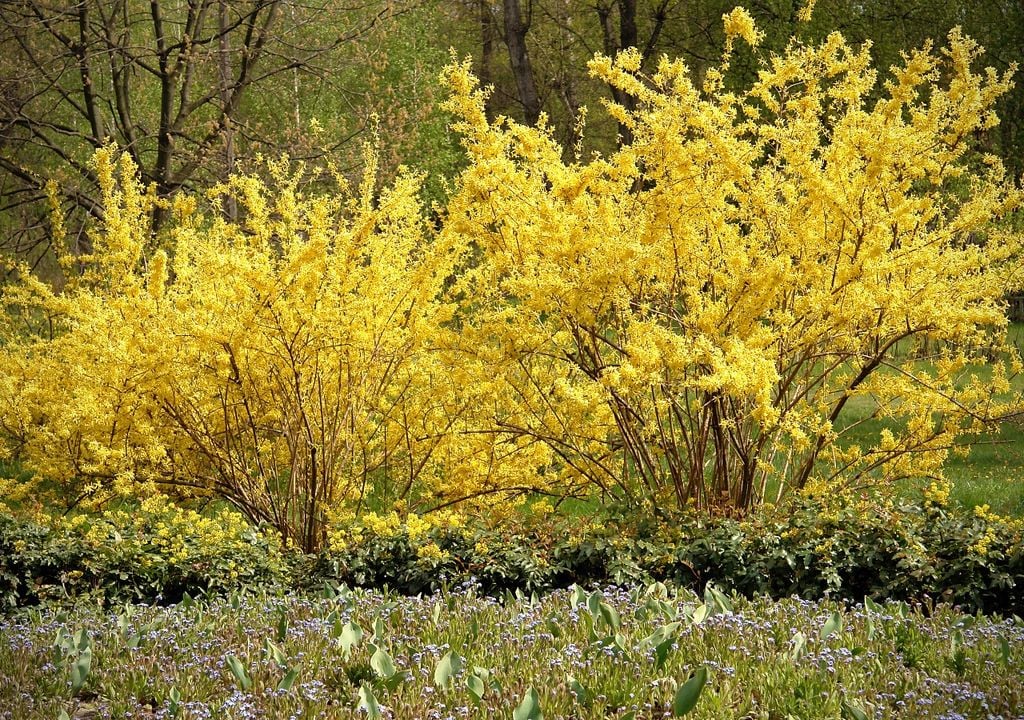
It prefers full sun and moderate watering. To keep it denser, it is best to prune it after flowering. It works better in informal hedges or more natural divisions. In pots, it is not the best option: it tends to spread out and loses its ability to form a compact screen.
5. Escallonia (Escallonia spp.)
Balanced and reliable. It grows between 30 and 60 cm per year and can form a dense hedge in two to four seasons. It reaches between 2 and 3 meters, although it can be kept lower with pruning.
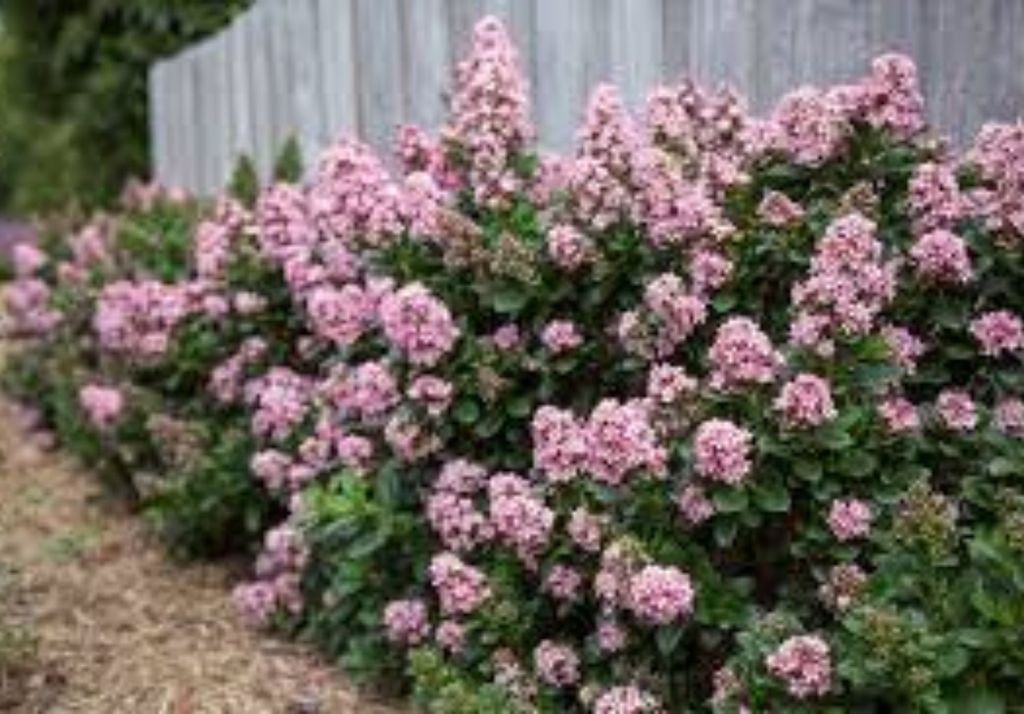
It prefers full sun, moderate watering, and good drainage. It resists wind and coastal environments, and keeps its foliage year-round. In summer, it adds flowers in shades of pink, red, or white.
It can adapt to pots, but with less development: it is best used only in large containers and with the understanding that it will grow more slowly.
6. Duranta (Duranta erecta)
Widely used, especially in temperate and warm climates. It grows quickly, forms dense hedges, and adds violet flowers with small orange fruits.
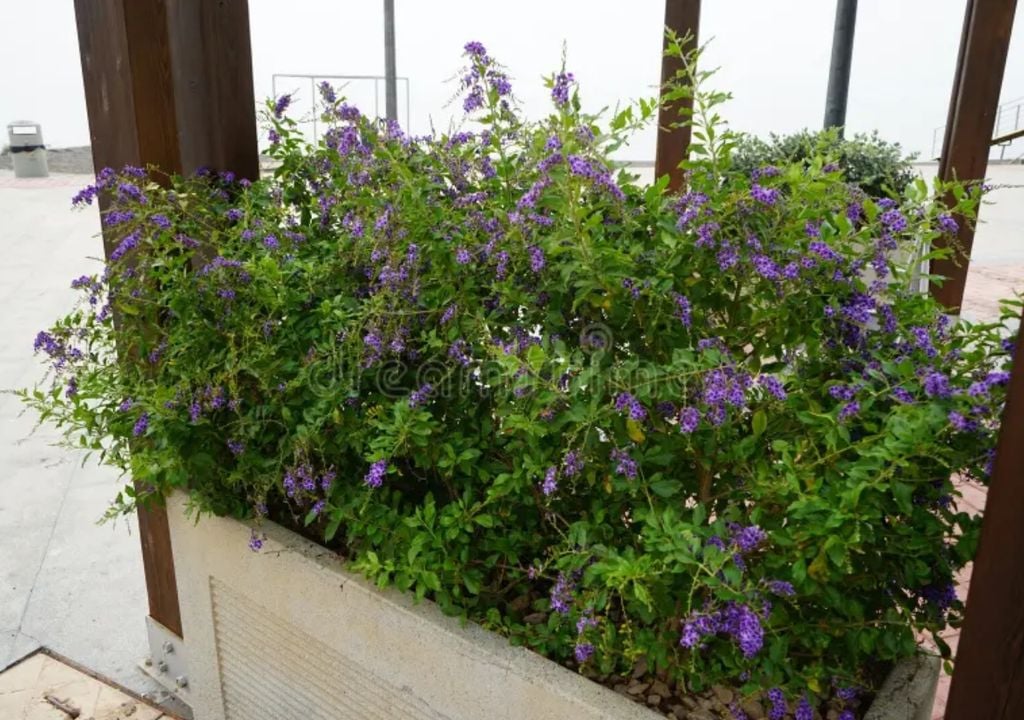
It prefers full sun and regular watering. It tolerates pruning well, which makes it possible to keep it compact. It is sensitive to strong frosts, which can affect its foliage.
In pots, it is not the most practical option: it needs space to develop and loses density in containers.
7. Privet (Ligustrum spp.)
The classic among classics. It grows quickly—between 50 cm and more than 1 meter per year—and forms compact green walls in a short time. It adapts to sun, partial shade, and different soil types, even in demanding urban environments.
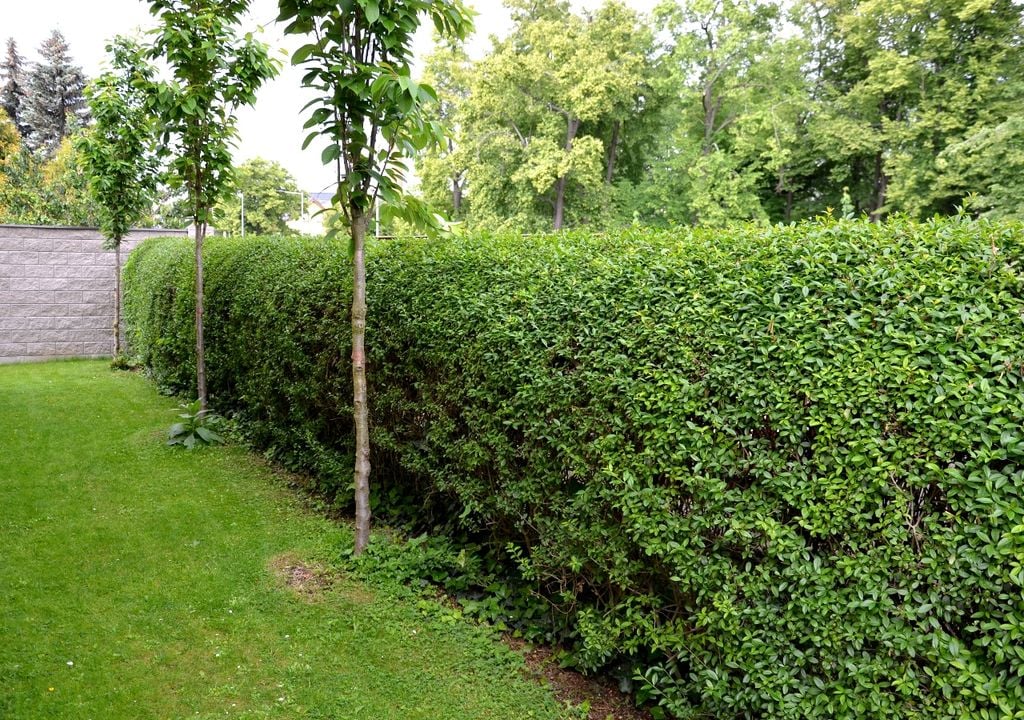
It tolerates heavy pruning, which makes it easy to keep neat and tidy. It requires moderate watering at first, but later becomes resilient. It can be used in pots, although it requires large containers and frequent pruning to control its vigor.
Unlike trees that become bare in autumn, these shrubs renew their leaves gradually. They never look empty, and that is why they work as green screens all year long.
In the end, the choice is not only about how fast they grow, but about how you want to live in that space. Some shrubs build green walls in record time, while others also add flowers, color, or texture. And some, even in pots, manage to bring that freshness to a balcony.