
Strawberry plants: the best time to plant them and the mistakes that can ruin your harvest
The strawberry plant arrives without a single leaf, looking like a dry root. What happens in the next ten minutes, and above all, the depth at which it is planted, determines the spring harvest.
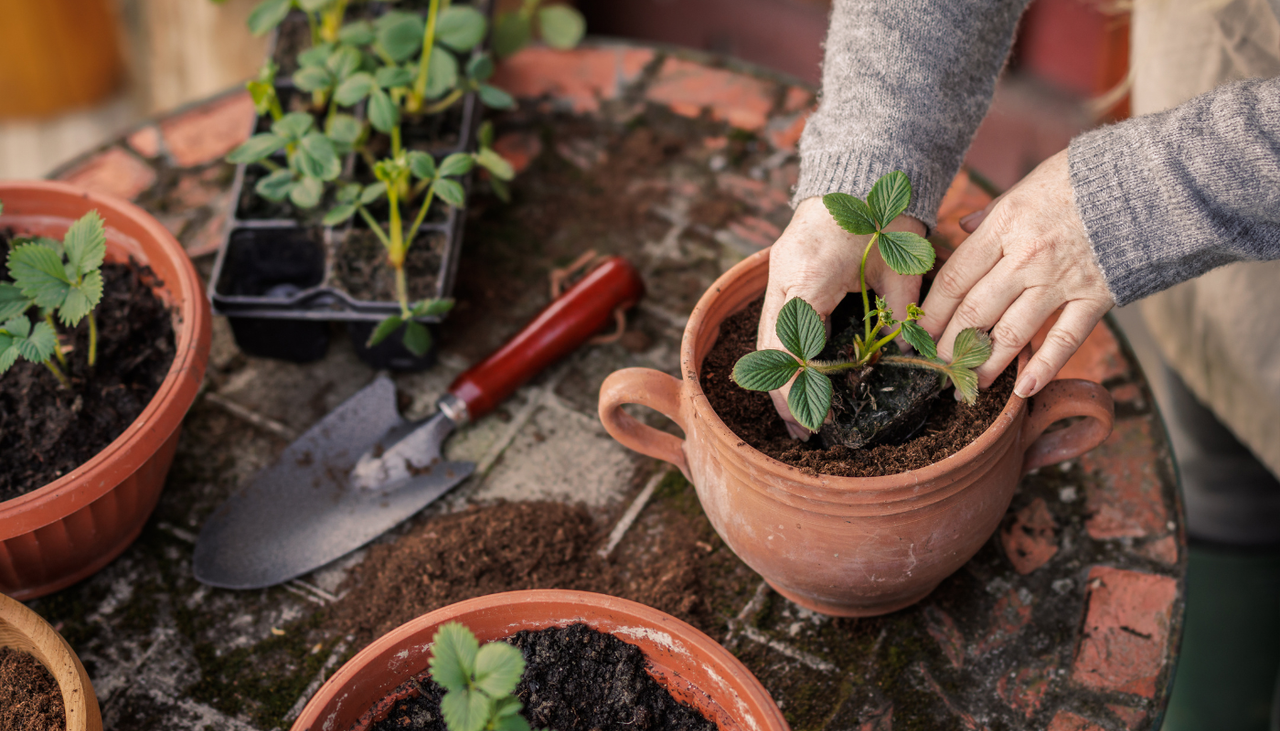
The ground should already have been prepared since the summer, and now comes the part that seems simplest of all: digging a hole and putting the plant in it.
Yet this is precisely where most strawberry harvests are lost, almost always because of a difference of just a few millimetres.
Everything depends on the height of the crown
When you look at the plant as it arrives, you see a bundle of roots and, at the top, a short, swollen section from which the leaves will emerge. This is the part that determines the success of the entire planting process.
This swollen area between the roots and the leaves is called the crown. It is the living part of the strawberry plant, from which all the shoots emerge, and it is the only part that must neither be buried nor left exposed to the air. It must sit exactly level with the soil.
If the crown is buried, it rots during the first few weeks of rain and the plant dies before it ever has a chance to establish itself. If it sits too high, the roots are exposed, dry out in the first breeze and the plant gradually withers.
It is worth planting carefully and checking each plant individually, because this is a mistake that cannot be corrected afterwards.
From the box to the ground on the same day
The plant arrives dormant and without leaves, so it is normal to wonder whether it is alive. It is, but time is of the essence. It also has a specific name that appears in catalogues and on nursery labels.
Alongside this, you may also find fresh plants, lifted from the nursery and sold immediately, while they still have some leaves and their roots remain active. These can also be planted at this time of year, and everything that follows applies to both types.
If the roots are very long, trim them to around ten centimetres so that they fit straight into the hole. Roots that bend upwards inside the planting hole are another common mistake and result in weak plants.
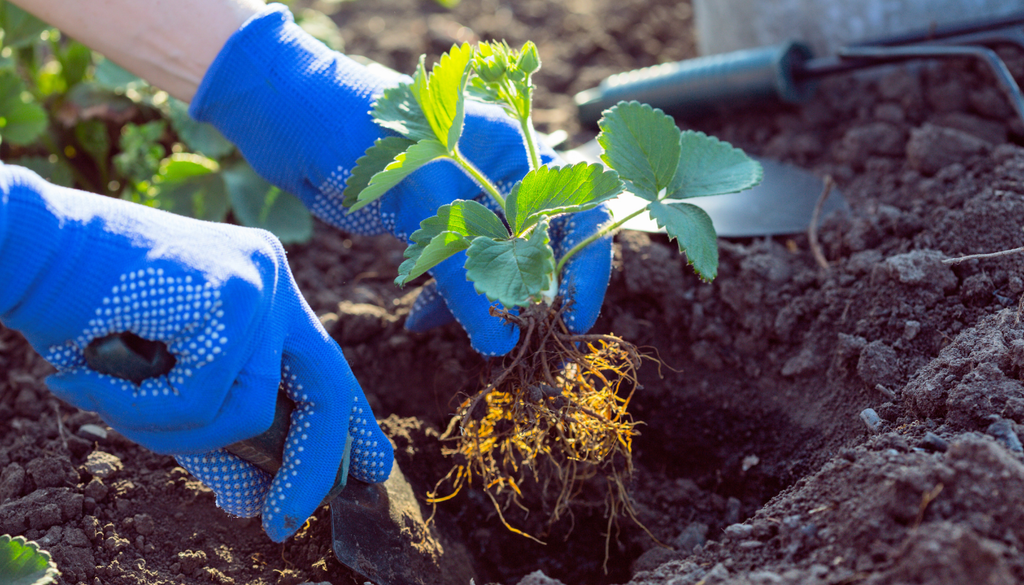
Soak the roots in water for 15 to 30 minutes before planting, and no longer than that. The aim is to rehydrate them, not drown them.
Above all, do not leave the plants in the sun while you work. The roots can dry out within minutes. Keep them covered with a damp cloth and take them out one at a time.
The mistakes made at this stage recur every year and are always the same. The following table brings together the most common ones, explaining their consequences and how to avoid them.
Mistake | What happens | How to avoid it |
|---|---|---|
Crown buried | It rots during winter rainfall | Leave it exactly level with the soil |
Crown too high | Exposed roots dry out | Bring the soil up to the base of the crown |
Roots bent inside the planting hole | Weak plant and low yield | Trim the roots to ten centimetres and position them straight |
Roots left in the sun before planting | The plant dies within a few days | Cover with a damp cloth and plant one at a time |
Plants too close together | Poor airflow, more diseases and small fruit | Leave 30–35 centimetres between plants |
Fresh manure in the planting hole | The crown and roots rot | Use well-rotted compost, applied in summer |
| The most common mistakes when planting strawberry plants in autumn, their usual consequences and how to avoid them. The spacing given refers to planting in raised beds with two rows. Source: original compilation. | ||
After planting, three weeks of careful attention
The plant has no leaves through which to transpire, but it needs to grow new roots, and to do so it requires consistently moist soil.
Water immediately after planting, even if the soil appears moist, to settle the earth around the roots and eliminate air pockets. Then maintain the moisture without waterlogging the soil for the first three to four weeks.
This is also the time to apply a covering. Black plastic warms the soil, suppresses weeds and keeps the fruit clean in spring. A layer of straw does much the same thing and is cheaper, although it needs to be replenished.
Where to plant, and when in each region
Strawberry plants need full sun, well-drained soil and, above all, ground that has not been used to grow strawberries, tomatoes, potatoes or peppers in recent years.
In Odemira and the south, the planting window extends comfortably into November. In Leiria and the central coastal region, October and the first half of November are the best periods. In Braga and the inland north, it is advisable not to go much beyond October, because the plant needs time to establish its roots before the soil cools.
Runners: the hidden mistake
Finally, there is one mistake that causes no problems now but can halve your harvest later.
When spring arrives, the strawberry plant starts sending out long stems that spread across the ground in every direction. This looks like a sign of a vigorous plant, and partly it is, but there is a cost that becomes apparent at harvest time.
In the first year, cut off all the runners as soon as they appear. This allows the plant to concentrate all its resources on the crown and the fruit, and the difference in the harvest is noticeable.
In the second year, the strategy is reversed. At that point, allow some runners from the healthiest and most productive plants to take root, as these will be used to renew the strawberry bed. A strawberry plant produces well for two or three years before its productivity declines, so it is advisable to have new plants coming along all the time.
To choose the right day, check the forecast for your area. Plant when the soil is moist but workable, preferably a few days after rain, and avoid windy days, which dry out exposed roots much faster than sunshine does.