
Can we travel through time? Neil deGrasse Tyson explains why the future is possible, but the past isn’t
The American astrophysicist explains how relativity allows us to experience the passage of time at different rates, and why travelling back to the past remains beyond our reach.
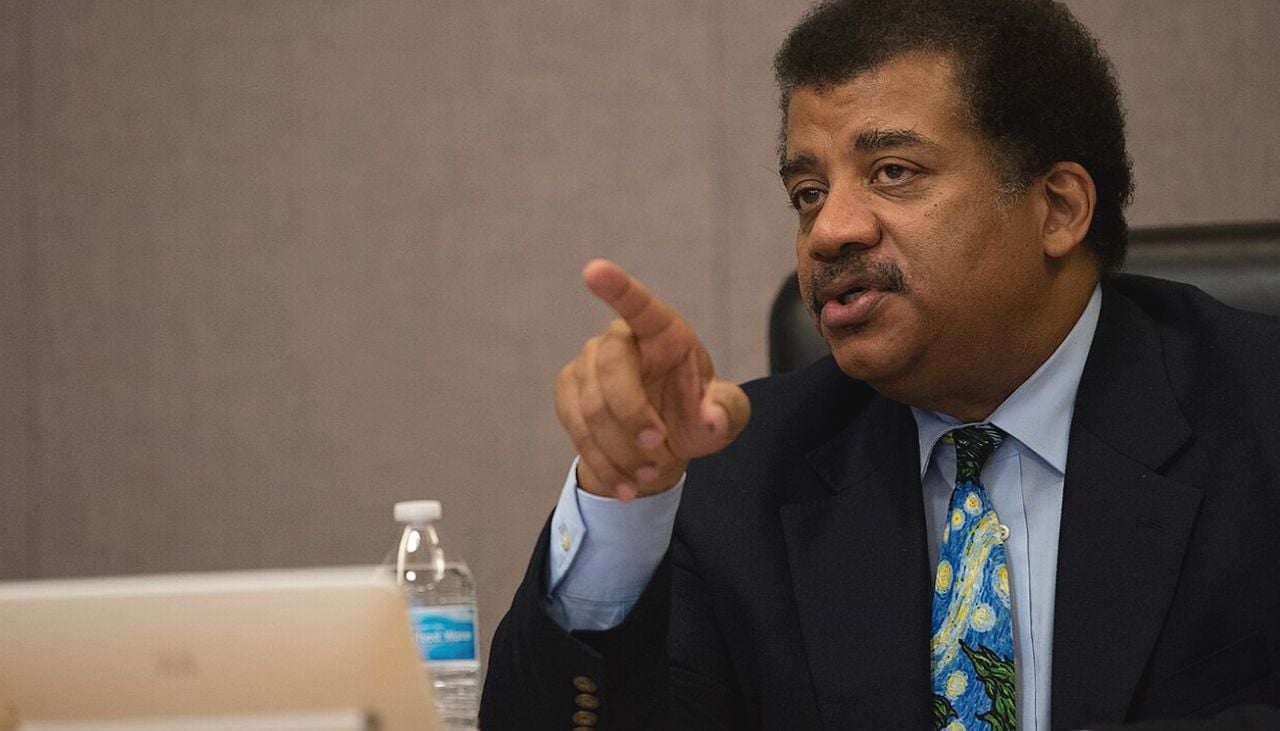
Time travel has featured in novels, films and television series for many years, but physics has always offered an explanation that differs considerably from these stories. Astrophysicist Neil deGrasse Tyson addressed this question during a recent interview, in which he explained what possibilities science considers and which still have no experimental evidence to support them.
The conversation also left room for other topics related to science communication. The American researcher discussed the limits of time travel and took part in a ranking of several well-known figures recognised for their work in science and communication.
Neil deGrasse Tyson explains time travel to the future
During his appearance on the YouTube interview programme Hot Ones Game Night, broadcast on 14 October and hosted by Joe Santagato, Tyson answered a question about whether human beings could ever manage to travel through time. His initial reaction was to dismiss the idea, although he later qualified his answer to distinguish between travelling to the future and returning to earlier periods.

“We can travel through time to the future, but not to the past,” the astrophysicist explained. With this statement, he summarised a distinction that is fundamental to understanding what physics allows and what still belongs to the realm of fiction.
To illustrate his point, he described the case of someone travelling through space at a very high speed. If they aged by ten minutes during the journey, they could return to Earth to discover that an hour, a day or even a year had passed for those who had remained on the planet. The difference would depend on the speed reached.
This effect is known as time dilation and is related to Albert Einstein’s Theory of Relativity. Time can pass at different rates depending on the observer’s motion and gravitational conditions. Consequently, the traveller could return to an Earth that was many years ahead of the one they had left behind.
Why we cannot return to the past, according to Neil deGrasse Tyson
Tyson’s explanation has one essential limitation: experiencing a shorter period of time than other people does not allow someone to choose a date freely or return to an earlier moment. Relativity describes differences in the amount of time that passes, but it does not prove that travelling backwards through history is possible.

The astrophysicist summarised this idea with a reflection on the limits of our experience of time: “It’s a form of time travel, but there’s no way you can travel to your own future. No. You’re a prisoner of the present on your own timeline, in a constant transition between your inaccessible past and your unknown future.”
The statement refers to the impossibility of controlling our own passage through time in the way that happens in many films. In the example put forward by Tyson, the traveller arrives at a future that is further ahead for everyone else, but continues moving forwards from their own present. They have no proven method of returning to their starting point.
Furthermore, making space travel at speeds close to the speed of light a reality presents enormous technological challenges. The existence of time dilation does not mean that we can currently organise journeys of this kind or that they are within the reach of available technology.
Stephen Hawking, Carl Sagan and Bill Nye: Tyson’s ranking
At another point in the interview, Santagato asked the astrophysicist to rank four personalities associated with science according to their intelligence: Stephen Hawking, Carl Sagan, Bill Nye and Neil deGrasse Tyson himself.
The question led the researcher to explain his preferences without establishing a ranking based on objective measurements. Tyson placed Hawking in first position, presenting him as the undisputed candidate, with the exception of Albert Einstein.
He then chose Sagan, known for his science communication work, and acknowledged that he would place him ahead of himself.
“Without a doubt, Stephen Hawking, right at the top, OK? The undisputed champion. Well, after Einstein, yes. I’d say Carl Sagan would be next, who was an intelligent guy. Yes, I’d put him ahead of me,” he replied.
The choice of the final two positions was different. Tyson explained that he is friends with Bill Nye and considers their intellectual abilities to be similar. For this reason, he avoided distinguishing between them and shared third place with him. The ranking therefore remained a personal opinion expressed during an interview, rather than a scientific assessment of the intelligence of the four individuals.