
Summer Lawn Care: Expert Tips for Keeping Your Lawn Green and Healthy Even in Extreme Heat
Don't let extreme heat be an excuse to keep your garden spotless. Today we'll explain how to protect your lawn during this time and keep it lush, fresh, and green all summer long.
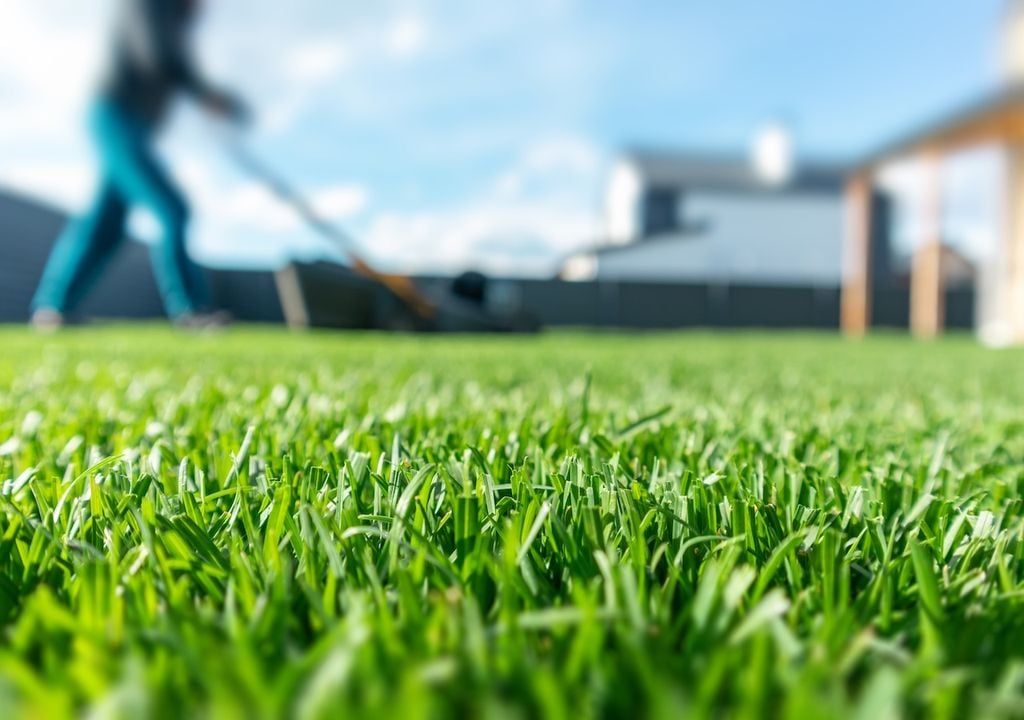
Spain has been facing an unusually long-lasting heatwave since the beginning of the month, and besides the problems it causes for people—who need to hydrate twice as much—other victims include plants in general, and lawns in particular. Under these conditions, keeping your lawn green and healthy is no easy task, but with proper planning it is entirely possible.
Practical tips for your garden lawn
Like any other living thing, grass suffers stress when heat combines with dry soil. Yellow patches appear, growth slows, and roots can weaken. That’s why it’s essential to apply specific care adapted to this period.
Without a doubt, watering is the most important factor in summer. To avoid rapid evaporation, always water at dawn, between 6:00 a.m. and 8:00 a.m., or at dusk, when the temperature drops and the grass can better absorb the moisture.
The best time to water the lawn is early in the morning, between 5 and 10 a.m.,
— EIRS MX (@EIRSmx) May 27, 2025
Deep, less frequent watering: Make sure the water reaches the roots, not just the soil surface. The best irrigation system is sprinklers. pic.twitter.com/BgmQLzAAk6
It is recommended to apply between 20 and 25 liters of water per square meter two or three times per week, depending on the type of lawn and local climate. It’s better to water deeply fewer times than to water lightly every day, which only encourages weak roots.
A taller lawn withstands heat better and retains moisture
In summer, it’s advisable to raise the mower height to between 6 and 8 centimeters, although this will also depend on the type of grass you have.
Also, if the grass clippings are fine, it’s a good idea to leave them on the lawn as “mulching,” since they act as a protective cover against the sun. This organic layer not only helps retain soil moisture and reduce watering frequency, but as it decomposes, it adds nutrients that naturally improve soil quality.
Light summer fertilization keeps the lawn healthy without stressing it
Avoid fertilizing the lawn during a heatwave. While fertilizers provide nutrients, applying them in extreme temperatures can burn the leaves and damage the roots.
FERTILIZER with GRASS CLIPPINGS
— Armando Barreto (@Armanbarret) December 16, 2021
When you mow the lawn, weeds included, don’t throw it away. If you use it for compost, save a portion to naturally produce nitrogen and use it on all your plants, not just the lawn. That way, you’ll enrich the soil with nutrients. pic.twitter.com/Rp4dPIsjLo
The ideal approach is to have fertilized at the start of summer with a slow-release product. If you need to give your lawn a boost in August, choose organic liquid fertilizers and apply them in the late afternoon after watering.
Aerating and dethatching the lawn improves soil health in summer
If the lawn has compacted areas or gets waterlogged easily, it’s time to aerate. Aerating the soil allows oxygen, water, and nutrients to reach the roots more easily. For lawns in warm climates, it’s recommended once a summer, especially before a heatwave.
Dethatching, meanwhile, helps remove the surface thatch that prevents water absorption. This thatch is a layer of organic debris, roots, and dry leaves that accumulates between the lawn and the soil. If not removed periodically, it can suffocate the roots and encourage fungi and diseases.
How to protect the lawn during a heatwave
During the most extreme days of summer, like those this week, the lawn goes into survival mode. If yellow or dry areas appear, it’s best not to mow or overwater, as this could worsen the plant’s stress.
Deeply water the lawn during a heatwave, don’t mow it too short, and water at dawn and/or dusk for ten minutes straight so the water penetrates down to the roots and doesn’t just stay on the surface and evaporate. #lospeñotes #jardinoterapia #oladecalor pic.twitter.com/Cl7hqIg55S
— Los Peñotes (@Los_Penotes) June 25, 2019
Instead, avoid walking on it to prevent damaging weakened blades, and protect the most exposed areas with a shade net that reduces direct sunlight. If temperatures exceed 40 °C, it’s best to adjust watering—apply it more frequently but in smaller amounts to keep surface moisture without saturating the soil.