
Blinking plays key role in visual perception, fresh research reveals. It appears to do much more than just keep our eyes lubricated.

Blinking plays key role in visual perception, fresh research reveals. It appears to do much more than just keep our eyes lubricated.

Recent studies reveal how climate change would be affecting the composition of mollusc and crustacean species. This, in addition to affecting its flavor, initiates a chain of problems in Chile, which is today the third largest exporter of molluscs worldwide.

Researchers from the Dragoi Lab have collaborated and used wireless tech to monitor the behaviour of macaques free to roam in natural settings, to understand foraging in not only animals, but humans.

The discovery of a dormant black hole 33 times the mass of our Sun offers new clues about how such massive black holes form.

The North Atlantic Meridional Circulation (AMOC), also known as the Gulf Stream, is weakening, possibly due to global warming. This evidence is supported by a study published in the journal Oceanography.

Fruit eating birds are vital to ensuring a healthy forest but division of the forest is hindering regeneration efforts.

A technique that increases the amount of cloud cover could be an effective "painkiller" for global warming, helping to increase climate cooling.

Dangerous PFAS have been found at higher concentrations around coastal regions around the world. Scientists find how the pollutant is reentering the atmosphere from oceans in new research.

Cloud engineering may be more effective at cooling the climate than previously thought - and the effect is largely due to increased cloud cover.

This phenomenon manifests itself through the appearance of a large, undefined and black silhouette, which is nothing other than the shadow of the observer, surrounded by a halo similar to a rainbow.
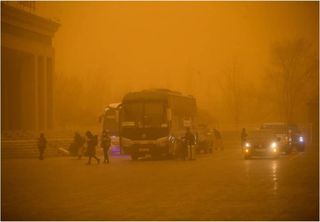
The phenomenon hits East Asia during spring, and Chinese scientists are developing an artificial intelligence model to more accurately predict these deadly storms.
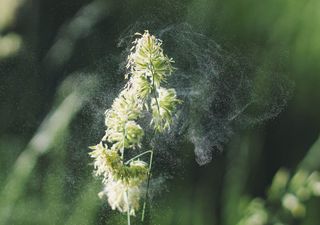
A new study has shown warmer temperatures are linked with earlier an hay fever season, and these temperatures could also bring with them new pollen in the UK.