Geophysicists at ETH Zurich (the Swiss Federal Institute of Technology) are using models of the Earth's lower mantle to identify areas where seismic waves behave differently than previously assumed.
A new study published in the journal Communications Earth & Environment describes how human activity in the region of the Aegean Sea resulted in lead contamination 5,200 years ago.
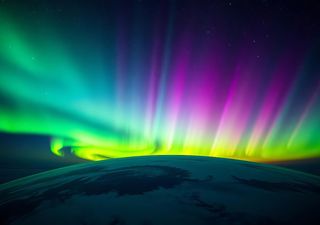
Space weather is known as the conditions and events that can affect the Earth and its environment, being a consequence of the behavior of the Sun, the magnetic field and the Earth's atmosphere.
Compounds hidden in bear fur could open the way to new developments in industries facing extreme temperatures.
A team of scientists has discovered a new fungus that turns spiders into zombie spiders. And there are many more...
According to some scientists, the surpassing of 1.5 °C of warming much earlier than we imagined is partly due to what is happening above the Arctic Circle.
The KOBE experiment, an initiative focused on finding potentially habitable exoplanets around K-dwarf stars, has made a significant breakthrough with the detection of the KOBE-1 system. More information: Why do stars and planets rotate? Spin, an omnipresent movement in the universe
The new generation of optical clocks is going to redefine the way we measure time in the future.
Researchers find whale song has a human language-like structure, suggesting a deep-seated commonality in communication systems.
Mission Spiritus is the second expedition in a seven-part study collecting data on the infiltration of micro and nano plastics in some of the most remote regions in the world.
In a new study published in the journal Science, researchers describe how the decline in polar bear numbers is due to a lack of food, which is preventing them from getting enough energy.
Initially considered a "mini-moon", this 10-metre-diameter object reveals its true origin after advanced spectroscopic studies.