
A tale of two mega icebergs and their very different impact on the Antarctic ocean
New research suggests two icebergs travelling the same path can be very different, but why, and what does this mean for the ocean and our climate?
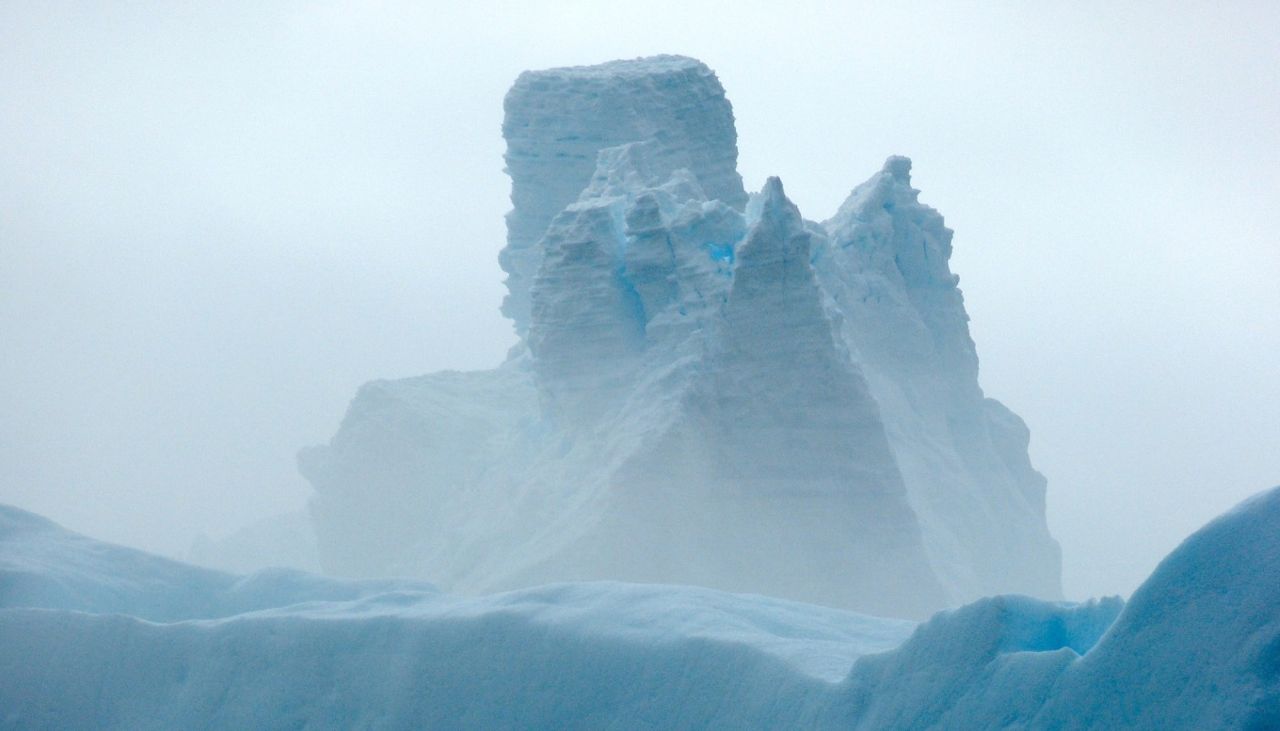
At over twice the size of Greater London and holding enough ice to supply the UK with freshwater for over 250 years, megabergs A23a and A76a are enormous – and they're melting.
This isn’t necessarily a bad thing: these ice giants release vital nutrients as they melt. But no two icebergs are identical, and this has important implications for the ocean, say British Antarctic Survey (BAS) scientists.
Marine fertiliser
As the climate warms, giant icebergs are expected to be more common. Some scientists had hoped this would have a positive impact on ocean life and the amount of carbon absorbed from the atmosphere.
This is because melting icebergs act as fertiliser for marine life, releasing important nutrients that allow tiny phytoplankton – the foundation of marine food chains – to bloom. But not all icebergs are equal.
Research comparing water samples from two of the most famous icebergs – A23a and A76a – on their journey north through Antarctic water has found only A76a provided beneficial nutrients to the waters it passed through, while A23a had no measurable effect.
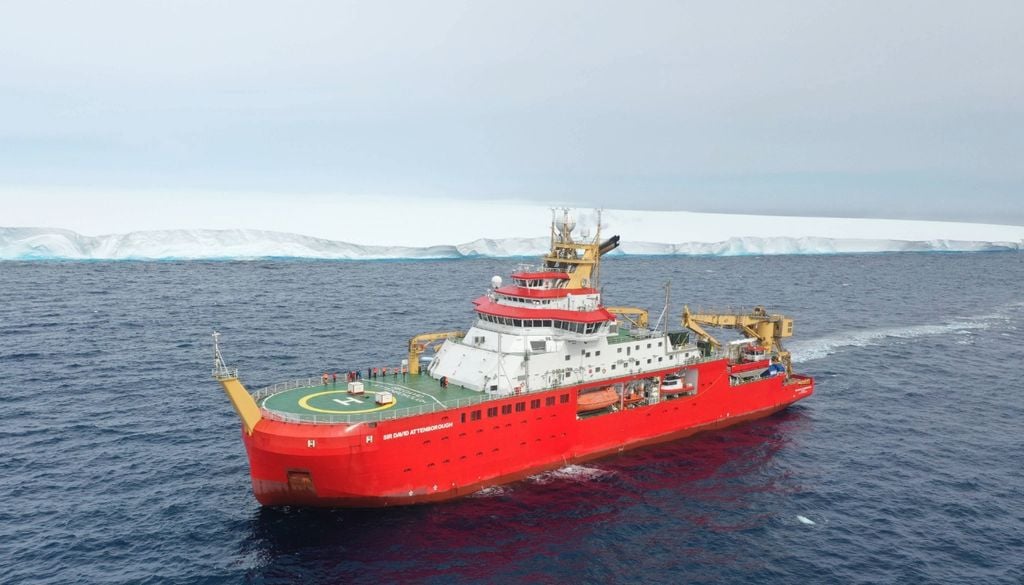
Samples from A76a were taken by scientists aboard the RSS Discovery in January 2023, and from A23a by a team aboard the RSS Sir David Attenborough in December 2023 as the megabergs traversed Iceberg Alley, situated between the Weddell Sea and the sub–Antarctic island of South Georgia.
A tale of two icebergs
Researchers analysed the chemical makeup and freshwater content of the samples, comparing the impact the icebergs had on the growth of phytoplankton in the water.
“We knew the icebergs could affect the waters around them differently, but the scale of that difference was a real shock,” said Laura Taylor, study leader and biogeochemist at BAS. “One was causing marine life to thrive; the other was having no detectable effect at all. It changes what we know about how icebergs interact with the ocean.”
The contrast could be down to the megabergs’ journey. A23a calved from the Filchner–Ronne Ice Shelf in 1986 but got stuck in the muds of the Weddell Sea for 30 years, eventually breaking free in 2020 before continuing its journey north along Iceberg Alley.
“When A23a got stuck, it lost about a quarter of its total area from melting, and with it, potentially lots of the nutrients from its outer layers,” explained Taylor. “By the time we came across it in Iceberg Alley, it may still have contained some of this ‘fertiliser’, but there wasn’t enough melting into the ocean to cause a phytoplankton bloom.”
A76a calved from the Filchner–Ronne Ice Shelf in May 2021 and quickly made its way north along Iceberg Alley towards South Georgia, and samples showed huge phytoplankton blooms in the waters surrounding the iceberg, fed by the nutrients escaping from the ice.
But there was another process at play in deeper water – upwelling, where melting ice can cause water and nutrients to be drawn up along the iceberg’s edge.
“In the case of A76a, we think that this process pulled up other important nutrients, such as nitrogen, phosphorus and iron – which are more common in deeper Antarctic waters – to the surface, helping phytoplankton bloom to a level that would not be possible with only the nutrients melting from the iceberg,” explained Professor Kate Hendry, an ocean scientist at BAS.
The study “could change the way we model climate in Antarctica,” said Professor Michael Meredith, an iceberg expert at BAS. “If some icebergs boost the growth of phytoplankton, and others have no effect, the role of each iceberg in the carbon cycle is much harder to predict. That means understanding why icebergs behave in different ways is needed to help us make better predictions about their climate impact.”
News reference
Giant icebergs impact regional biogeochemical cycling in the Southern Ocean, Nature Communications Earth and Environment, April 2026. Taylor, L., et al.