
Astronaut Christina Koch paves the way for women scientists as the first woman to travel to the Moon
The American astronaut, electrical engineer and physicist has made history by becoming the first woman to travel to the Moon, a milestone that goes beyond science and opens up new opportunities in space exploration for future generations of researchers.
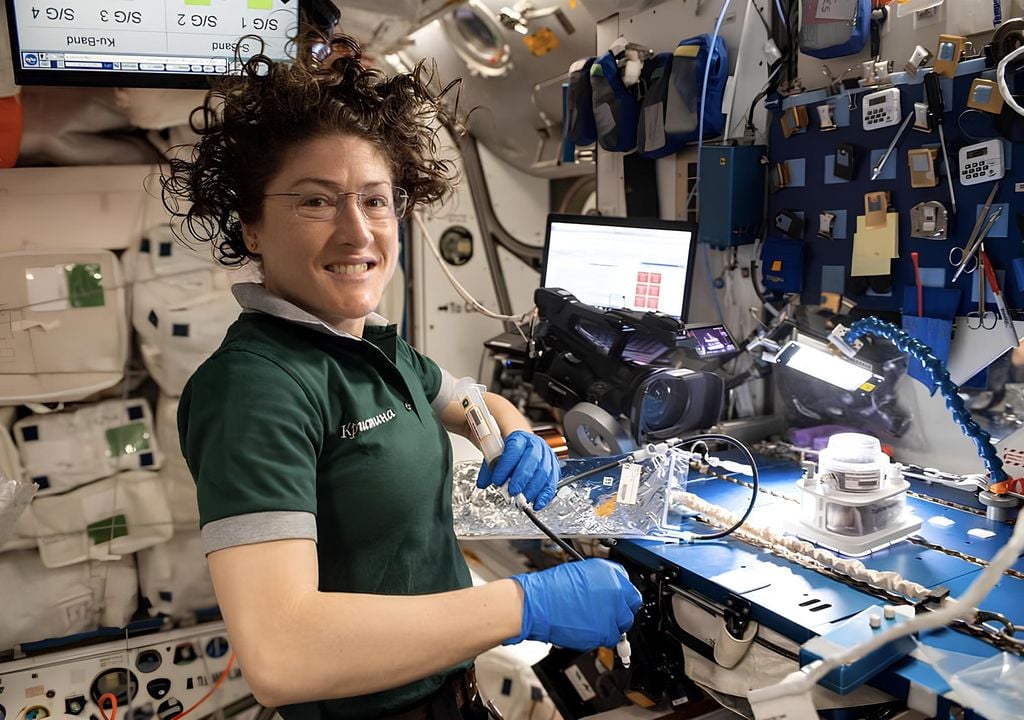
Space exploration is entering a new era shaped by diversity and inclusion, and one of its leading figures is undoubtedly Christina Koch. The 47 year old American astronaut, electrical engineer and physicist has made history by becoming the first woman to take part in a crewed mission around the Moon, a decisive step that paves the way for other women to set foot on the satellite in the future.
Her participation in NASA’s Artemis II mission is not only a technical achievement, but also a symbolic one. More than half a century after the Apollo missions, humanity is returning to the lunar environment with a crew that better reflects today’s society. Alongside Koch is Victor Glover, the first Black man to orbit the Moon.
A historic milestone in the space race
Christina Koch’s journey around the Moon marks a turning point in aerospace history. She is now the woman who has travelled the greatest distance from Earth, specifically 406,771.3 kilometres.
From being excluded from science and space entirely... To this, Christina Koch, on Artemis II, looking down at the entire planet, just incredible, if this doesn't give you goosebumps you're missing something. pic.twitter.com/Kb6ZfbJ4Ug
— Vittoria (@vitt2tsnoc) April 5, 2026
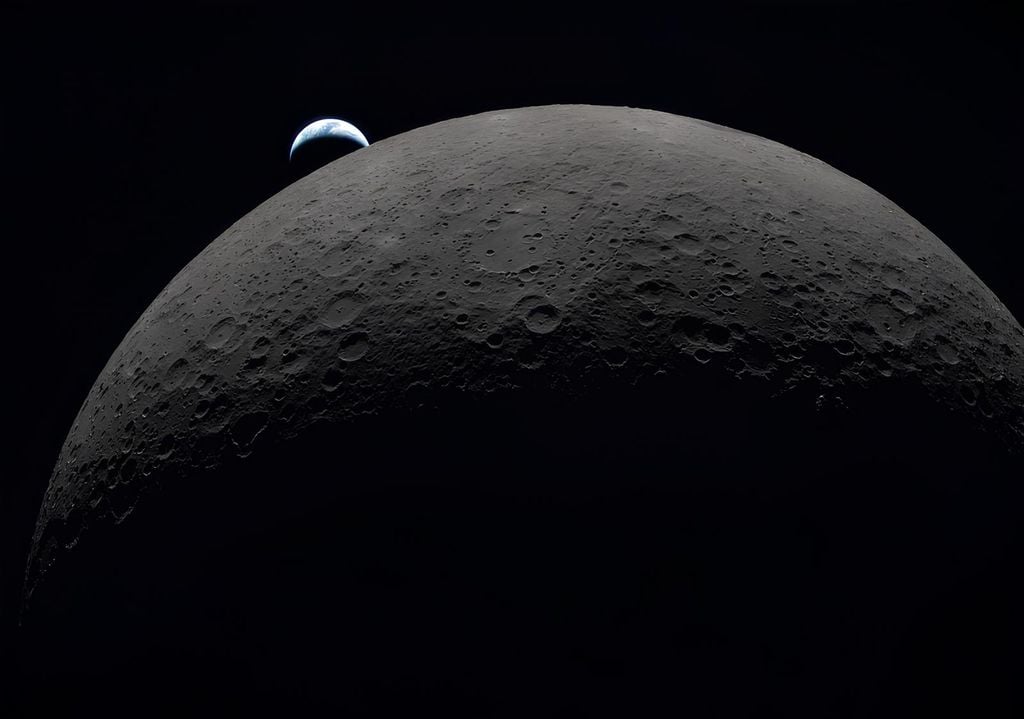
On board the Orion spacecraft, Koch and her crewmates have achieved other highly significant technical and scientific milestones, such as observing the far side of the Moon for the first time in human history.
These types of missions are essential because they serve as test platforms for future lunar landings. In this sense, NASA plans for Artemis III and Artemis IV to return humans to the lunar surface, and all indications suggest that a woman will be part of that historic moment.
From Antarctica to deep space
Christina Koch’s career largely explains her success. Trained as an electrical engineer, she has worked in some of the most extreme environments on Earth, such as Antarctica and Greenland. These experiences were key to her selection as an astronaut.
Before Artemis II, Koch had already broken records. In 2019, she completed the longest continuous spaceflight by a woman, spending 328 consecutive days aboard the International Space Station. In addition, together with her colleague Jessica Meir, she took part in the first all female spacewalk, a moment that already signalled a shift in the presence of women within NASA.
Her profile combines physical endurance, technical expertise and a problem solving mindset, qualities that are essential for long duration missions.
What is Koch’s role aboard the Orion spacecraft?
In the Artemis II mission, Christina Koch serves as a mission specialist aboard the Orion spacecraft.
Her role combines operational, scientific and technological validation functions, making her a key figure in ensuring that the mission lays the groundwork for humanity’s return to the lunar surface.
Koch’s main task is to support both technical and scientific operations during the flight around the Moon. This includes monitoring key spacecraft systems, assisting with navigation and taking part in the collection of data that will be crucial for future landing missions.
She also works on evaluating the performance of both the spacecraft and the astronauts in deep space conditions. This type of analysis is essential to guarantee the safety and effectiveness of future missions within the Artemis programme.
An inspiration for new generations
Beyond her technical achievements, Christina Koch’s impact is also measured in social terms. She has become a role model for girls and young women interested in STEM careers, meaning science, technology, engineering and mathematics.
For decades, space exploration has been dominated by men, with around 84 percent of astronauts being male. This has limited the number of female role models such as Valentina Tereshkova, the first woman to travel into space in 1963, Svetlana Savitskaya, the first woman to perform a spacewalk, and Peggy Whitson, who has spent the most time in orbit, totalling 665 days, 22 hours and 22 minutes.
Today, Koch joins them in the vital task of breaking barriers and demonstrating that space is also a place for women.