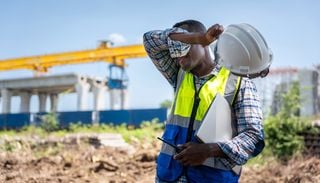
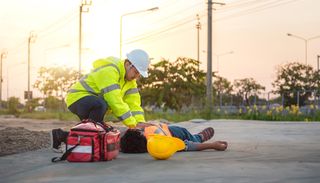
Heat increases the risk of these potentially life-threatening emergencies. Knowing the differences, recognizing the symptoms, and acting quickly can make the difference between a fast recovery and a critical situation.
Graduated in Political Sciences and Administration from the Complutense University of Madrid, Gloria is specialised in political and institutional communication. She has more than fifteen years of experience as an editor and collaborator in different radio, television and written press media such as Cadena Azul, Onda 7 TV or Arco Mediterráneo, a weekly newspaper of which she was also director. She has been press officer in different institutional groups linked to the local Administration.
She also has a Master's Degree in Administrative Management, she is a Nursing Technician, has university studies in Law and training in occupational risks, harassment and management of hostility in work environments or gender violence.
Her technical training and her work as a communication advisor in municipal corporations, associative movements and Third Sector entities, has allowed her to direct her interest to the field of social rights, health and the defense of consumers and users. This last facet has led it to produce, in recent years, more than half a thousand articles and pieces of informative interest, mainly local.

Heat increases the risk of these potentially life-threatening emergencies. Knowing the differences, recognizing the symptoms, and acting quickly can make the difference between a fast recovery and a critical situation.
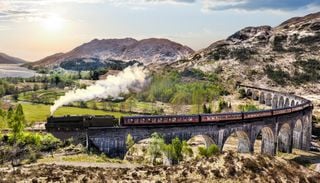
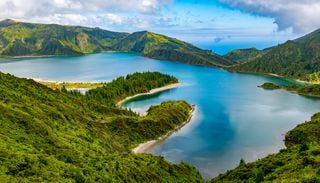
If you haven't booked your vacation yet and are looking to escape the crowds and extreme heat waves, these five little-known destinations offer spectacular scenery, pleasant temperatures, and a different experience for an unforgettable summer getaway.
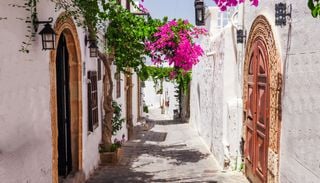
Cobblestone streets, whitewashed houses, crystal-clear beaches, and a history dating back to ancient times make this village on the island of Rhodes one of the most captivating family destinations in Greece and the Mediterranean.
High temperatures are changing the way people travel across Europe. Increasingly, visitors are adapting their schedules: resting during the hottest hours of the day and taking advantage of cooler evenings to explore cities, landmarks and local cuisine in greater comfort.
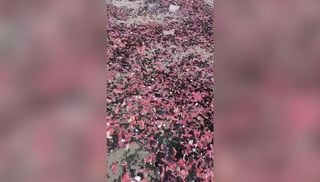
The echinoderms have appeared stranded on several beaches in Mae Ramphueng, where they have tinted the coastline a striking shade of pink. Authorities are investigating this unusual phenomenon, while scientists point to rainfall and ocean currents as possible causes.
The scientific community is urging the World Health Organization to recognize the climate crisis as a global health emergency. The request aims to place the impacts of global warming on the same level of international alert as major epidemics.
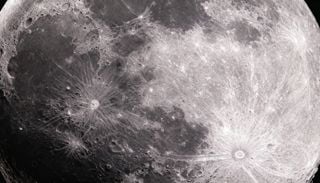
The new space race has once again raised the question: who can claim the Moon? Between international treaties, commercial interests and geopolitical ambitions, Earth’s satellite is becoming a strategic territory for the future of humanity.
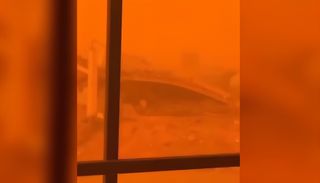
An intense sandstorm has swept across Iraq’s Al Anbar province, creating a massive wall of dust over roads and urban areas. Visibility has been drastically reduced, and local authorities are urging residents to take extra precautions.
Following in the footsteps of The Hague and Utrecht, the Dutch capital has just restricted advertising for combustion-engine cars, flights, cruises and meat in public spaces. The aim? To combat the normalisation of polluting emissions.
Feeling dizzy, experiencing a rapid heartbeat, or even fainting in front of a work of art is not an exaggeration: Stendhal syndrome describes a real reaction to emotional overload triggered by intense beauty in museums, churches, or historic cities.
An impressive roll cloud, resembling a tsunami in the sky, astonished beachgoers at Riviera de São Lourenço in Brazil. The meteorological phenomenon was accompanied by strong wind gusts and prompted warnings from the local Civil Defence.
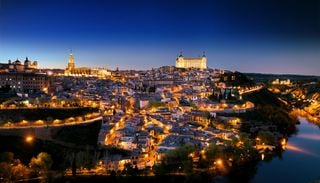
The Italian city, one of the most visited in the world, is strengthening its controversial access fee with more days of application and adjustments to the system. The measure aims to curb overtourism and preserve its fragile balance.
From turquoise lakes to deep caves and breathtaking cliffs, the Old Continent is home to some of the most spectacular natural landscapes in the world. These five national parks stand out for their stunning beauty and are fantastic destinations for a summer getaway.
Traveling to Turkmenistan is possible, but it is not like any other destination. Strict rules, complex visas, and controlled routes make it a very different experience. It is generally considered safe in terms of street crime, but it comes with extreme political restrictions that require strict compliance to avoid legal issues.
The American astronaut, electrical engineer and physicist has made history by becoming the first woman to travel to the Moon, a milestone that goes beyond science and opens up new opportunities in space exploration for future generations of researchers.
The closure of airspace in the Middle East is reshaping global flight routes. Cancellations, longer journeys, and rising prices: this is what you need to be aware of before booking your next flight.
The brilliant fireball was seen in central and western Germany and produced a thunderous sound that prompted numerous emergency calls. Experts have recovered fragments of chondrite, an ancient type of space rock.
The biology of attachment helps us understand why the loneliness of Punch, the abandoned monkey clinging to his soft toy that has gone viral, touches us so profoundly through our instincts for survival and connection.
Tourism experts warn about destinations overwhelmed by overtourism—places where visitor numbers exceed local capacity, creating social and environmental problems and less rewarding experiences. Here are the five you should avoid this year.
In 1995, a Norwegian meteorological rocket triggered a false nuclear alarm in Russia, leading President Boris Yeltsin to activate his nuclear briefcase. For several minutes, the world stood on the brink of an atomic disaster due to a misinterpreted scientific experiment.