
Could the Standard Model of Physics be incomplete? Rare particles offer clues
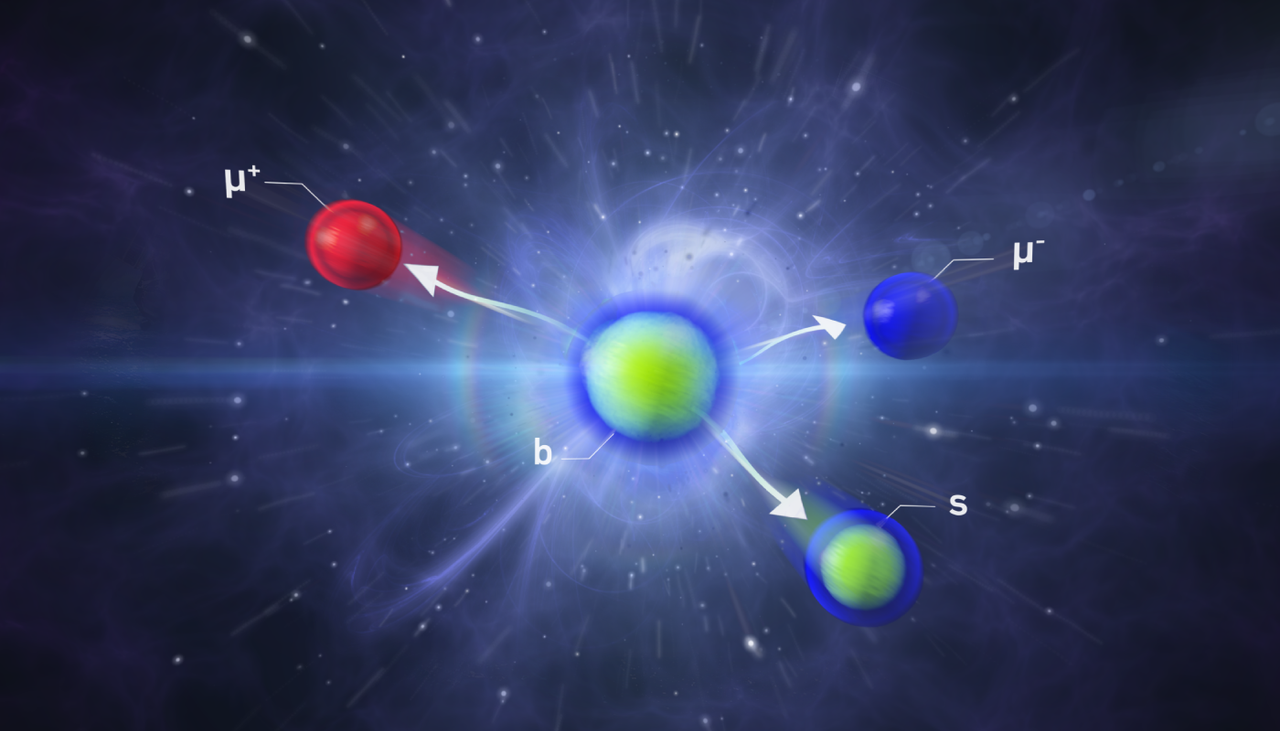
CERN has announced new results on the rare decay of subatomic particles. The process involves the transformation of a type of quark called a beauty quark into another type known as a strange quark, accompanied by the production of two muons with opposite charges.
CERN is home to the Large Hadron Collider (LHC), the world's largest particle accelerator. Protons are accelerated to speeds close to the speed of light and collide at high energies inside it. Experiments analyse the products of these collisions to test theoretical predictions.
The Standard Model is the theory that describes known elementary particles and three of the four fundamental interactions. It is considered one of the most successful theoretical frameworks in physics because its predictions have been repeatedly confirmed by experiments.
However, in new results presented at the international ICHEP 2026 conference, the CMS and LHCb collaborations investigated a rare decay. This process, mediated by the weak interaction, occurs with a low probability and may be affected by contributions from particles that have not yet been discovered.
What are quarks?
Quarks are elementary particles that make up protons and neutrons, which are components of atomic nuclei. They interact through the strong nuclear force, described by a branch of physics known as quantum chromodynamics, and possess a property called colour charge.
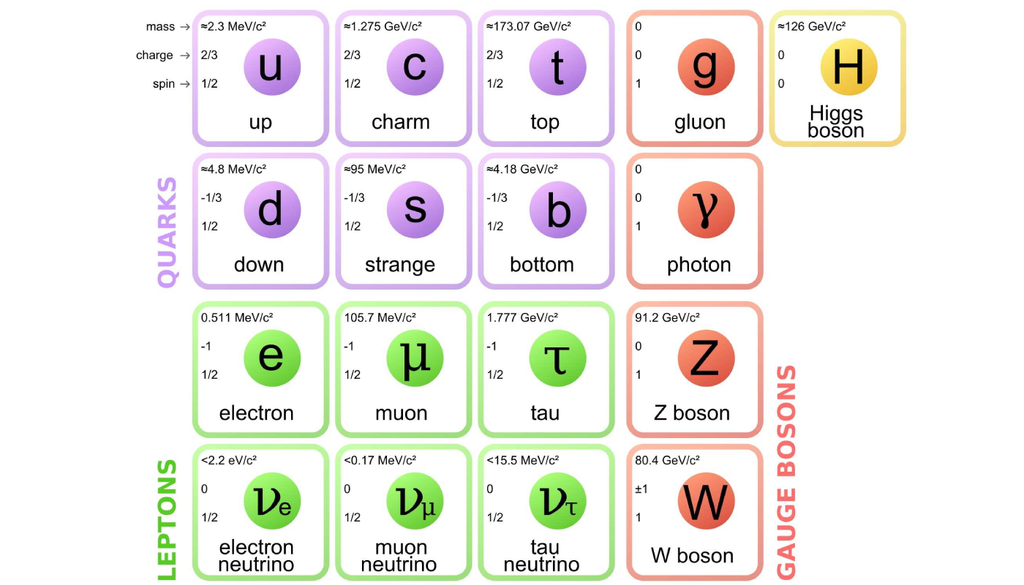
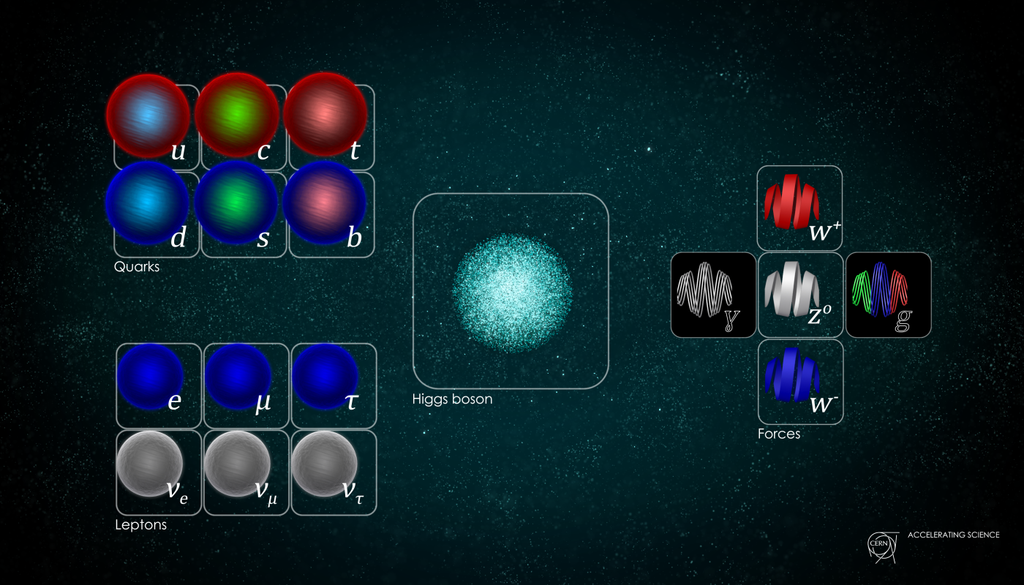
There are six types of quark, known as flavours: up, down, charm, strange, top and bottom, also known as beauty. They differ primarily in mass and certain quantum properties, although they share fundamental characteristics such as electric charge and spin.
Flavour transitions
A quark of one type can transform into a quark of another type through flavour transitions. These transformations can also be influenced by other particles. If experimental results differ from the predictions for known particles, this could indicate the influence of particles that have not yet been discovered.
Some of these transitions are extremely rare and therefore serve as tests of the Standard Model. One example is the process in which a beauty quark transforms into a strange quark, accompanied by the production of a muon and an antimuon, which occurs once in every ten million decays.
The rarity of the effect
This was one of the processes investigated by the CMS and LHCb collaborations, requiring the analysis of large numbers of collisions to observe it accurately. The researchers studied six types of decay involving beauty quarks, measuring how frequently each process occurs.
The researchers measured a property known as P5', which is related to the angles of the particles produced during the decay. These measurements make it possible to test different aspects of theoretical predictions and may also help establish whether the Standard Model can correctly predict these results.
Discrepancy
In this analysis, LHCb found a discrepancy because the measurement showed a small difference from the Standard Model prediction. The result was obtained through an independent analysis of theoretical models used to explain the process. This difference raises the possibility of previously unknown phenomena.
Nevertheless, the result is far from conclusive and does not prove that the Standard Model is flawed. To determine whether the discrepancy is due to new physics or is a consequence of experimental and theoretical uncertainties, it will be necessary to increase the data sample and refine the measurements.
News reference
CERN. (2026). Studying beautiful flavour transitions.