
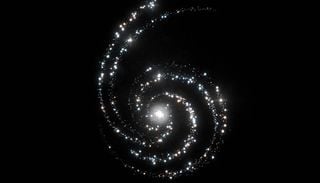
Advances in artificial intelligence models raised new concerns among industry leaders this week. The speed at which these systems are becoming more capable is reviving one of the sector’s biggest challenges: the alignment problem.

Physicist and Master in Astrophysics from USP, Roberta is currently a PhD student in Astrophysics at the same university. She specialises in Computational Physics and Artificial Intelligence. She is currently working at the intersection of Artificial Intelligence and Astrophysics publishing the First AI Simulation of a Black Hole. Her work was recognised internationally and nationally, being disclosed by the federal government itself. She works mainly on prediction of magnetised fluids using AI, with astrophysics applications.
In 2021, she won a Best Artificial Intelligence Application award at M2L for this work. Recently, the work was one of those chosen to be presented at the Google event, Women in ML. She promotes science on social networks under the username @import_robs, with more than 100,000 people following her. She is also a screenwriter for the channel Ciência Todo Dia, where she writes about various subjects involving Physics and Artificial Intelligence. She has participated in several well-known podcasts and programs promoting Astronomy and AI.
Advances in artificial intelligence models raised new concerns among industry leaders this week. The speed at which these systems are becoming more capable is reviving one of the sector’s biggest challenges: the alignment problem.
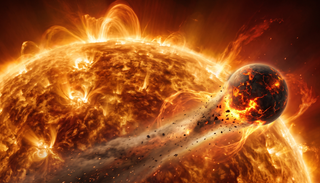
The Sun may have swallowed a super-Earth in its early stages. A recent study suggests this event left detectable traces inside our star, offering a unique window into the history of the solar system.
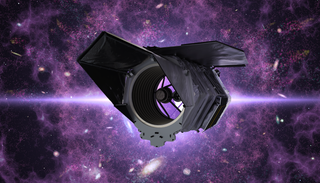
The Nancy Grace Roman Space Telescope will launch on August 30 and will have a field of view 100 times larger than Hubble’s.
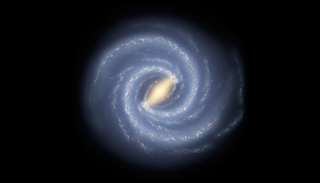
A new study seeks to explain the origin of structures recently observed at the center of the Milky Way and other galaxies.
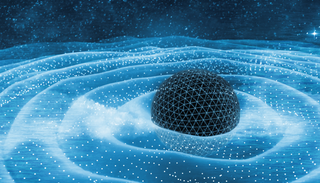
According to this hypothesis, dark energy could be a natural effect of quantum gravity acting on the geometry of spacetime itself.
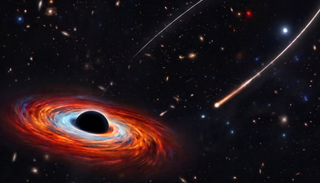
The fastest star in the Milky Way reaches 25,000 km/s and could reveal how the central black hole spins.
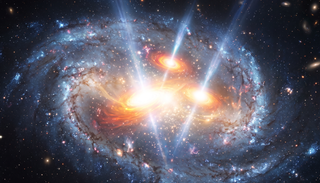
The discovery reveals three active supermassive black holes in the galaxy J0148-4214 that accumulate matter through surrounding accretion disks. This system could help scientists understand how black holes and galaxies evolve together.
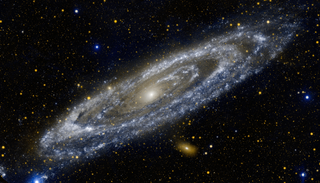
Observations from the Euclid telescope are helping astronomers understand how the spiral arms of galaxies form and evolve.
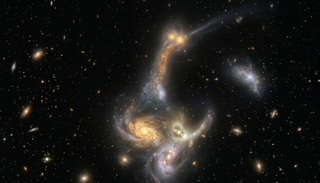
This compact group of six galaxies, observed in the early universe, may represent an early stage in the formation of a giant elliptical galaxy.
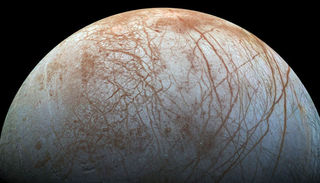
Considered one of the most promising places in the Solar System in the search for extraterrestrial life, Europa may conceal an ocean that is far more difficult to access than previously thought.
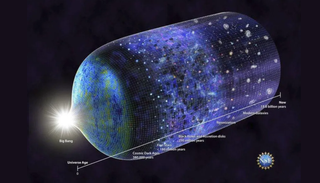
After analyzing the ages of more than 155,000 stars, astronomers have produced an estimate confirming that the universe is 13.8 billion years old.
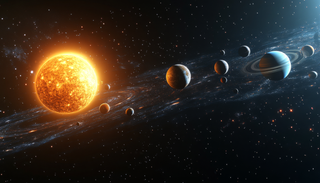
According to astronomers in the United States, the existence of a giant planet could help explain the characteristics observed in the current orbits of the planets in our solar system.
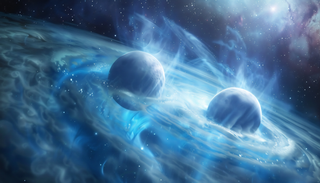
This technique combines artificial intelligence and nuclear physics to better understand the cosmic origin of elements such as gold, platinum, and uranium.

Understanding extreme temperatures helps reveal the fundamental properties of matter and how particles behave.
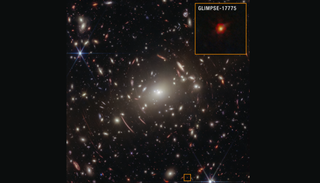
The result obtained reinforces the idea that massive black holes emerged very early in the history of the universe.
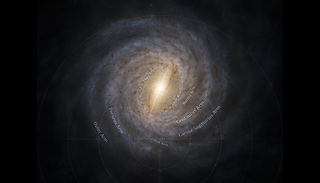
Researchers investigated how interactions between galaxies shaped the structure of the galactic disc over billions of years.
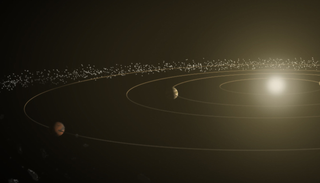
The search for dark energy is advancing toward smaller scales, with proposals that use the Solar System as a natural laboratory.
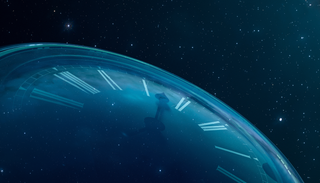
An experiment published in Physical Review Letters shows that particles can exhibit effectively negative interaction times.
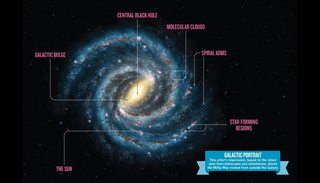
The analysis of stellar age allows us to determine where star formation gradually declines in the Milky Way and, therefore, at the edge of the galaxy.
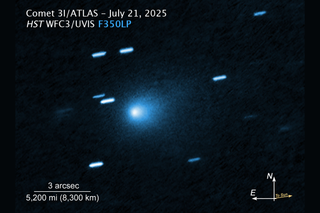
In the final moments of comet 3I/ATLAS in the solar system, observations revealed the presence of methane in its composition.