
Have interactions with humans made bears less aggressive?
Have human-led changes led to the evolution of smaller, less aggressive bears in a population found only in Central Italy?
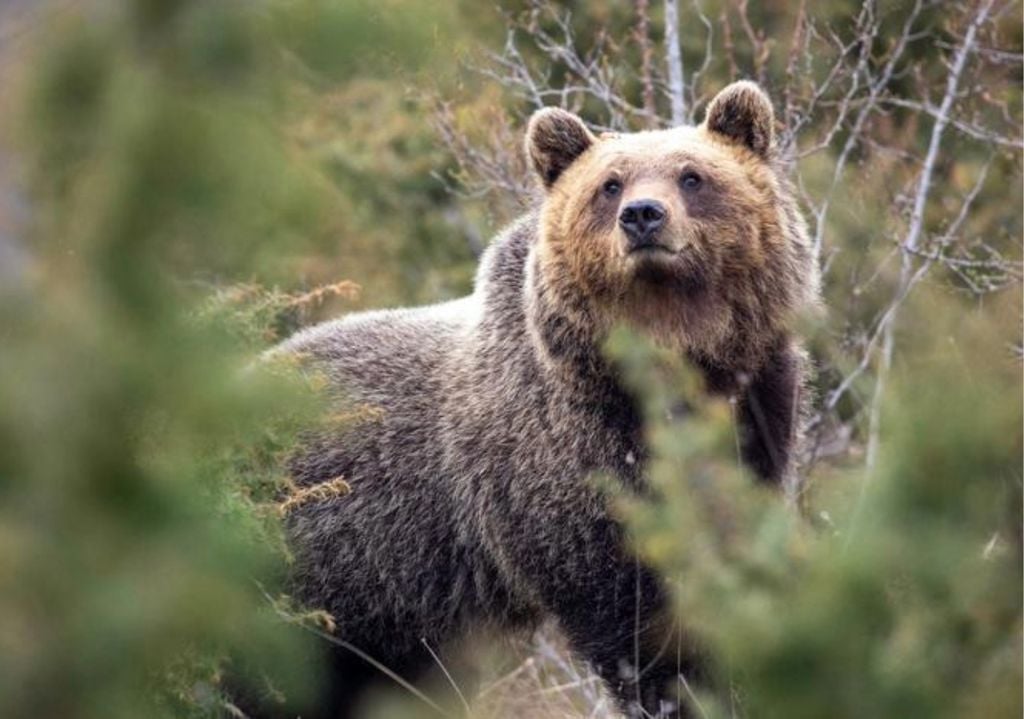
A new study published in the journal Molecular Biology and Evolution, published by Oxford University Press, describes how Italian bears living in highly populated areas have evolved to become less aggressive and smaller.
Humans shape their environments, affecting both ecosystems and biodiversity. Habitat overuse and change are among the most significant human-led changes affecting wildlife, often resulting in population declines and shifts in selective pressures, which have knock-on effects on how a species evolves.
How human involvement shaped bear populations
Ursus arctos marsicanus, the Apennine brown bear, is an isolated, small population of bears found only in Central Italy, with a history of living near human communities. Previous research suggests that this population diverged from other European brown bears 2000-3000 years ago and has remained isolated since Roman times. “One major cause of decline and isolation,” said Andrea Benazzo, the study’s lead author, “was probably forest clearance associated with the spread of agriculture and increasing human population density in Central Italy.”
The Apennine brown bear population exhibits significant phenotypic differences compared to other brown bear populations, including smaller body size, distinctive facial and head features, and less aggressive behaviour than North American, European, and Asian brown bears.
The team focused on the recent evolutionary changes that were driven by human-led activities on the isolated bears. They produced a high-quality chromosome-level reference genome for the Apennine brown bear and re-sequenced whole-genomes from a sample. These were then compared to genomes from a larger European population in Slovakia and previously published genomes from American brown bears.
The researchers then characterised genomic diversity and identified adaptation signals which were distinctive to this population. The Apennine brown bears displayed reduced genomic diversity and higher levels of inbreeding compared with other brown bears. “More interestingly, however,“ added Giulia Fabbri, an author from the paper, “we showed that Apennine brown bears also possess selective signatures at genes associated with reduced aggressiveness.”
The team’s findings suggest that selection on behaviour-related genetic variants, possibly driven by humans removing aggressive bears, led to the emergence of a more docile, less aggressive bear population. This highlights how human involvement and encroachment on natural areas have led to a demographic decline and genomic erosion, an increase in extinction risk, and the evolution of a less conflictual relationship between this bear population and humans.
Evolution of traits that favour humans
“The general implications of our findings are clear,” added Giorgio Bertorelle, a researcher from the study, “human-wildlife interactions are often dangerous for the survival of a species, but may also favour the evolution of traits that reduce conflict. This means that even populations that have been heavily and negatively affected by human activities may harbour genetic variants that should not be diluted, for example, by restocking.”
News reference:
Coexisting With Humans: Genomic and Behavioral Consequences in a Small and Isolated Bear Population | Molecular Biology and Evolution | Oxford Academic. Fabbri, G., Biello, R., Gabrielli, M., Torres Vilaça, S., Sammarco, B., Fuselli, S., Santos, P., Ancona, L., Peretto, L., Padovani, G., Sollitto, M., Iannucci, A., Paule, L., Balestra, D., Gerdol, M., Ciofi, C., Ciucci, P., Mahan, C.G., Trucchi, E. and Benazzo, A. 15th December 2025.