
In a first, CERN scientists plan to transport antimatter
During the Big Bang, matter and antimatter were created in equal amounts. But the world around us is largely made up of matter. To understand why, scientists want to create antimatter and send it to labs where they can be studied in detail.
the Dan Brown novel, Angels and Demons? A canister of antimatter was stolen from the CERN research facility to blow up the Vatican. Science fiction just became real as scientists plan to transport antimatter in a similar canister to a laboratory in Düsseldorf, Germany.
What is antimatter?
As the name implies, antimatter is similar to matter but has the opposite charge. First predicted nearly a century ago, it was detected in 1932, and since then, we have antimatter versions of electrons, protons, and neutrons that could possibly assemble into anti-atoms and anti-molecules too.
Scientists are interested in understanding antimatter because, according to models of the origin of our universe, matter and antimatter were created in equal amounts in the Big Bang. When matter and antimatter meet, there is a burst of energy created, but most of the antimatter has disappeared, and we are left with largely matter.
Researchers are keen to understand why antimatter disappeared, but to study them, they need it in large numbers. So, the research team at CERN decided to make them in the Antimatter Factory.
Why transport anti-matter?
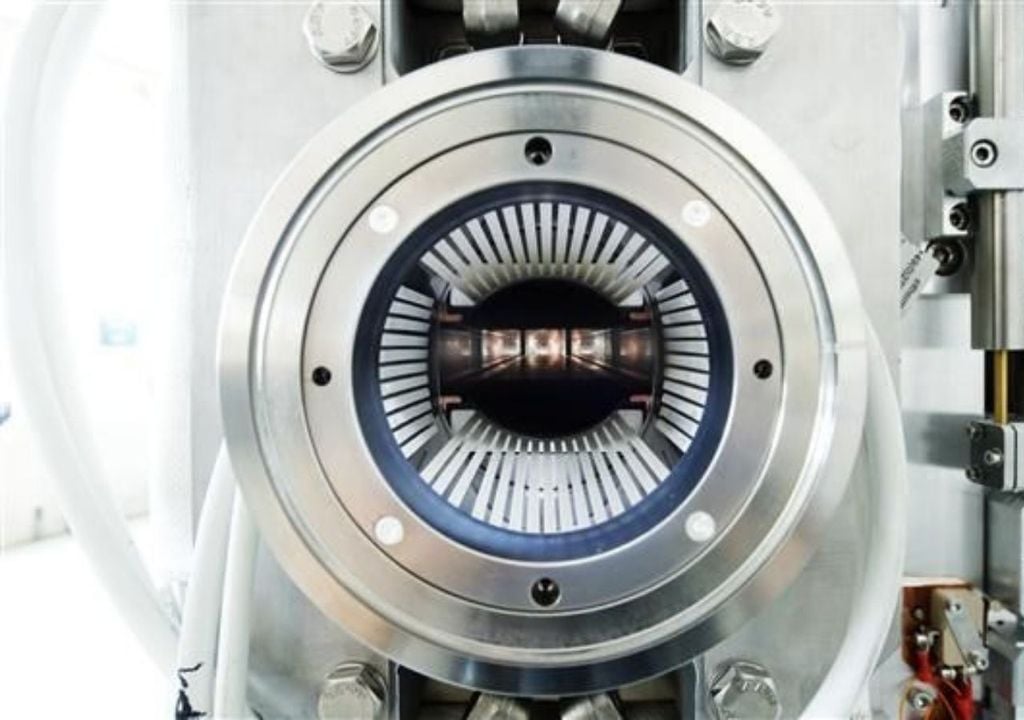
Inside the Antimatter Factory, researchers smash high-energy protons into dense metal targets to create secondary particles. Amongst the secondary particles are antiprotons that are directed towards a decelerator and then slowed down to be captured in an antimatter trap.
This is because the decelerator equipment uses strong magnetic fields to slow down the antiprotons to speeds one-tenth the speed of light. This field prevents sensitive measurements from taking place in its vicinity, requiring a trap to move the particle elsewhere.
While the initial rides for these traps are scheduled on the CERN campus, researchers eventually want to send them to the Heinrich Heine University in Düsseldorf, where they can be studied in greater detail. That's about 500 miles away with an additional two hours needed for loading and unloading the trap, totalling over 10 hours.
The batteries on the trap last about 4 hours, so additional power must be supplied by an onboard generator, much like in the Dan Brown novel.
A trial run scheduled for later this month will carry 1,000 antimatter particles. While utmost precautions are being taken, the total antimatter content to be carried is about a billionth of a trillionth of a gram.
If all that antimatter comes into contact with the can, the resultant pulse of energy will be so little that the load isn’t even carrying a radioactive label, The Guardian report said.