
Snowball Earth's climate kept going during massive Ice Age, say Southampton scientists
It was thought the Snowball Earth was completely frozen and the climate shut down, but analysis of well-preserved rock suggests that might not have been the case.
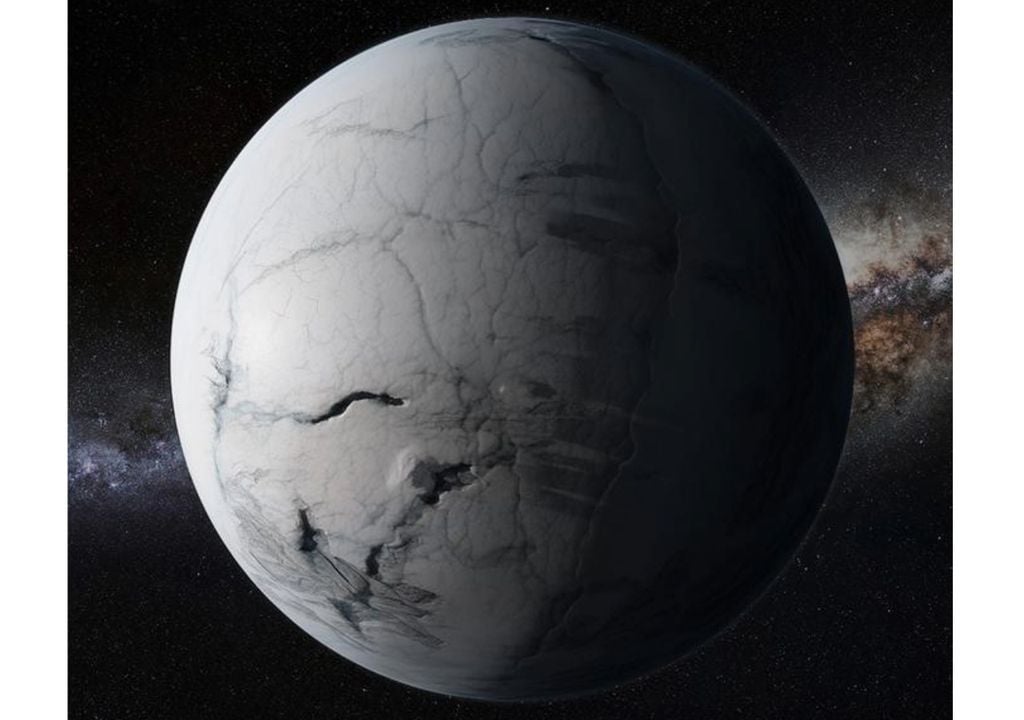
The Earth was once a giant snowball, or at least that’s how it would have looked from space during the Cryogenian Period between 720 and 635 million years ago. The planet was in the grips of its most severe Ice Age, almost entirely frozen and covered in ice sheets that reached the tropics.
It was thought the Earth’s climate completely shut down during this time but new research from the University of Southampton has found evidence from ancient rocks that show the climate continued to vary.
Analysis layer by layer
The study challenges the belief that much of the interaction between the atmosphere and oceans stopped, muting short-term climate variability for millions of years. During at least one interval, climate oscillations happened on annual, decadal, and centennial timescales – cycles incredibly like those we see in the Earth’s climate system today.
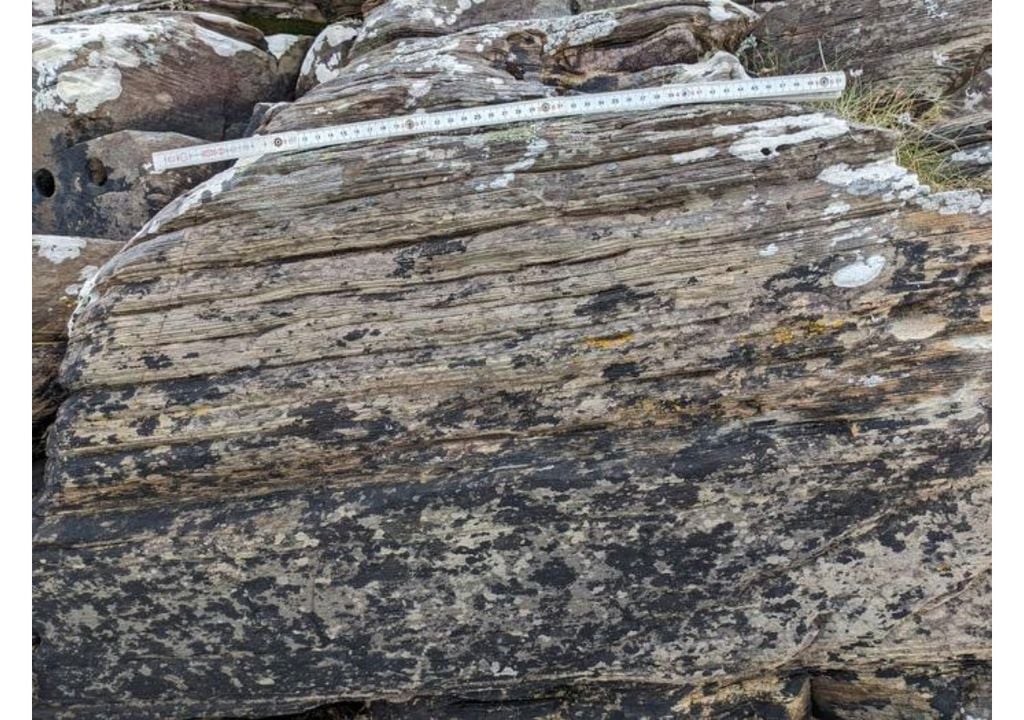
Researchers examined 2,600 individual layers within incredibly-well preserved laminated rocks – or varves – from the Port Askaig Formation on the Garvellach Islands off the west coast of Scotland. These sediments accumulated during the Sturtian glaciation, the most severe Snowball Earth event that persisted for 57 million years and each layer records a single year of deposition.
“These deposits are some of the best-preserved Snowball Earth rocks anywhere in the world," explains Dr Elias Rugen, Research Fellow. "Through them, you’re able to read the climate history of a frozen planet, in this case one year at a time.”
The rocks "preserve the full suite of climate rhythms we know from today – annual seasons, solar cycles, and interannual oscillations – all operating during a Snowball Earth," adds Thomas Gernon, Professor of Earth and Planetary Science. "That’s jaw dropping. It tells us the climate system has an innate tendency to oscillate, even under extreme conditions, if given the slightest opportunity.”
These "extraordinary" rocks "act like a natural data logger, recording year-by-year changes in climate during one of the coldest periods in Earth’s history," says Dr Chloe Griffin, Research Fellow in Earth Science. "Until now, we didn’t know whether climate variability at these timescales could exist during Snowball Earth, because no one had found a record like this from within the glaciation itself.”
The layers likely formed during seasonal freeze-thaw cycles in a calm, deep water setting beneath ice, and researchers “found clear evidence for repeating climate cycles operating every few years to decades. Some of these closely resemble modern climate patterns, such as El Niño-like oscillations and solar cycles,” Griffin says.
But these climate cycles were likely “the exception, rather than the rule,” adds Gernon. “The background state of Snowball Earth was extremely cold and stable. What we’re seeing here is probably a short-lived disturbance, lasting thousands of years, against the backdrop of an otherwise deeply frozen planet.”
Slushball state
Climate simulations for Snowball Earth showed that a completely ice-sealed ocean would suppress most climate oscillations; however, if around 15% of the ocean surface remained ice-free, familiar atmosphere-ocean interactions could restart.
Dr Minmin Fu, Lecturer in Climate Science, says: “Our models showed that you don’t need vast open oceans. Even limited areas of open water in the tropics can allow climate modes similar to those we see today to operate, producing the kinds of signals recorded in the rocks.”
The study supports the idea that the Snowball Earth was generally frozen solid but was interspersed by intervals when small areas of the open ocean emerged, during ‘slushball’ or ‘waterbelt’ states.
Gernon adds: “This work helps us understand how resilient, and how sensitive, the climate system really is. It shows that even in the most extreme conditions Earth has ever seen, the system could be kicked into motion. That has profound implications for how planets respond to major disturbances, including our own in the future.”
News reference
Interannual to multidecadal climate oscillations occurred during Cryogenian glaciation, Earth and Planetary Science Letters, 2026. Griffin, C., et al.