
Svalbard’s polar bears are getting fatter - and scientists didn’t see it coming
A long-running study in Norway’s Svalbard has found polar bears’ body condition has actually improved despite global warming, which has shocked researchers who were expecting the opposite.
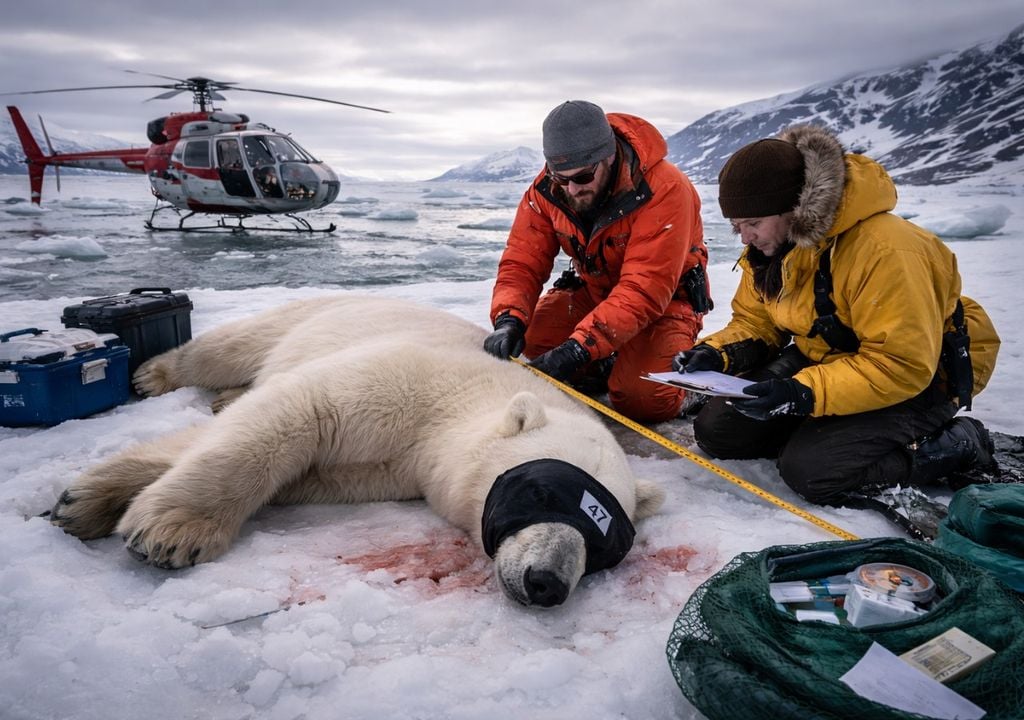
Polar bears are pretty much the poster child for the ice caps melting - often seen on a small ice floe, looking a little lonely. And since they hunt seals from sea ice, less ice should mean less dinner.
That's why scientists studying bears around Svalbard - the Norwegian Arctic archipelago - have been shocked by what they’ve measured over the last few decades.
Using data from 770 adult bears (1,188 captures) between 1992 and 2019, the researchers found the animals have become significantly fatter and healthier overall since around 2000, even as the region has seen a rapid loss of sea ice.
"The fatter a bear is the better it is," said the study's lead author, Dr Jon Aars, from the Norwegian Polar Institute. "And I would have expected to see a decline in body condition when the loss of sea ice has been so profound."
How they’re pulling it off
The researchers reckon Svalbard’s bears have done what hungry animals tend to do - they’ve adapted.
Some of that looks like more land-based meals, including reindeer and walrus, rather than relying purely on seals. Walruses, in particular, have rebounded in Norway after protections introduced decades ago, which may have quietly created a new, fatty food option.
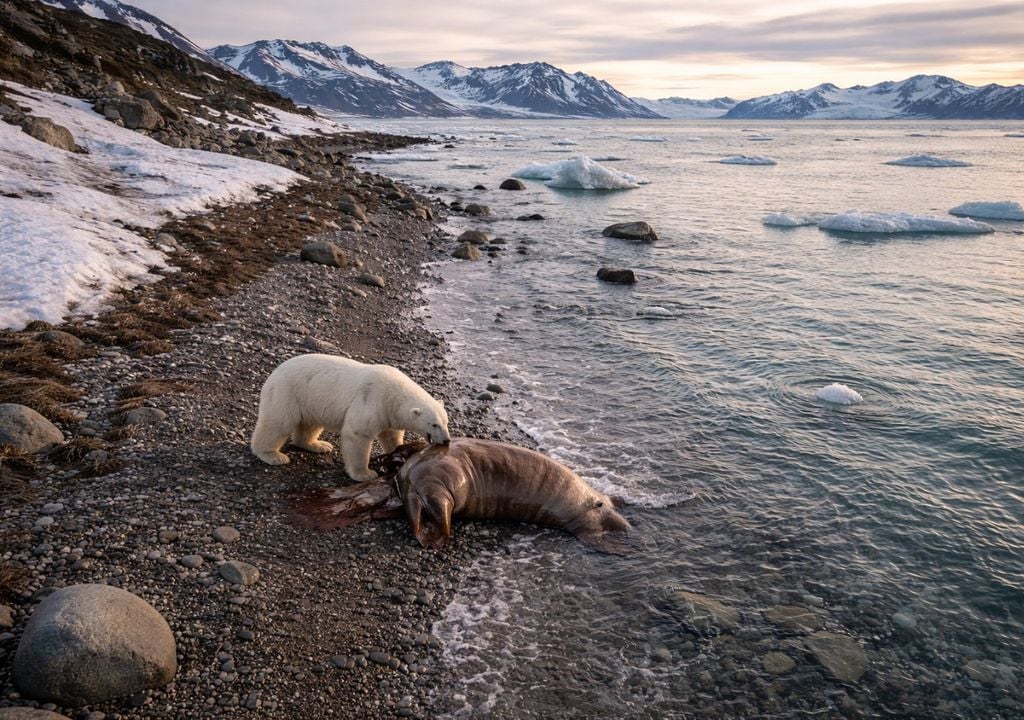
There’s also a slightly counterintuitive possibility at sea, the scientists said. If seals have less ice to spread out on, they may end up clustered in smaller areas, which can make hunting more efficient - at least while there’s still enough ice left for bears to use as a platform.
The new paper also suggests the Barents Sea region has warmed fast, and Svalbard’s ice loss has been among the sharpest anywhere polar bears live - yet this population hasn’t followed the neat, simple decline story people expect.
Why it may not last
However, despite the findigns, the study's authors stress that different polar bear populations respond differently, and plenty elsewhere have shown clear negative effects from shrinking sea ice.
As ice keeps retreating, bears have to travel further to reach hunting grounds, burning more energy and risking a point where even a broadened diet can’t cover the costs.
The short-term picture here might be oddly positive in Svalbard, but the long-term dependency hasn’t changed: polar bears still need sea ice to thrive.
Reference of the news:
Body condition among Svalbard Polar bears Ursus maritimus during a period of rapid loss of sea ice, published in BBC.co.uk, January 2026.