
The Amazon enters a hyper-tropical climate that threatens the survival of its forests
The sustained increase in extreme temperatures and persistent humidity in the Amazon is giving rise to a hyper-tropical climate that many trees cannot withstand for prolonged periods.
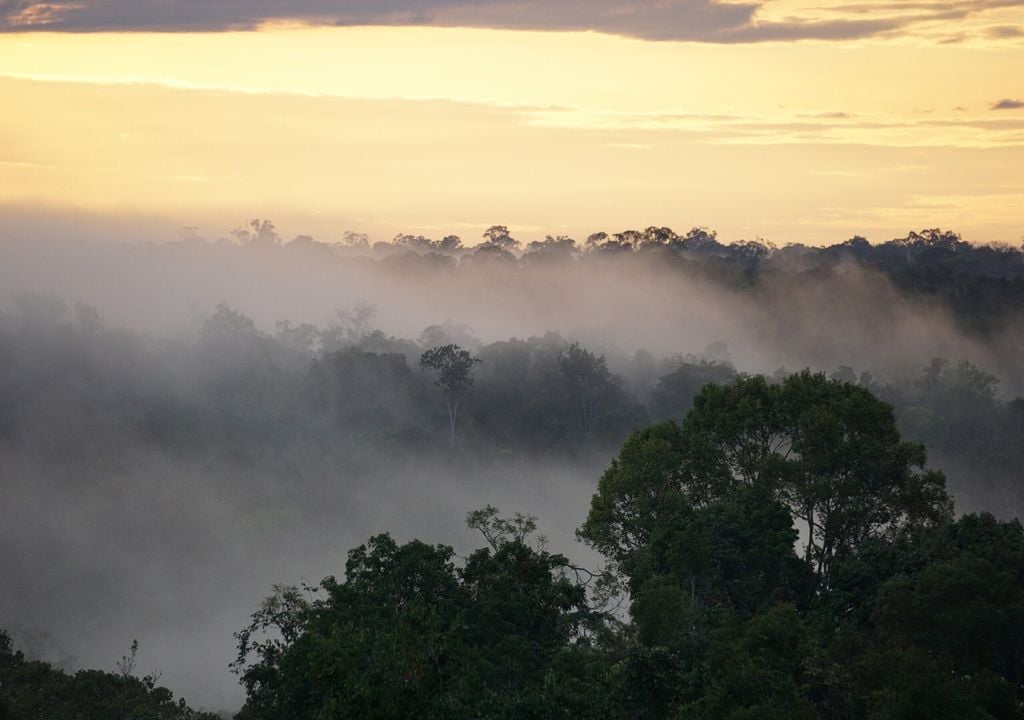
For thousands of years, the Amazon rainforest has been one of the planet’s most important climate regulators. Its ability to recycle moisture, store carbon, and stabilise regional temperatures allowed it to support unprecedented biodiversity and a climatic balance crucial for South America.
However, recent studies published by Live Science show that large regions of the forest are already experiencing conditions that exceed the historical ranges of tropical climate. These are not isolated episodes, but rather a structural change characterised by persistent extreme heat and increasingly warm nights.
Scientists warn that this new climatic context imposes severe physiological stress on the trees. When the combination of temperature and humidity reaches certain thresholds, many species reduce their photosynthesis, grow less, and increase their risk of mortality, weakening the structure of the forest.
The emergence of an unprecedented hyper-tropical climate
The concept of hyper-tropical climate arises from research led by climatology teams at the University of California, Berkeley. It describes regions where heat and humidity consistently exceed the known limits of the tropics, even during the traditionally wetter seasons.
A study published in the journal Nature confirms that these conditions are already expanding in different areas of the Amazon basin. The excess water vapor in the atmosphere reduces plants’ ability to cool themselves through transpiration, increasing the risk of large-scale ecological failures.
Researchers point out that this process can generate dangerous feedback loops. As the forest loses efficiency in regulating its own climate, local warming intensifies and accelerates the transition toward even more extreme conditions. Over time, this will have direct implications for global climate.
Global consequences and human causes of the change
The climatic transformation of the Amazon is not just a local problem. The rainforest plays a central role in generating rainfall and in atmospheric circulation that influences much of South America and the global climate system.
According to an analysis published in ScienceDirect, the loss of forest cover reduces the so-called atmospheric rivers—moisture currents that transport water vapor over thousands of kilometres. This can intensify droughts, affect agricultural production, and increase the frequency of extreme heat waves.
Studies agree that the advance of hyper-tropical climate is closely linked to human activity. Global warming driven by greenhouse gas emissions and regional deforestation reduces the forest’s capacity to self-regulate, bringing the Amazon closer to a point of no return.
References of the news:
Chambers, J.Q., Nogueira Lima, A.J., Pastorello, G. et al. Hot droughts in the Amazon provide a window to a future hypertropical climate. Nature (2025). https://doi.org/10.1038/s41586-025-09728-y