
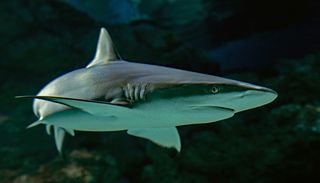
Researchers at the University of Miami turned blue sharks into mobile oceanographic observers. Their data improved the accuracy of seasonal climate models by up to 40%.

Enzo Campetella is a meteorologist who graduated from the University of Buenos Aires in 1993. In addition to his training in meteorology, he is a surface meteorological observer. For just over 3 years he developed skills as a meteorological forecaster for the Argentinean Meteorological Service. Then his activity focused on providing meteorological advice to companies in the private area.
Parallel to meteorology, he has developed skills in journalism, being a correspondent for different media in the National Congress of Argentina between 1995 and 2007. The experience gained helped him to perfect his own communication strategy, participating for several seasons in radio programs to help agricultural producers in times of late frosts. The Radiocentígrado cycle on LU18 Radio El Valle was one of the most emblematic in the upper valley of the Río Negro in Patagonia.
As part of his outreach work, he has developed meteorology courses for amateurs, and is currently leading a project to take this idea to a larger scale with his Internet presence through the We are the Climate site.
Researchers at the University of Miami turned blue sharks into mobile oceanographic observers. Their data improved the accuracy of seasonal climate models by up to 40%.
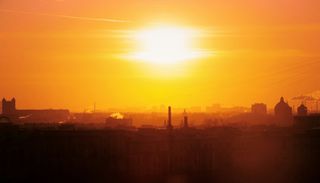
The Lancet Countdown 2026 report confirms that climate change is already deteriorating health in Europe, with more deaths from heat, the spread of diseases, and increasing exposure to environmental risks.
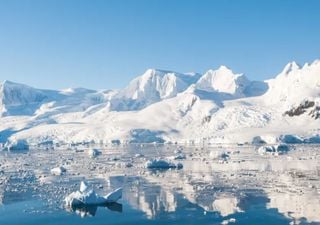
Although the minimum sea ice extent returned to near-average values, scientists warn that this is not a recovery, but rather a pause within a deeper and more concerning trend.
After the extreme 2023 and 2024 event, scientists warn that the Pacific Ocean may be heading towards another warm episode. The rapid recurrence of El Niño challenges historical patterns and raises the risk of new global temperature records.
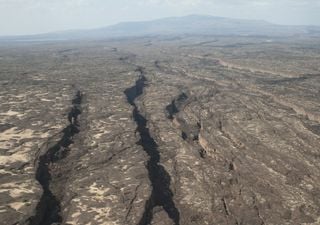
A cutting-edge scientific study reveals that the transition from a humid to a dry climate in East Africa not only alters ecosystems and human communities, but may also be accelerating the continent’s tectonic separation, causing the East African Rift to move faster.
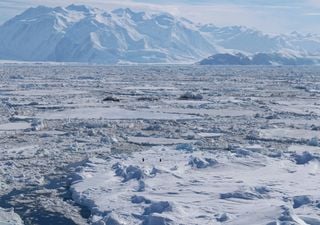
New scientific research warns that the rapid retreat of the West Antarctic Ice Sheet not only threatens to raise sea levels, but could also fundamentally alter the continent’s geology. These processes have the potential to trigger abrupt and difficult-to-reverse effects.

The sustained increase in extreme temperatures and persistent humidity in the Amazon is giving rise to a hyper-tropical climate that many trees cannot withstand for prolonged periods.
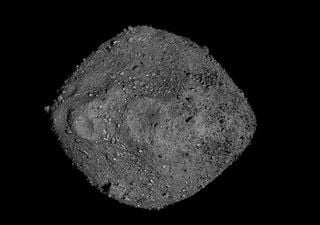
The analysis of the samples brought back by the OSIRIS-REx mission from the asteroid Bennu revealed the presence of key molecules such as sugars, nitrogen-bearing compounds, and complex organic structures that may have helped seed life on Earth.
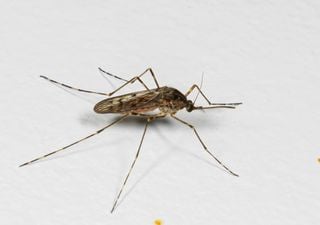
For the first time in recorded history, mosquitoes have been found on Icelandic territory. The discovery of three specimens of Culiseta annulata marks the end of the last mosquito-free frontier in Europe and highlights how accelerated warming is transforming Arctic ecosystems.
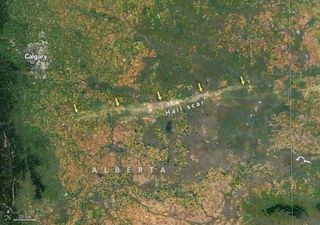
Extreme hail has left a trail nearly 200 km long in southwestern Alberta, Canada. A supercell dumped golf-ball-sized hail and hurricane-force winds, carving a "furrow" visible from space and causing untold losses.
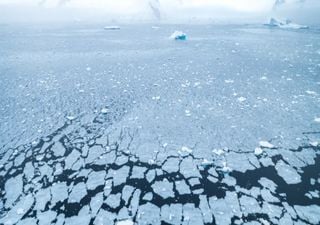
For decades, satellites captured bright, turquoise patches in the waters south of the Antarctic Circle with no clear explanation. Now, a recent study finally identifies microorganisms that alter the colour of the sea.
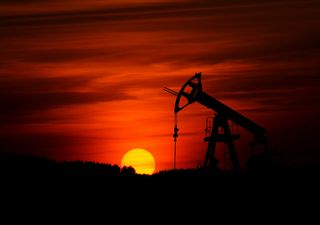
A groundbreaking scientific analysis demonstrates for the first time that 180 fossil fuel companies have directly contributed to the worsening of hundreds of heat waves that have caused thousands of deaths.
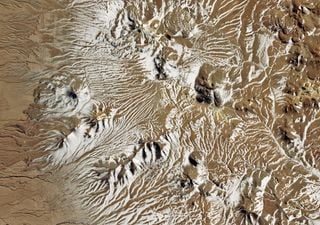
An extraordinary snowfall in the Atacama Desert forced the suspension of operations of the world's most powerful telescope, revealing the intricate atmospheric mechanisms that can temporarily transform the landscape of the driest region on the planet.

Japan has just broken all internet speed records, reaching 1.02 petabits per second. Meteorological experts are already seeing how this could radically transform the way we predict the weather.

Scientists are documenting unprecedented morphological changes in species across the planet. From Australian parrots with 10% larger beaks to bats with expanded wings, life on Earth is mutating to cope with new climatic conditions.
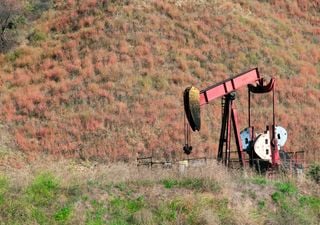
An alarming Canadian study reveals that inactive oil wells release seven times more methane into the atmosphere than official estimates. The finding calls into question inventories and established climate policies.
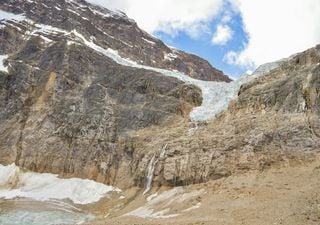
The latest scientific data reveal that the carbon budget for keeping global warming below 1.5°C will be exhausted before 2028, marking a critical turning point in Earth's climate history. This threshold, key to avoiding irreversible impacts, is getting closer, warns a large group of scientists.
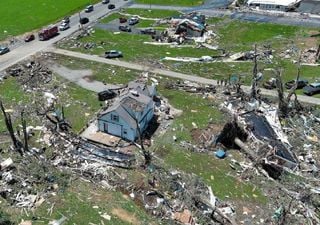
A severe weather event that developed especially on Friday, May 17, left at least 28 dead and a series of higher-intensity tornadoes in several states in the central United States. The death toll is expected to rise as rescue efforts continue.

Just days before the start of hurricane season, estimates are analyzing the most likely scenarios. With a warmer-than-average ocean, the Atlantic has enough energy to develop intense systems.
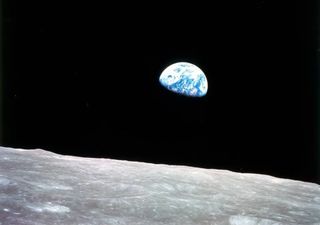
The Earth rotates more slowly, increasing the amount of oxygen we breathe daily. A study has proven this process in the history of our planet. At one point on Earth, 1.4 billion years ago, days lasted about 18 hours.