
The underestimated danger: Plastic in the sea is becoming so small we can no longer detect it
In recent years, there has been much global talk about the vast amounts of plastic waste in the oceans. Shocking images of vortexes of trash and completely polluted beaches have gone viral. We know that plastic waste is ground into tiny plastic elements.
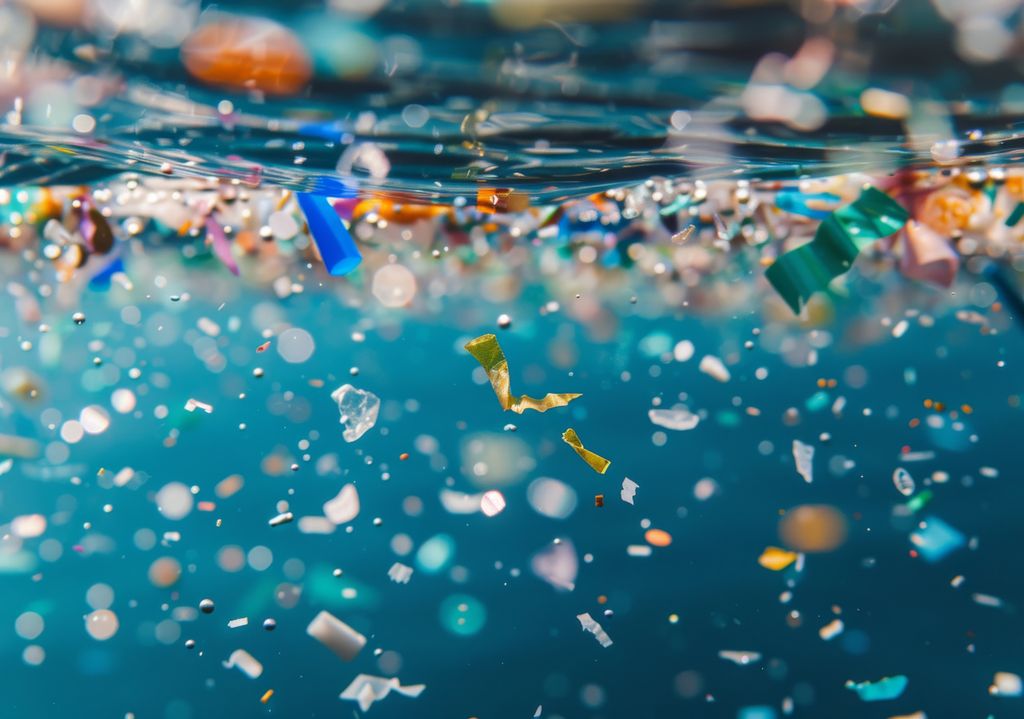
A new study clearly shows for the first time that plastic waste is also largely present in the nanometer range. Nanoparticles are extremely small, so we can only detect them using complex measurement techniques.
We all know about microplastics, but what about nanoplastics?
The difference with the smallest particles in the micron range quickly becomes apparent. Humans can filter microscopic plastic using special filters to prevent it from ending up in our bodies.
Microplastics pose a threat to fish, turtles, and other marine animals, causing inflammation in their organs and significantly reducing their populations.
A complex analysis in the North Atlantic
Scientists from the Netherlands, together with the Royal Netherlands Institute for Marine Research (NIOZ), have recorded the presence of nanoplastics in the North Atlantic . Nano-sized plastic particles are so small that they can only be detected in water samples using high-resolution measurement methods.
The research team set up a total of twelve different measuring stations. The smallest particles can be found everywhere and in large quantities.
The EU already warns against the use of this type of plastics
A large number of nanoparticles have been discovered, especially in common types of plastic. For example, the plastics used to make single-use and reusable plastic bottles, films, and disposable beverage cups and cutlery.
These include plastics such as polyethylene terephthalate (PET), polystyrene (PS), and polyvinyl chloride (PVC). Researchers were able to detect all types of plastic in the first layer of seawater.
New research shows that nanoplastics play a significant role in ocean plastic pollution. To date, nanoparticle pollution has not been considered politically or economically.
The research team clarifies that the pollution is comparable to the proportion of macro- and microplastics in the ocean. It is unclear whether new protective measures and regulations will be implemented.
News references
Ten Hietbrink, S., Materić, D., Holzinger, R. et al.(2025) Nanoplastic concentrations across the North Atlantic. Nature 643, 412–416.
Oberbeckmann, S., Markert, S. & Labrenz, M. (2021) Mikrobieller Plastikabbau im Meer: die Suche nach dem Unwahrscheinlichen. Biospektrum 27, 358–361.