
The World’s Oldest Ice Core: Scientists Ready To Reconstruct 1.5 Million Years of Earth’s Climate
The oldest ice core ever drilled has arrived at the British Antarctic Survey, and researchers are starting the meticulous process of analyzing it for clues to the planet's past climate.
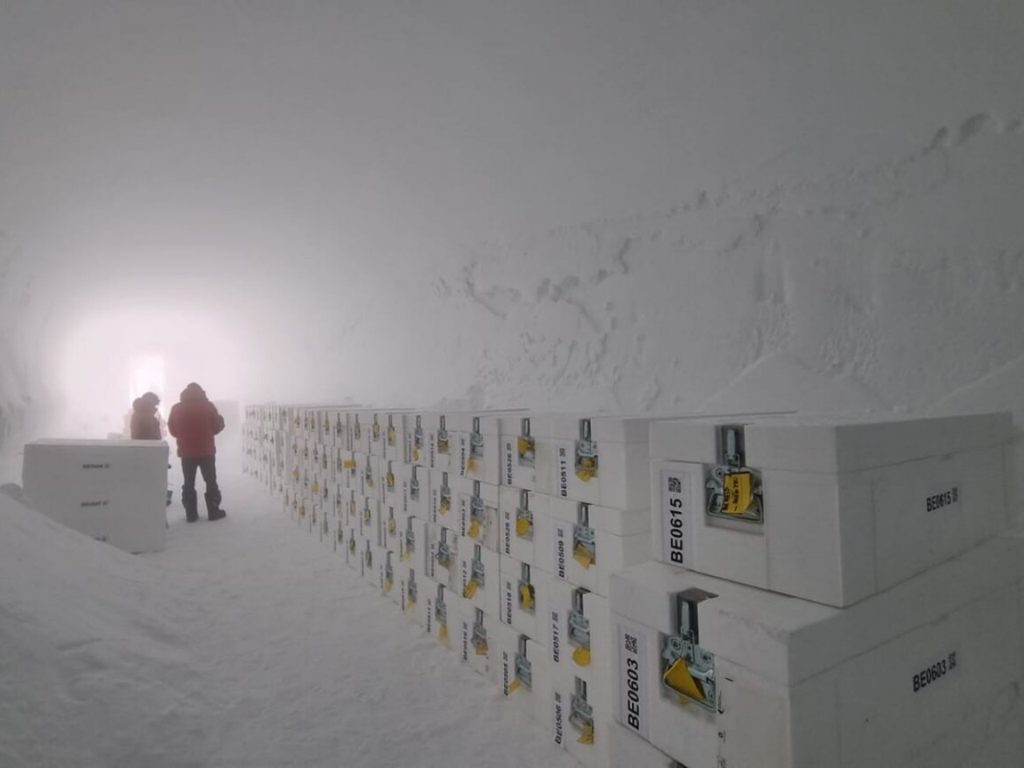
It took years, but the oldest ice core ever has been extracted from Antarctica. That’s right– 2800 metres of ice that holds the secrets to Earth’s climate over the last 1.5 million years. This ice core has now arrived at the British Antarctic Survey, ready for scientists to analyze every single inch of it.
Extracting The Ice: No Easy Feat
Extracting 2800 metres of ice is not easy. It is time and labor-intensive. And extraction takes extreme precision. The project to extract, analyze and reconstruct the planet’s climate is part of the Beyond EPICA – Oldest Ice project. This project is funded by the European Commission, and collecting the ice core kicked off in 2022 when a team of 15 scientists made their way to Little Dome C in Antarctica. This was after years of searching for the oldest ice on the planet.
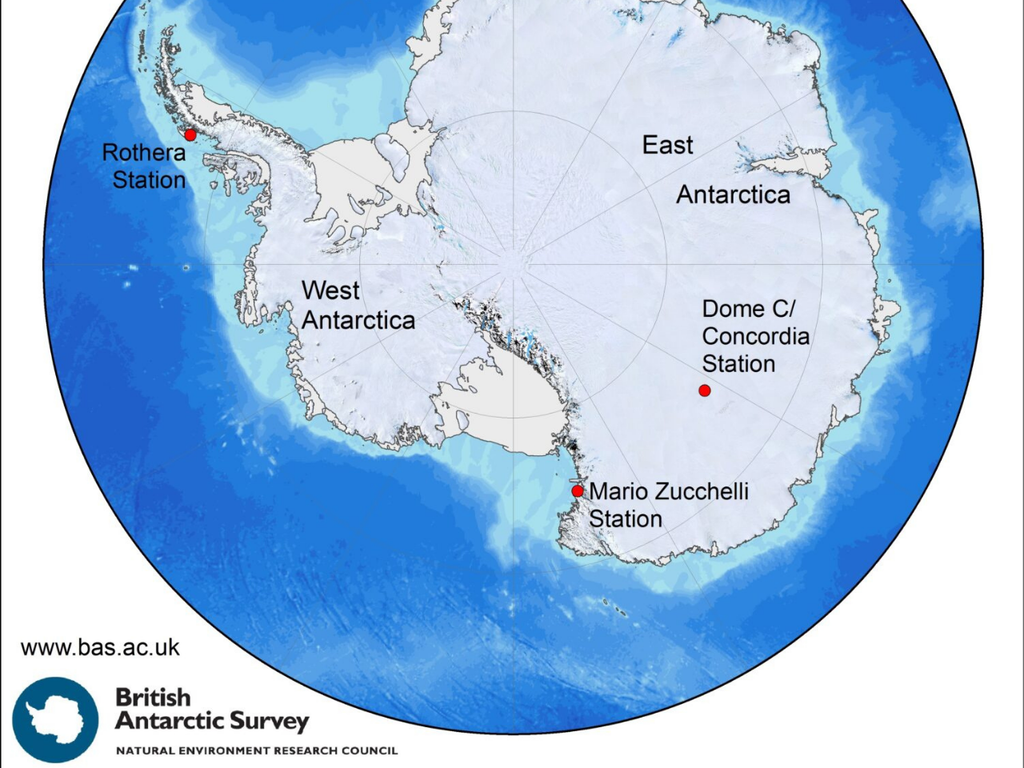
Little Dome C is one of the most remote and extreme parts of the planet, with an average summer temperature of -35°C. It is located near the centre of Antarctica and contains some of the oldest ice in the world.
The researchers extracting the ice had to be careful of breaks, heat and more as they brought up 2800 metres of ice that stretched down to the bedrock of Antarctica.
15 researchers
— British Antarctic Survey (@BAS_News) December 7, 2022
3km ice core ️
1.5 million years of climate history
Scientists are heading to East Antarctica this month to locate the oldest ice on Earth! https://t.co/rAkM2SoVkl pic.twitter.com/2Vdn0gkamv
Analyzing Earth’s Past Climate
Previously, ice cores had been extracted that allowed scientists to recreate the last 800,000 years of the Earth’s climate. This new core will almost double that.
Through a cutting-edge technique called continuous flow analysis, the scientists will slowly melt sections of the ice core to analyze everything from the carbon dioxide concentration to impurities to chemical elements found in the ice.
Ice cores act as a time machine to the past. The ice locks in the atmospheric conditions and stores them as more ice accumulates on top of them, and then the process continues. So each piece of the 2800 metre ice core can show a different time over the last 1.5 million years, and what the climate of the planet looked like.
A Big Question To Answer
Now, there are other ways of recreating paleoclimate data, including deep-sea sediment analysis. But these sediment samples don’t trap the conditions of the atmosphere like an ice core does.
Previous analysis has shown, though, that a large climate shift happened 1 million years ago, and scientists have continued to hypothesize about why.
Scientists call this shift the Mid-Pleistocene Transition. Before this, Earth’s climate shifted through glacial and interglacial cycles every 41,000 years or so. After the transition, that timeline increased to 100,000 years.
The Beyond EPICA ice core drilling has finally reached the bedrock at a depth of 2800 m: this is a huge success for our project and for ice core science! We have strong indications that 1.2 million years of climate record are stored in the uppermost 2480 m of ice.
— Beyond EPICA (@OldestIce) January 9, 2025
PNRA/IPEV pic.twitter.com/rmlJjBhsAh
“Our data will yield the first continuous reconstructions of key environmental indicators—including atmospheric temperatures, wind patterns, sea ice extent, and marine productivity—spanning the past 1.5 million years. This unprecedented ice core dataset will provide vital insights into the link between atmospheric CO₂ levels and climate during a previously uncharted period in Earth’s history, offering valuable context for predicting future climate change,” said Dr Thomas.
News Reference
Antarctica’s oldest ice arrives for climate analysis. British Antarctic Survey.