
A tropical "monster" could form over the Pacific with record-low central pressure: Bavi
Tropical Storm Bavi has been named after forming over the tropical Pacific. Numerical weather models indicate that it could strengthen into one of the most extreme tropical cyclones ever forecast for July, potentially becoming a historically powerful and exceptionally large super typhoon.
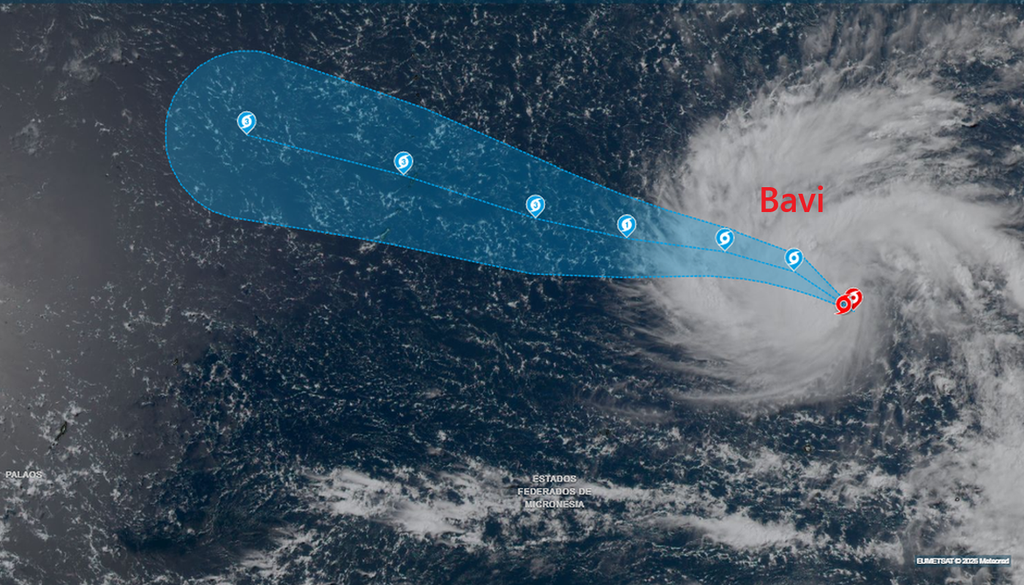
The waters of the tropical Pacific are exceptionally warm and, during an El Niño event, the western Pacific basin is capable of producing the most powerful tropical cyclones on Earth: extremely large and intense super typhoons.
The possible Super Typhoon Bavi
A new tropical storm, named Bavi, has formed over very warm open waters and is expected to strengthen significantly, with little to inhibit its development. It could grow to an enormous size while reaching exceptionally low central pressure values.
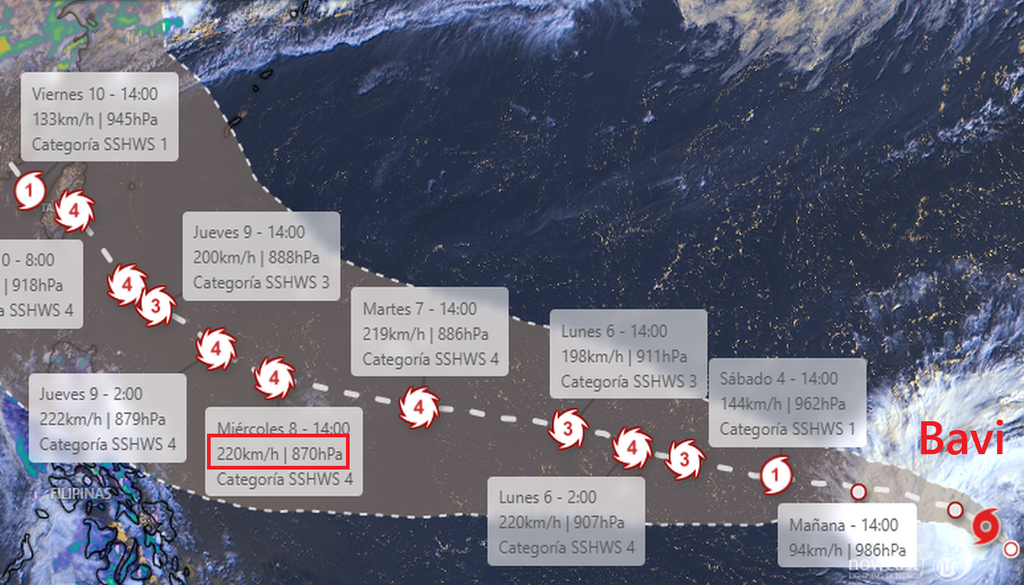
According to the Joint Typhoon Warning Center (JTWC), Bavi is expected to pass through the Mariana Islands as a Category 4 or 5 super typhoon in approximately four days' time.
Some forecast models suggest that Tropical Storm Bavi will intensify into a Category 5 super typhoon on the US scale by 5–6 July 2026, following a period of rapid intensification (RI) that could begin within the next 24 hours.
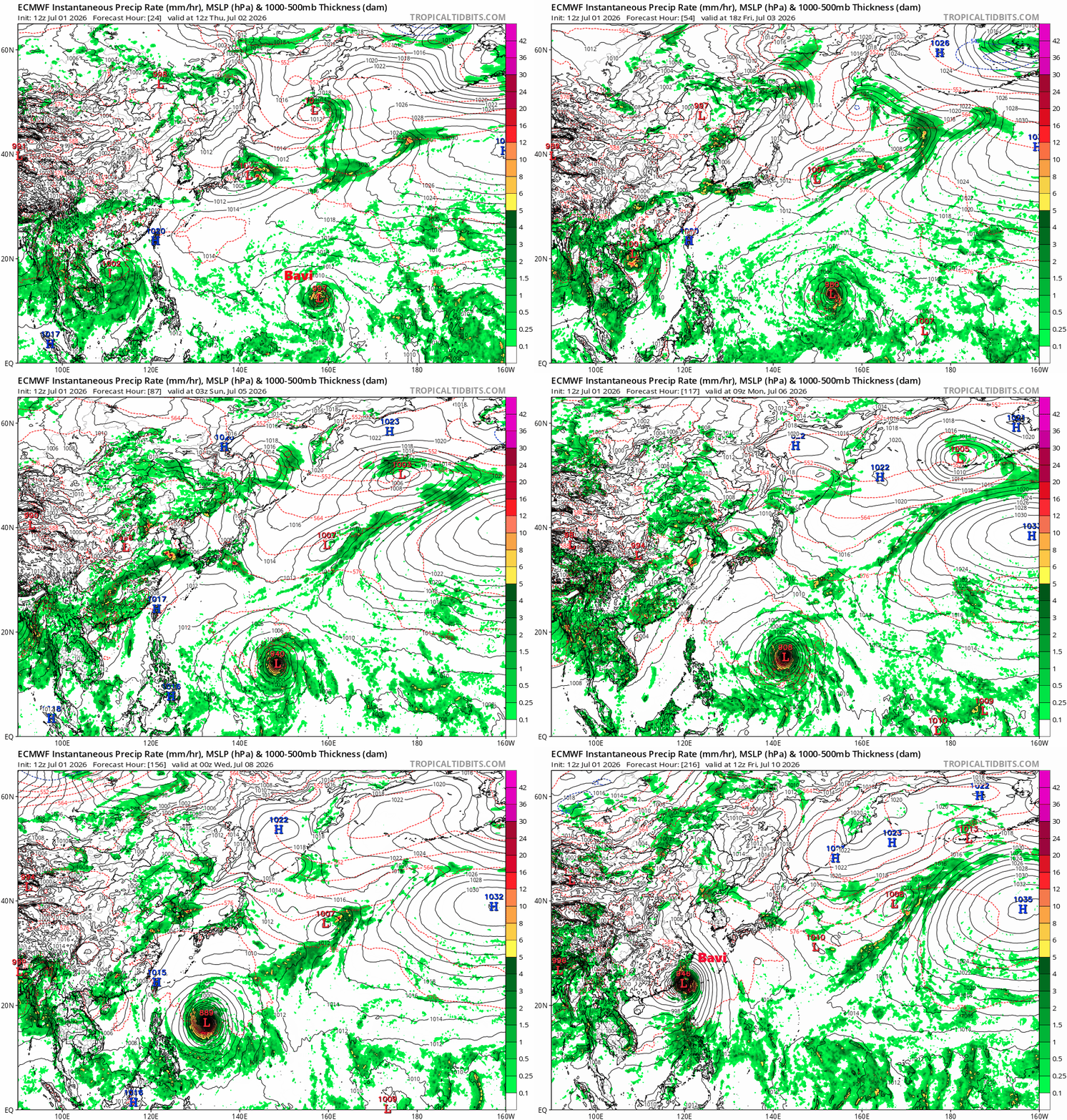
The system is expected to reach sustained winds of at least 220 km/h and could even peak at around 260 km/h within the five-day forecast period as it approaches the Mariana Islands. If this occurs, it could become the strongest July typhoon to pass directly through the area since reliable records began.
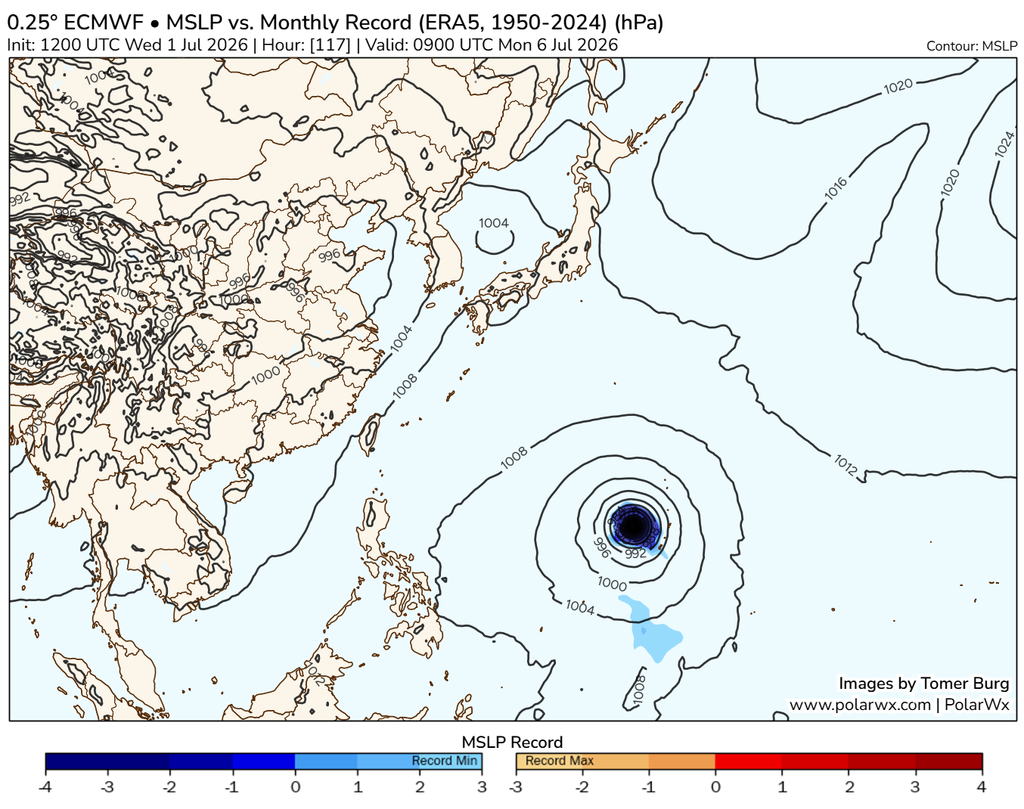
Earlier ECMWF model runs predicted that Bavi could deepen to 870 hPa during rapid intensification. The latest run now suggests a minimum central pressure of around 881 hPa. Other models are more conservative, forecasting minimum pressures closer to 900 hPa.
It is worth remembering that the tropical cyclone with the lowest central pressure ever recorded was Super Typhoon Tip, which reached a minimum pressure of 870 hPa on 12 October 1979 over the western Pacific Ocean.
Meanwhile, the Atlantic remains remarkably quiet in terms of tropical cyclone development.