
AI Tutors in the Classroom: Harvard Study Finds They Are Transforming Teaching and Learning
As the debate over AI in classrooms intensifies, educators are increasingly concerned about its effects on teaching and learning. Yet a recent Harvard study indicates that AI can enhance education—if it is used to actively support students’ understanding rather than simply completing their assignments.
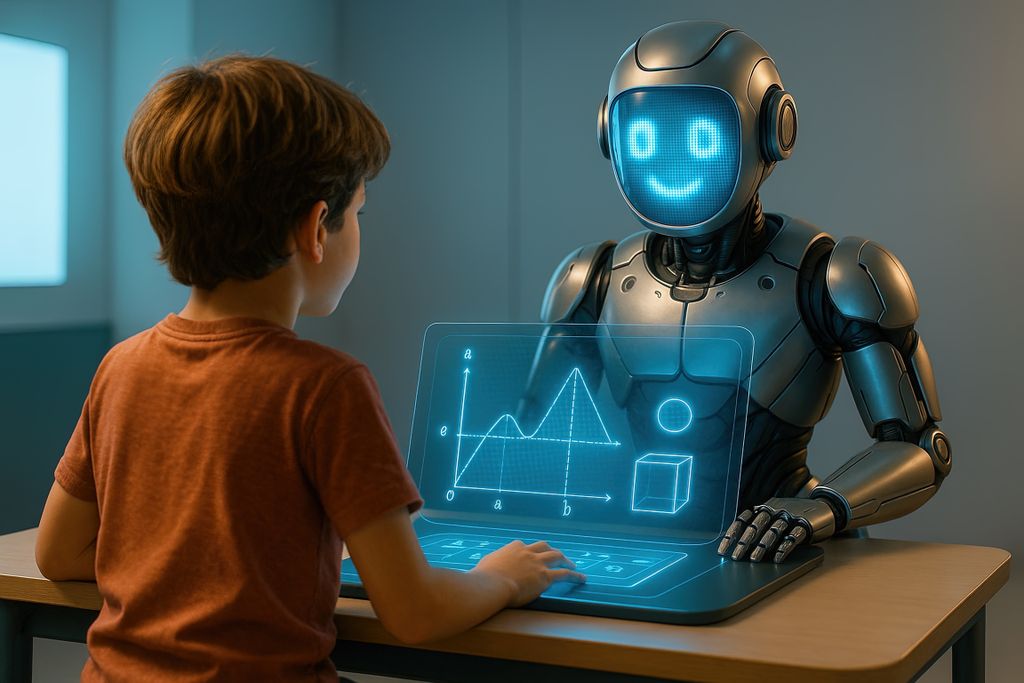
As AI enters classrooms, the new study by Harvard reveals that AI tutors are entering classrooms with surprising levels of student engagement and yielding positive learning outcomes. The Harvard study finds that when used to support student learning, AI can enhance understanding and boost engagement.
For this experiment, Harvard researchers have studied learning outcomes for students in a large physics course who used a “custom-designed AI chatbot last fall.” Compared with traditional “active learning” in classrooms—where students learn in groups under the guidance of human instructors—the AI-supported approach was unexpectedly more effective, according to the study.
While professors and educators across institutions express concern about AI’s impact on learning, Gregory Kestin, who has led the study, notes that students in the experimental group using the AI tutor not only learned more material but also reported significantly higher engagement and motivation:
Kelly Miller, a senior lecturer who has analyzed the learning results of 194 students who signed up for Kestin’s course last fall, said “it was shocking, and super exciting,” to observe the outcome of the AI-supported course.
While passionate about AI’s potential to transform education, Kestin and Miller are aware of the risks of AI if it's misused. Kestin alerts that while AI has the potential to enhance learning, it could also undermine it if used carelessly.
The study’s lead researcher noticed that when students became dependent on AI tools, they may bypass the process of developing their own critical thinking skills. This overreliance can weaken the learning process and ultimately lead to poorer performance on tests and assessments.
Meanwhile, Kestin noted that once the framework was developed, it could be easily adapted for different courses and subjects, and several of his colleagues have already begun testing it in their own classes. Building on Kestin and Miller’s findings, the Derek Bok Center for Teaching and Learning has partnered with Harvard University Information Technology to pilot similar AI tutors in several large introductory courses this fall. They are also developing resources to support any instructor interested in incorporating AI tutor bots into their teaching.
References:
Professor tailored AI tutor to physics course. Engagement doubled. news.harvard.edu/gazette/story/2024/09/professor-tailored-ai-tutor-to-physics-course-engagement-doubled.