
Air Pollution from Climate Change and Wildfires Threatens Millions Worldwide
Air pollution threatens most of the world’s population, with climate change–driven wildfires playing a primary role in degrading global air quality, according to a new report.
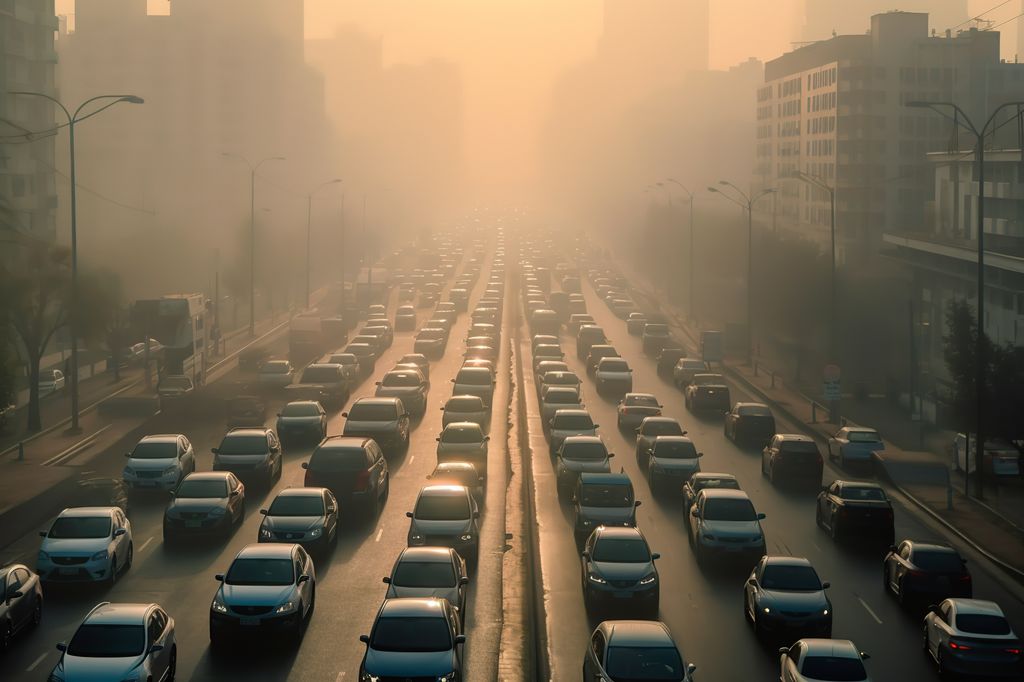
While air pollution has long been a persistent hazard, 2025 marked a turning point. A new global report by IQAir finds that most people around the world are now breathing unhealthy air, as rising pollution—fueled by climate change, worsening wildfires, dust storms, and extreme weather—spreads across borders.
Rising Air Pollution in 2025
According to the report published Tuesday most of the world’s cities experienced unhealthy levels of air pollution in 2025. Climate-driven wildfires, dust storms, and the continued burning of fossil fuels are spreading toxic air across borders and making the problem worse.
The report noted that among 9,446 cities across 143 countries, regions, and territories covered in 2025, only 13 countries—mostly in Latin America and the Caribbean—met the WHO annual PM2.5 guideline of 5 micrograms per cubic meter.
Cities Meeting the WHO PM2.5 Air Quality Standards
Globally, only 14% of cities met the WHO annual PM2.5 guideline in 2025, down from 17% in 2024, highlighting a concerning downward trend in air quality.
Canadian wildfires, intensified by climate change, were a major factor in deteriorating air quality in regions that had previously seen improvements. Intensified wildfires in California, Canada, and South Korea, along with dust storms stretching from China to Texas, made it more difficult for millions of people to breathe clean air last year.
The Health Risks of Air Pollution, Particularly for Children
Fine particulate matter, or PM2.5, is mix of tiny particles of soot, smoke, and other substances. Measuring less than 2.5 micrometers, these particles can penetrate the lungs and enter the bloodstream, leading to a wide range of health problems—from respiratory distress and cardiovascular damage to premature death.
#AirPollution is one of the greatest environmental risks to child health.
— World Health Organization (WHO) (@WHO) November 1, 2024
Children who have been exposed to high levels of air pollution may be at greater risk for chronic diseases such as cardiovascular disease later in life. pic.twitter.com/Ijo20mx4nU
According to the IQAir report, the impacts are particularly severe for children, as exposure to air pollution in early life can have lifelong effects. Additionally, respiratory damage sustained during children’s developmental years is often irreversible.
According to the WHO estimates, each year, 4.2 million people die from air pollution linked to fossil fuels, including ozone and nitrogen dioxide.
U.S. and Canada See Drop in Air Quality as Wildfires Intensify
In Canada and the United States, only 23 percent of cities met WHO air quality standards in 2025, down from 29 percent in 2024. Much of the increase in pollution was driven by Canadian wildfires intensified by climate change. The report ranked El Paso, Texas, as the most polluted major U.S. city, placing it ahead of Los Angeles and Chicago in 2025.
Tom Gill, professor of environmental science and engineering at the University of Texas, told Inside Climate News that El Paso experienced a 46 percent increase in PM2.5 levels in 2025, largely driven by dust storms worsened by drought and climate change.
In China, which has the highest national average for particulate matter in East Asia, pollution was driven mainly by coal combustion and power plants, industrial emissions, transportation, rural biomass burning, and dust storms intensified by climate change.
IQAir's 2025 World Air Quality Report finds only 14% of global cities and only 13 countries/territories meet the World Health Organization's PM2.5 air pollution guideline. #WAQR #IQAir #airquality #airpollutionhttps://t.co/dNcscNgddq pic.twitter.com/sPDCGPZfDV
— IQAir (@IQAir) March 24, 2026
According to the report, the rise in air pollution and the downward trend highlight the need for active stewardship and proactive strategies. It also highlights that maintaining clean air is a long-term responsibility shared by all countries.
Reference:
Interactive global map of 2025 PM2.5 concentrations by city. https://www.iqair.com/world-air-quality-report.
Climate-Fueled Wildfires and Dust Storms Drove Up Air Pollution Around the World Last Year. ANQYT8bTzTPGuiEiyf7rZUg.